Machine learning agents that optimize coverage, capacity, and energy.
Deep learning replacing traditional signal processing blocks.
Machine learning systems for real-time anomaly detection and response.
Preventing bias in AI-driven network resource allocation.
Battery-free devices powered by harvesting ambient RF energy.
Technologies to maintain open communication under authoritarian regimes.
Distributed ledgers to automate inter-operator billing and trust.
Neural interfaces enabling thought-based control and communication.
Containerized, microservice-based implementations of the 5G core network.
Intelligent radios that sense and opportunistically use available spectrum.
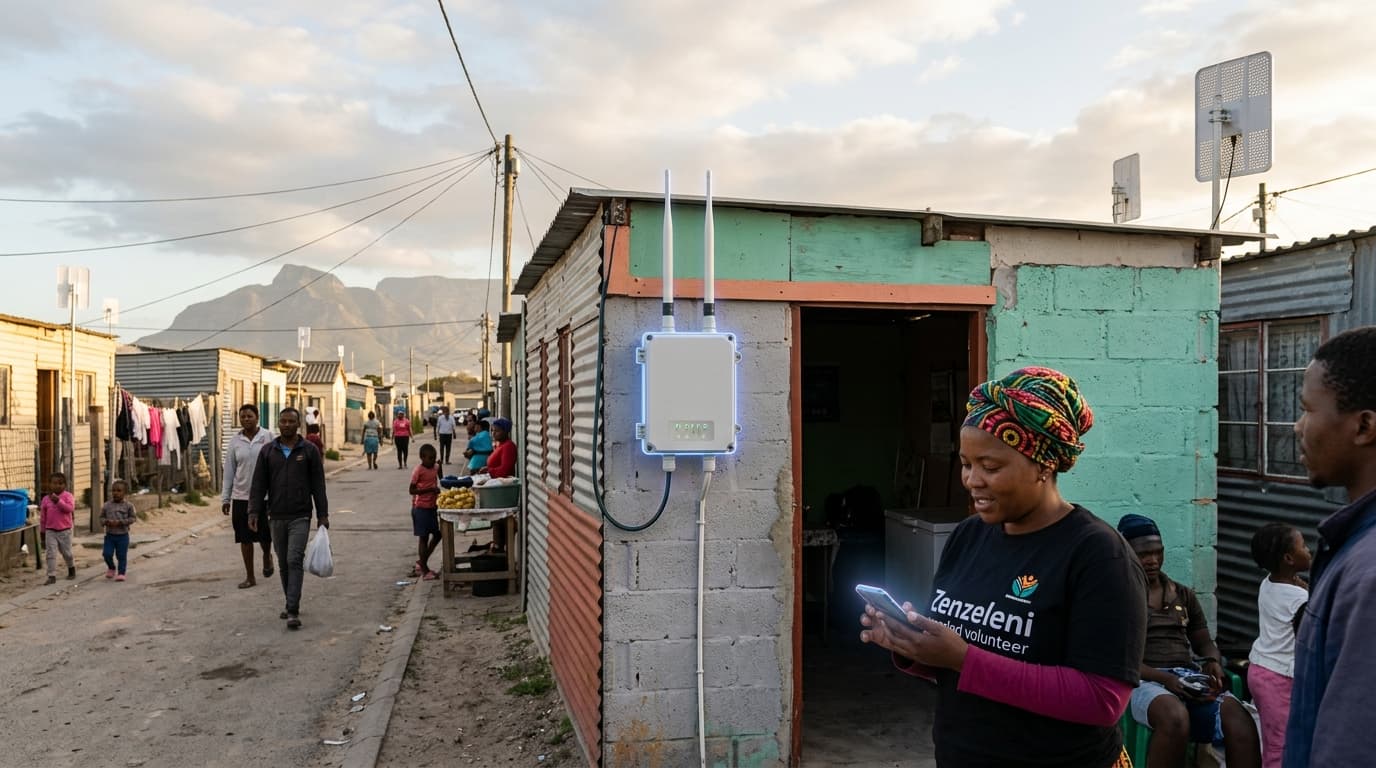
Bottom-up, cooperative infrastructure built and operated by local communities.
Architectures to keep networks running under extreme failures or attacks.
Self-sovereign digital identities and programmable SIM provisioning.
Virtual replicas of entire urban areas for planning and simulation.
Satellites that connect directly to standard phones and IoT devices.
Mini data centers colocated with base stations for ultra-low latency.
Real-time monitoring and guidelines for RF radiation exposure.
Dedicated, hardened networks for first responders and disaster scenarios.
Multi-user AR/VR environments for remote work and social interaction.
Training AI models across distributed nodes without centralizing data.
Liquid metal antennas that reshape to optimize signal reception.
Laser-based wireless links for high-capacity backhaul without fiber.
AI and automation to minimize energy consumption across telecom infrastructure.
Stratospheric stations providing wide-area connectivity.
Real-time, volumetric 3D communication.
Governance frameworks ensuring indigenous communities control their connectivity and data.
Immersive virtual environments for industrial control.
Dedicated cellular networks for factories, ports, and logistics hubs.
Wireless relay chains that extend coverage without fiber backhaul.
High-level policy engines that translate human intent into network config.
Transmitting touch, smell, and taste over networks.
Delay-tolerant networking protocols for deep space communication.
Waveforms and protocols that combine connectivity with environmental sensing.
Balancing government surveillance access with end-to-end encryption.
Swarm-like low-Earth orbit satellites for global broadband coverage.
High-throughput connectivity for ships, aircraft, and offshore platforms.
Management and connectivity for billions of low-power devices.
Base stations with dozens to hundreds of antennas for spatial multiplexing.
Compact base stations operating in millimeter-wave bands for dense hotspots.
Encoding information in molecules for transmission within biological environments.
Open APIs that let developers access and control network capabilities.
Standardized measurement and reporting of telecom carbon footprints.
Real-time virtual replica of the entire network infrastructure.
Technical and regulatory systems to prevent discriminatory traffic treatment.
Software to define, deploy, and manage virtual networks on shared hardware.
Controls over where connectivity paths and traffic are allowed to flow.
Brain-inspired chips for ultra-efficient AI inference at the network edge.
Policy and coordination frameworks for satellite mega-constellations.
Virtualized and vendor-neutral radio access network architectures.
Twisting radio waves to create infinite new communication channels.
Encryption methods resistant to quantum computer attacks.
IoT-enabled farm optimization for yield, water, and animal welfare.
Analytics on network data without exposing individual users.
Software-defined forwarding planes that can be reprogrammed in the field.
Fiber and satellite links for distributing quantum keys at scale.
Ultra-precise atomic sensors as alternatives to satellite GPS.
Metamaterials that actively reflect and steer radio signals.
Quantum sensors using excited atoms for ultra-sensitive radio detection.
Seamless handover and unified standards between terrestrial and satellite networks.
Hard isolation between virtual slices on shared infrastructure.
Transmitting meaning and intent rather than just raw bits.
Harvesting energy from the same radio signal used for communication.
Integrated connectivity fabric for traffic, utilities, and public services.
Systems to prevent orbital debris and satellite collisions.
Decentralized protocols for coordinating fleets of drones, robots, and vehicles.
Ultra-reliable, ultra-low-latency links for remote control of machines.
Ultra-high frequency antennas enabling Terabit-per-second speeds.
Reusing unused TV spectrum for long-range, cost-effective connectivity.
Subsea connectivity for ocean monitoring, research, and defense.
Vehicle-to-everything connectivity for safety, traffic efficiency, and autonomy.
High-speed data transmission using LED lighting infrastructure.
Security model that never trusts, always verifies at the edge.