Edge Compute Nodes (MEC)
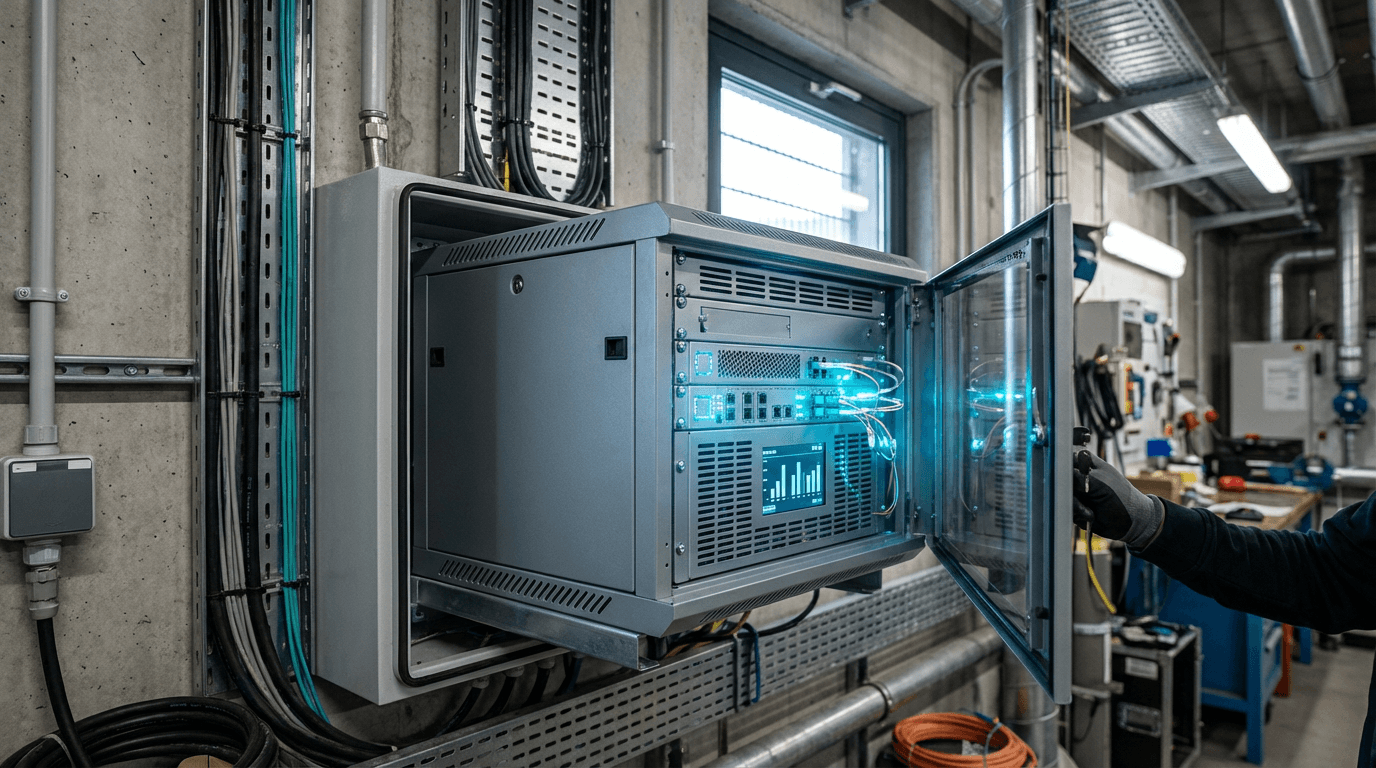
Multi-access edge computing (MEC) represents a fundamental shift in how telecommunications networks process and deliver data by positioning computational resources at the network's edge, typically colocated with cellular base stations or regional aggregation points. Unlike traditional cloud computing architectures that route data through distant centralized data centers, MEC platforms deploy compact computing infrastructure directly within the radio access network. This proximity to end users dramatically reduces the physical distance data must travel, enabling latency measurements in single-digit milliseconds rather than the tens or hundreds of milliseconds typical of cloud-based processing. The technical architecture typically involves ruggedized server equipment housed in telecommunications facilities, running containerized applications and virtualized network functions that can be dynamically allocated based on local demand and network conditions.
The telecommunications industry faces mounting pressure to support applications that cannot tolerate the delays inherent in traditional network architectures. Autonomous vehicles require near-instantaneous processing of sensor data to make split-second decisions, while industrial automation systems demand real-time control loops that break down with even modest latency. Augmented and virtual reality applications similarly struggle when visual processing lags behind user movements, creating disorienting experiences. MEC addresses these challenges by bringing computation to where it's needed most, effectively creating thousands of micro data centers distributed across a carrier's network footprint. This distributed approach also alleviates bandwidth congestion on backhaul connections to central clouds, as data can be processed and filtered locally before only essential information is transmitted upstream. For network operators, MEC opens new revenue opportunities through edge hosting services, allowing third-party applications to leverage the low-latency infrastructure.
Major telecommunications providers have begun deploying MEC infrastructure at select cell sites, particularly in urban areas and industrial zones where demand for latency-sensitive applications is highest. Early implementations focus on supporting smart manufacturing environments, where machine vision systems and robotic controls benefit from millisecond-level responsiveness, and enabling immersive gaming experiences that require real-time rendering and interaction. The technology also shows promise for public safety applications, where first responders could access AI-powered video analytics and situational awareness tools with minimal delay. As 5G networks continue their global rollout, MEC is increasingly viewed as an essential complement to the high-bandwidth, low-latency promises of next-generation wireless technology. The convergence of edge computing with network slicing capabilities allows operators to create dedicated virtual networks optimized for specific use cases, from connected vehicles to smart city sensors. Industry analysts suggest that as edge infrastructure matures and standardization efforts progress, MEC will become a foundational element of telecommunications architecture, enabling applications and services that remain impractical with today's centralized computing models.
Related Organizations


Builds the Kinetic Grid, a platform of micro-modular data centers located at the wireless edge.

Alef
United States · Startup
Provides a private mobile edge platform for enterprises.

American Tower
United States · Company
Global owner and operator of wireless and broadcast communications infrastructure.


Cox Edge
United States · Company
Edge cloud computing service from Cox Communications.

The world's digital infrastructure company, heavily investing in green data centers and renewable energy for interconnects.

Provides cloud-native network software and Open RAN solutions for both public and private 5G networks.


Edge orchestration solution enabling the deployment of analytics apps to distributed edge nodes.
Supporting Evidence
Research this in Signals
Signals turns a topic into a sourced research record you can inspect and rerun. Your first scan is free, and this one starts with Edge Compute Nodes (MEC) already loaded, so edit it or scan as is.