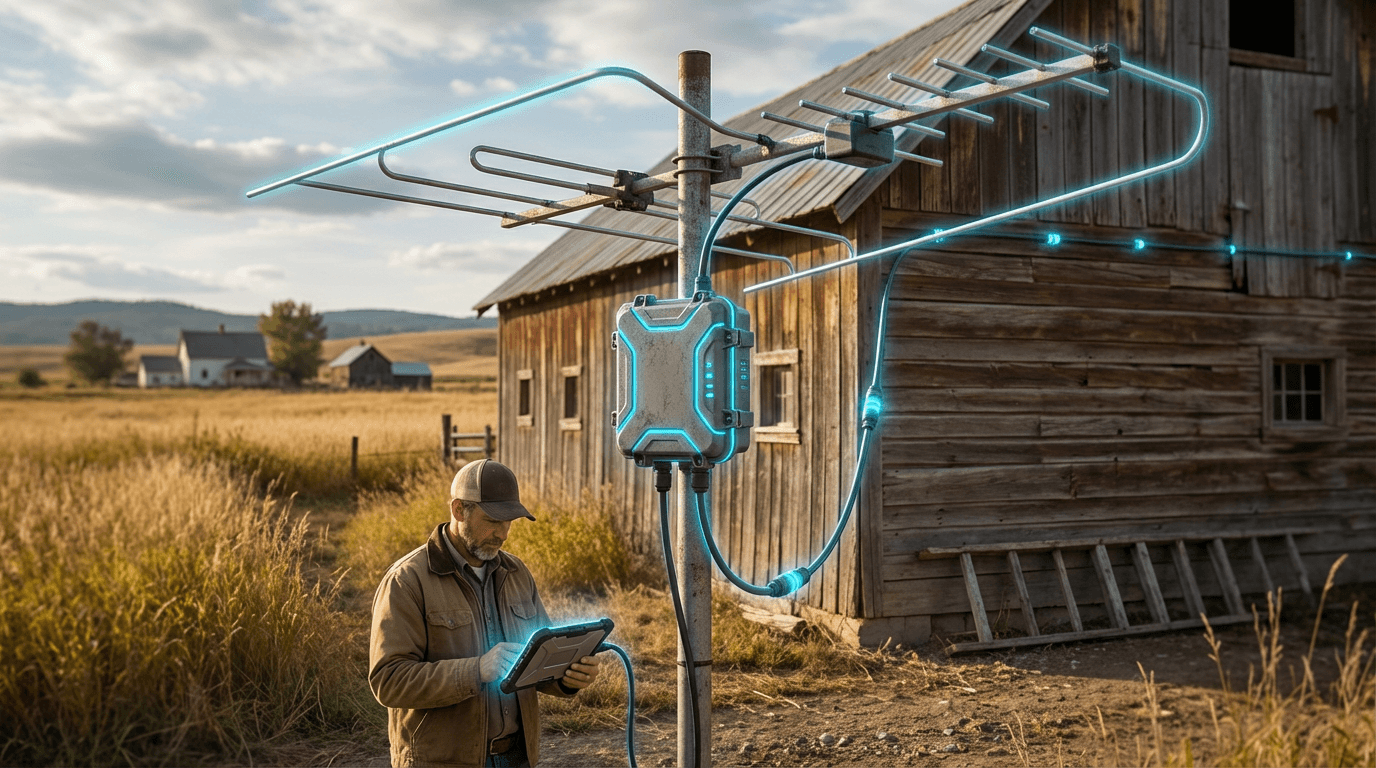
TV White Space & Rural Broadband
Television White Space (TVWS) technology represents a pragmatic solution to the persistent challenge of rural connectivity by repurposing the electromagnetic spectrum left vacant after the digital television transition. These "white spaces" exist in the UHF and VHF bands between 54 and 698 MHz, frequencies that were once allocated to analog television broadcasting but now sit largely unused in many geographic areas. The technology operates through a sophisticated coordination system: wireless devices equipped with TVWS radios query geo-location databases to identify which channels are available at their specific location, ensuring they transmit only on frequencies that won't interfere with licensed broadcasters or wireless microphones. This dynamic spectrum access model allows unlicensed users to leverage valuable low-frequency spectrum without disrupting existing services. The physical characteristics of these frequencies—particularly their ability to propagate over long distances and penetrate obstacles like buildings and foliage—make them exceptionally well-suited for covering large geographic areas with relatively few transmission points.
The fundamental problem TVWS addresses is the economics of rural broadband deployment. Traditional solutions like fiber-optic cables require prohibitively expensive trenching and infrastructure installation across sparsely populated areas, while cellular networks demand dense tower deployments that cannot generate sufficient revenue in low-density markets. Satellite internet, though geographically flexible, suffers from high latency and capacity constraints. TVWS technology disrupts this calculus by offering propagation ranges of up to 10 kilometers from a single base station—significantly greater than Wi-Fi or conventional wireless broadband operating at higher frequencies. This extended reach dramatically reduces the number of transmission sites needed to cover rural territories, lowering both capital and operational expenditures. For indigenous communities, remote agricultural regions, and developing nations, this cost structure transforms broadband from an economic impossibility into a viable infrastructure investment. The technology also supports essential services beyond consumer internet access, including precision agriculture sensor networks, remote healthcare connectivity, and educational resource delivery to underserved schools.
Field deployments across multiple continents have demonstrated TVWS's practical viability in bridging the digital divide. Pilot programs in parts of Africa, Southeast Asia, and rural North America have successfully delivered broadband speeds ranging from several megabits to tens of megabits per second—sufficient for video conferencing, online education, and small business operations. Regulatory frameworks have evolved to support TVWS deployment, with spectrum authorities in numerous countries establishing the necessary database systems and certification processes. The technology has found particular traction in regions where geographic barriers or low population density make conventional infrastructure economically untenable. As global connectivity becomes increasingly essential for economic participation and access to services, TVWS represents a critical tool in the broader portfolio of rural broadband solutions. While it may not match the raw bandwidth of fiber or 5G in urban centers, its unique combination of range, cost-effectiveness, and regulatory accessibility positions it as an enduring component of strategies to achieve universal connectivity, particularly as the technology continues to mature and integrate with complementary approaches like satellite backhaul and mesh networking architectures.
Related Organizations

6Harmonics
Canada · Company
Designs and manufactures TV White Space radios for rural broadband connectivity.

A global organization advocating for laws and regulations that lead to more efficient and effective spectrum utilization.

A spinoff from A*STAR providing TV White Space solutions, often termed 'Super Wi-Fi'.

The Council for Scientific and Industrial Research in South Africa, actively researching and piloting TVWS.

Through Copilot and the 'Recall' feature in Windows, Microsoft is integrating persistent memory and agentic capabilities directly into the operating system.

Provides dynamic spectrum management database services required for TVWS operation.

A non-profit organization advocating for and deploying free public WiFi in low-income communities.
Supporting Evidence
Research this in Signals
Signals turns a topic into a sourced research record you can inspect and rerun. Your first scan is free, and this one starts with TV White Space & Rural Broadband already loaded, so edit it or scan as is.