Ambient Backscatter IoT
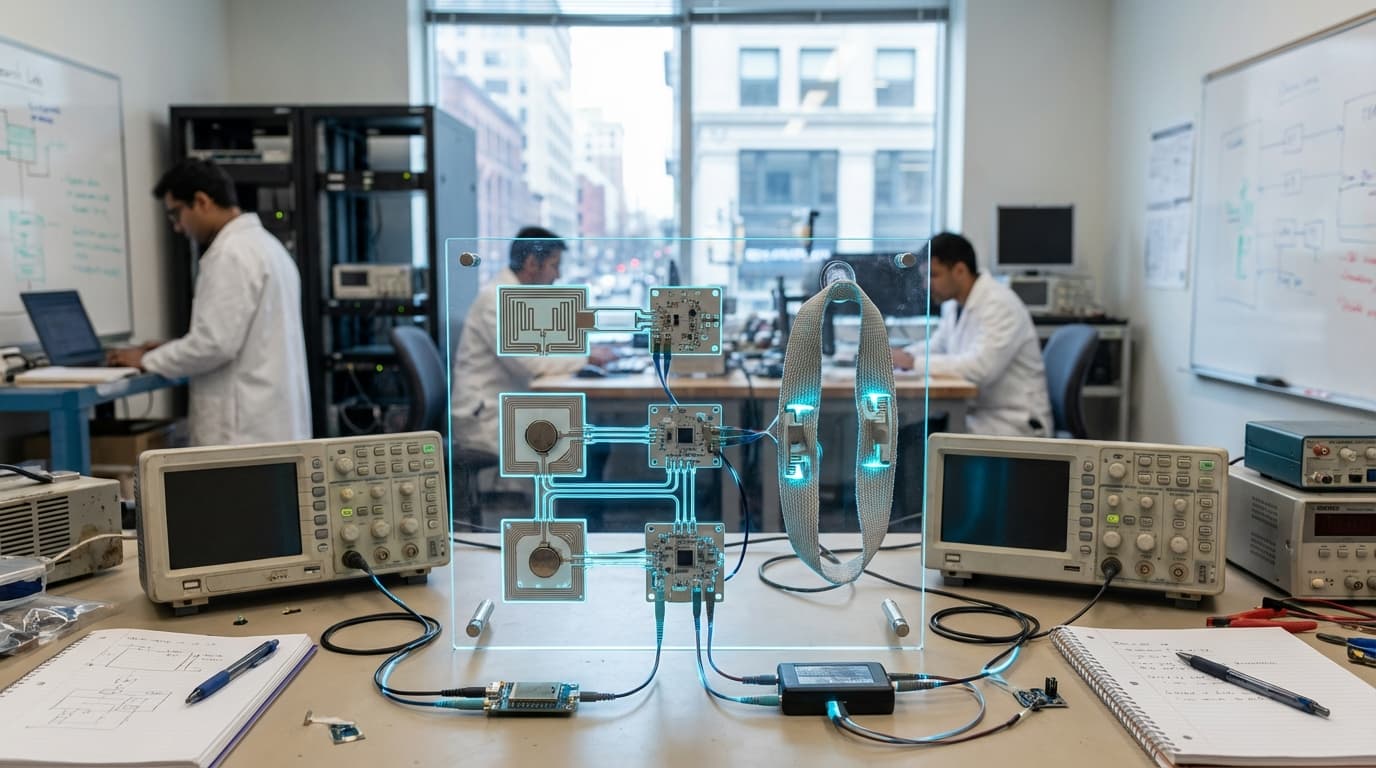
Ambient backscatter IoT represents a paradigm shift in wireless communication, enabling devices to transmit data without requiring dedicated power sources or active radio transmitters. The technology operates by harvesting energy from existing ambient radio frequency (RF) signals—such as WiFi, cellular networks, television broadcasts, and other wireless transmissions—that permeate our environment. Rather than generating their own signals, these devices work by selectively reflecting or absorbing incoming RF waves, modulating them to encode information in a process analogous to how a mirror can be angled to flash Morse code using sunlight. This backscattering mechanism requires orders of magnitude less power than conventional wireless transmission, often operating on microwatts or even nanowatts of harvested energy. The technical architecture typically involves an antenna to capture ambient RF energy, a simple modulator to alter the reflection pattern, and minimal circuitry to process sensor data, resulting in devices that can be manufactured at extremely low cost and deployed without maintenance concerns related to battery replacement.
The fundamental challenge this technology addresses is the scalability barrier inherent in traditional IoT deployments, where battery-powered sensors create unsustainable maintenance burdens and environmental waste at massive scales. In applications requiring thousands or millions of distributed sensors—such as precision agriculture monitoring soil conditions across vast farmlands, tracking temperature-sensitive pharmaceuticals through complex supply chains, or deploying environmental sensors in remote or resource-constrained regions—the logistics and costs of battery replacement become prohibitive. Ambient backscatter IoT eliminates this constraint entirely, enabling truly "deploy and forget" sensor networks. This capability unlocks new business models and applications previously considered economically unfeasible, particularly in developing regions where infrastructure limitations and cost sensitivities have historically prevented widespread IoT adoption. The technology also addresses growing concerns about electronic waste, as battery-free devices can be designed as biodegradable or easily recyclable components.
Research institutions and technology companies have demonstrated functional prototypes in various contexts, with pilot deployments exploring applications ranging from warehouse inventory management to agricultural monitoring systems. Early implementations have shown particular promise in cold-chain logistics, where disposable temperature sensors can track perishable goods throughout transport without adding significant cost or complexity. The technology aligns with broader industry trends toward sustainable electronics and the proliferation of edge computing, where processing increasingly occurs closer to data sources. As ambient RF energy becomes more ubiquitous with the expansion of 5G networks and other wireless infrastructure, the available power for harvesting continues to grow, potentially enabling more sophisticated sensor capabilities. Looking forward, ambient backscatter IoT may fundamentally reshape expectations about sensor deployment density and longevity, moving toward environments where sensing becomes essentially invisible and maintenance-free, integrated seamlessly into materials and surfaces throughout our built and natural environments.
Related Organizations

Develops battery-free IoT Pixels that harvest energy from radio waves to sense and communicate.

The 3rd Generation Partnership Project unites telecommunications standard development organizations.

Fabless semiconductor company providing passive backscatter communication chips.


Develops radioless communication chips for Wi-Fi backscatter.

Develops ultra-low power wireless connectivity solutions (Bluetooth) with integrated energy harvesting capabilities.

Produces self-powered industrial sensors that run continuously without batteries.

Fabless semiconductor company developing batteryless microcontrollers.

Smartphone maker with 'HyperBoost' engine that optimizes scheduling between the game, the CPU, and the GPU.

Launched the Digital Asset Broker (DAB) platform to allow devices to trade securely using blockchain technology.
Supporting Evidence
Research this in Signals
Signals turns a topic into a sourced research record you can inspect and rerun. Your first scan is free, and this one starts with Ambient Backscatter IoT already loaded, so edit it or scan as is.