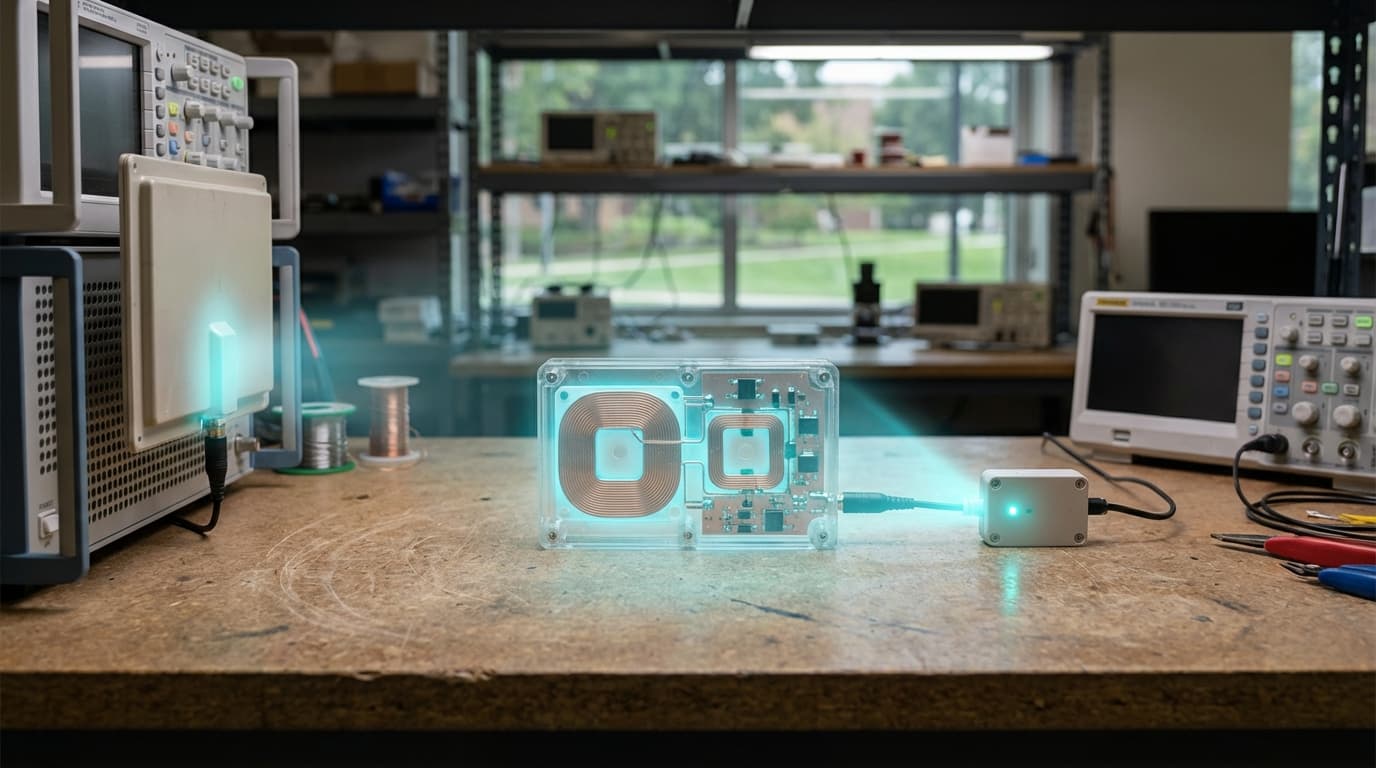
Simultaneous Wireless Information and Power Transfer (SWIPT)
The exponential growth of Internet of Things (IoT) devices has created a significant challenge in telecommunications infrastructure: how to power billions of sensors, tags, and connected devices without relying on batteries that require periodic replacement or external power sources that limit deployment flexibility. Traditional wireless systems treat power delivery and data transmission as separate functions, requiring dedicated infrastructure for each. Simultaneous Wireless Information and Power Transfer (SWIPT) addresses this fundamental limitation by enabling radio frequency (RF) signals to serve dual purposes—carrying data while simultaneously providing energy that can be harvested by receiving devices. The technology works by allowing receivers to split incoming RF signals into two distinct streams through specialized circuits: one stream is directed to conventional communication components for decoding information, while the other is channeled to rectifying circuits that convert the electromagnetic energy into direct current for charging batteries, supercapacitors, or directly powering low-energy electronics. This splitting can be achieved through various architectural approaches, including time-switching protocols that alternate between energy harvesting and information processing, or power-splitting techniques that divide the signal strength between both functions simultaneously.
The telecommunications industry faces mounting pressure to deploy massive sensor networks for smart cities, industrial monitoring, and environmental tracking, yet the logistics and costs of maintaining battery-powered devices across thousands or millions of endpoints remain prohibitive. SWIPT fundamentally transforms this economic equation by enabling truly autonomous, battery-less networks that can operate indefinitely without human intervention. This capability is particularly valuable in scenarios where physical access is difficult, dangerous, or expensive—such as sensors embedded in building structures, devices deployed in remote environmental monitoring stations, or tags attached to infrastructure in hazardous industrial environments. Beyond reducing maintenance costs, SWIPT addresses growing environmental concerns about battery waste and the carbon footprint associated with manufacturing and disposing of billions of power cells. The technology also enables new network architectures where base stations and access points can strategically manage their transmission power to optimize both communication quality and energy delivery, creating more efficient and sustainable wireless ecosystems.
Early deployments of SWIPT-enabled systems are already emerging in specialized applications, particularly in radio-frequency identification (RFID) systems and low-power sensor networks where energy requirements are modest and communication distances are relatively short. Research initiatives are exploring advanced techniques such as beamforming to focus energy delivery on specific devices, and intelligent resource allocation algorithms that dynamically balance information throughput against energy harvesting efficiency based on network conditions and device needs. As 5G and future 6G networks incorporate higher frequency bands and denser infrastructure deployments, the potential for SWIPT expands significantly—these networks can provide more concentrated energy delivery while maintaining robust data connections. Industry analysts note that SWIPT represents a critical enabler for the vision of ambient IoT, where countless low-power devices seamlessly integrate into our environment without the constraints of battery life or wired power connections. The convergence of SWIPT with other emerging technologies such as backscatter communication and ultra-low-power electronics suggests a future where wireless networks not only connect devices but actively sustain them, fundamentally reshaping how we conceive of and deploy connected infrastructure across telecommunications systems.
Related Organizations

Develops wireless power technology that harvests radio frequency (RF) energy to power devices remotely.

Develops battery-free IoT Pixels that harvest energy from radio waves to sense and communicate.

Develops WattUp, an RF-based wireless charging technology for near-field and far-field applications.

The Centre for Cold Matter develops portable quantum accelerometers for navigation without satellite support.

Creator of Cota, a technology that delivers power over air at a distance, primarily for indoor IoT and smart city devices.

Develops ultra-low power wireless connectivity solutions (Bluetooth) with integrated energy harvesting capabilities.

Semiconductor company dedicated to ambient energy harvesting PMICs (AEM series) for PV and other sources.

Provides an industrial wireless power network platform (TFi) for powering sensor networks without batteries or cabling.
Supporting Evidence
Research this in Signals
Signals turns a topic into a sourced research record you can inspect and rerun. Your first scan is free, and this one starts with Simultaneous Wireless Information and Power Transfer (SWIPT) already loaded, so edit it or scan as is.