Terahertz (THz) Antennas
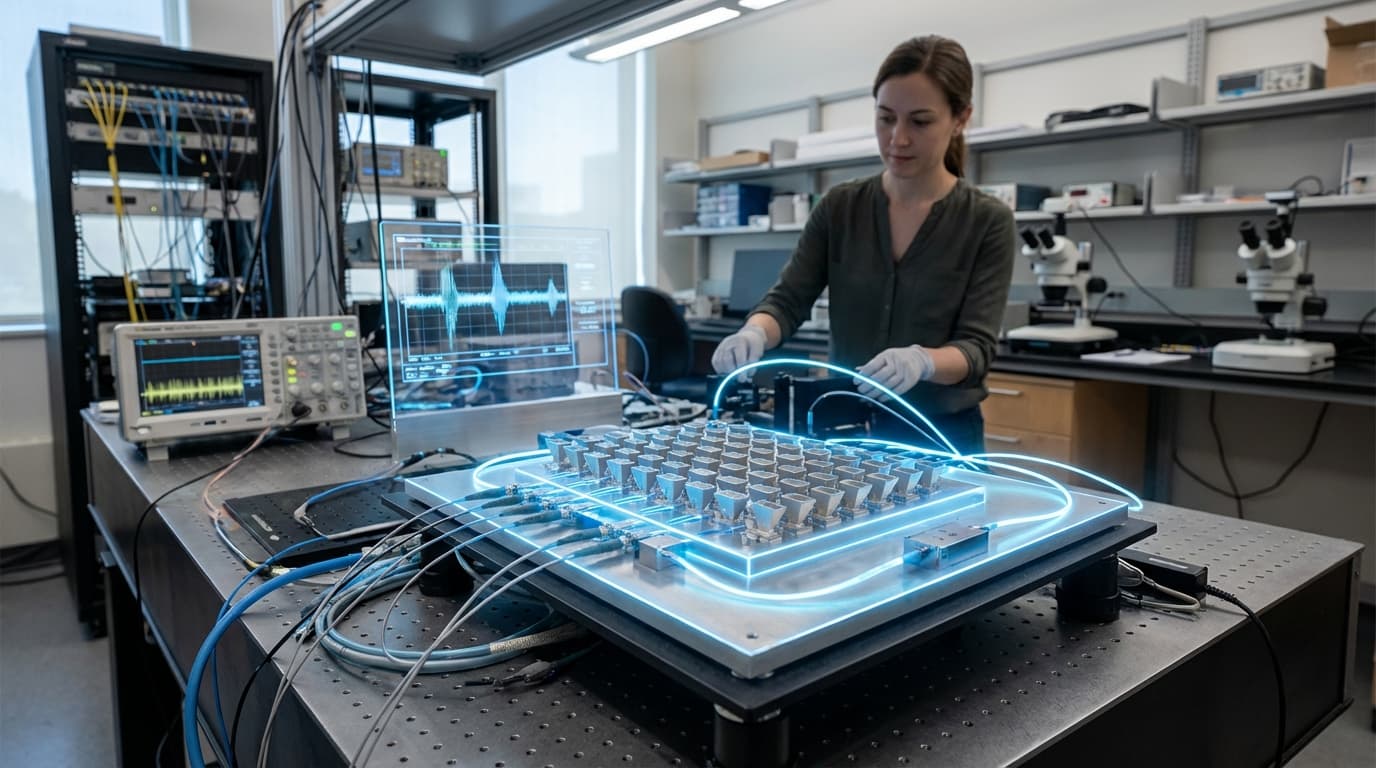
Terahertz antennas represent a critical advancement in wireless communication technology, operating within the electromagnetic spectrum between 0.1 and 10 terahertz—a frequency range that sits between microwave and infrared bands. Unlike conventional radio frequency antennas used in current 4G and 5G networks, THz antennas exploit previously underutilised spectrum to achieve unprecedented data transmission capabilities. The fundamental mechanism relies on the inverse relationship between wavelength and frequency: as frequencies increase into the terahertz range, wavelengths shrink to submillimeter scales, enabling extremely compact antenna designs while simultaneously providing access to vast swaths of unused bandwidth. However, these high frequencies introduce significant technical challenges, particularly severe atmospheric absorption and limited propagation distances. To overcome these obstacles, researchers are developing novel antenna architectures using advanced materials such as graphene, metamaterials, and specially engineered semiconductors that can efficiently generate, transmit, and receive THz signals. Additionally, sophisticated beamforming techniques—which electronically steer narrow, focused signal beams toward specific receivers—are essential to compensate for the high path loss inherent to terahertz frequencies.
The telecommunications industry faces an escalating bandwidth crisis as data consumption continues its exponential growth trajectory, driven by emerging applications like immersive extended reality, holographic communications, and massive Internet of Things deployments. Current 5G networks, while significantly faster than their predecessors, will likely prove insufficient for the demands anticipated in the coming decade. Terahertz antennas address this fundamental limitation by unlocking frequency bands capable of supporting data rates measured in terabits per second—roughly one hundred times faster than peak 5G speeds. This technological leap enables entirely new categories of wireless services that were previously impossible, including wireless data centers where servers communicate at fiber-optic speeds without physical cables, ultra-high-definition video streaming that surpasses current quality standards, and near-instantaneous cloud computing experiences. Beyond raw speed, THz antennas also support extremely low latency communication, a critical requirement for applications like remote surgery, autonomous vehicle coordination, and industrial automation where millisecond delays can have serious consequences.
Research institutions and telecommunications companies worldwide are actively developing THz antenna prototypes, with laboratory demonstrations already achieving multi-gigabit wireless links over short distances. Early deployment scenarios focus on fixed wireless applications—such as building-to-building connections in dense urban environments or last-mile broadband delivery—where the limited range of terahertz signals is less problematic than in mobile networks. Industry analysts anticipate that THz technology will form a cornerstone of sixth-generation (6G) wireless standards expected to emerge in the early 2030s, though significant engineering challenges remain before widespread commercial deployment becomes feasible. The integration of THz antennas into future communication infrastructure represents a natural evolution in the ongoing quest for higher bandwidth, positioning this technology as essential to meeting the connectivity demands of increasingly data-intensive societies and supporting the continued digital transformation of industries worldwide.
Related Organizations

German research institute developing advanced algorithms for 3D Human Body Reconstruction and volumetric video coding.

Host of the 6G Flagship, the world's first major 6G research program.

Manufactures test and measurement equipment for mmWave and THz applications, essential for 6G research.

Offers the Quantum Engineering Toolkit (QET) and Labber software for instrument control and pulse generation.


Samsung Research
South Korea · Research Lab
Advanced R&D arm of Samsung Electronics, heavily invested in 6G spectrum and THz communications.

Develops terahertz instruments and solutions, originally for imaging but increasingly relevant for comms material characterization.

Provider of Schottky diodes and components for THz applications.

Lead institution for the BrainGate consortium, pioneering the first human trials of invasive BCIs.

A leading developer and supplier of instrumentation for high-precision metrology.
Supporting Evidence
Research this in Signals
Signals turns a topic into a sourced research record you can inspect and rerun. Your first scan is free, and this one starts with Terahertz (THz) Antennas already loaded, so edit it or scan as is.