Community Networks & Mesh Connectivity
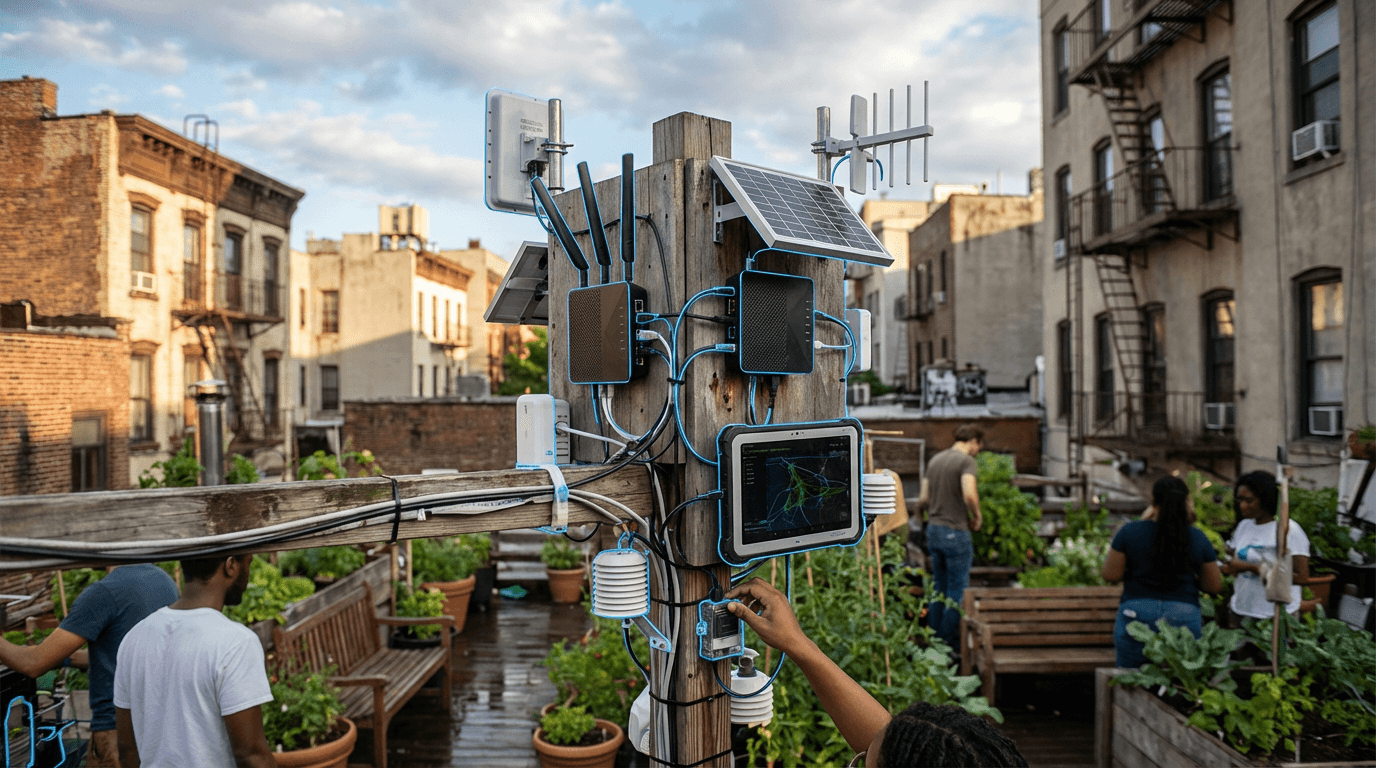
Community networks represent a fundamental shift in how telecommunications infrastructure can be deployed and governed, moving away from centralized, top-down models toward cooperative, locally-owned systems. These networks utilize mesh topology architectures where each node—typically a wireless router or radio device—connects to multiple other nodes, creating a self-healing web of connectivity that doesn't rely on a single point of failure. The technical foundation often combines multiple wireless technologies: WiFi for short-range, high-bandwidth connections; LoRa (Long Range) radio for low-power, extended-distance communication; and TV white space spectrum, which repurposes unused television broadcast frequencies for broadband internet access. Unlike traditional cellular or fiber networks that require substantial capital investment and centralized infrastructure, mesh networks can be deployed incrementally, with each new node strengthening the overall network. This distributed architecture means that data can hop from device to device to reach its destination, bypassing the need for expensive backhaul connections at every location.
The emergence of community networks directly addresses the persistent challenge of the digital divide, particularly in regions where commercial telecommunications operators find insufficient return on investment to justify infrastructure deployment. Rural areas, remote villages, indigenous territories, and low-income urban neighborhoods often face prohibitive costs or complete absence of connectivity options from traditional providers. Community networks solve this problem by empowering local populations to build and maintain their own infrastructure through cooperative models, where community members contribute labor, resources, and governance. This approach dramatically reduces deployment costs while ensuring that network priorities align with local needs rather than profit maximization. Beyond basic connectivity, these networks enable communities to host local content servers, intranet services, and digital resources that remain accessible even when external internet connections are limited or unavailable. This creates what advocates call "digital sovereignty"—the ability for communities to control their own digital infrastructure and data, rather than remaining dependent on external commercial entities or government systems.
Research from organizations supporting community network development indicates that hundreds of such initiatives now operate across Latin America, Africa, and Asia, with some serving thousands of users in areas previously considered unconnectable. In mountainous regions of Mexico, indigenous communities have deployed cellular networks using open-source software and cooperative governance structures. Across rural Africa, community networks provide essential connectivity for education, healthcare, and economic development where no alternatives exist. These deployments demonstrate that the technical and organizational models are viable and replicable. As global connectivity demands increase and the limitations of purely commercial deployment models become more apparent, community networks represent an increasingly important complement to traditional telecommunications infrastructure. They embody principles of local ownership, participatory governance, and appropriate technology that align with broader movements toward decentralization and community resilience. The continued evolution of affordable wireless technologies, open-source networking software, and supportive regulatory frameworks suggests that community-owned mesh networks will play an expanding role in achieving universal connectivity goals, particularly in contexts where conventional approaches have consistently failed to reach.
Related Organizations

A bottom-up, citizenship-driven technological, social and economic project to create a free, open and neutral telecommunications network.

A non-commercial initiative for free wireless networks across Germany.

A community-owned network in New York City providing resilient, neutral internet access via rooftop mesh nodes.

Facilitates community-owned GSM/LTE cellular networks in rural areas of Latin America.

Develops hardware and software for incentivized mesh networks where routers pay each other for bandwidth.

A set of modules that extend the OpenWrt distribution to create self-configuring wireless mesh networks.


An international network of organizations that was founded to provide communication infrastructure and support to civil society.

Global non-profit that actively funds and trains community network operators.
Supporting Evidence
Research this in Signals
Signals turns a topic into a sourced research record you can inspect and rerun. Your first scan is free, and this one starts with Community Networks & Mesh Connectivity already loaded, so edit it or scan as is.