Indigenous Data Sovereignty & Community Networks
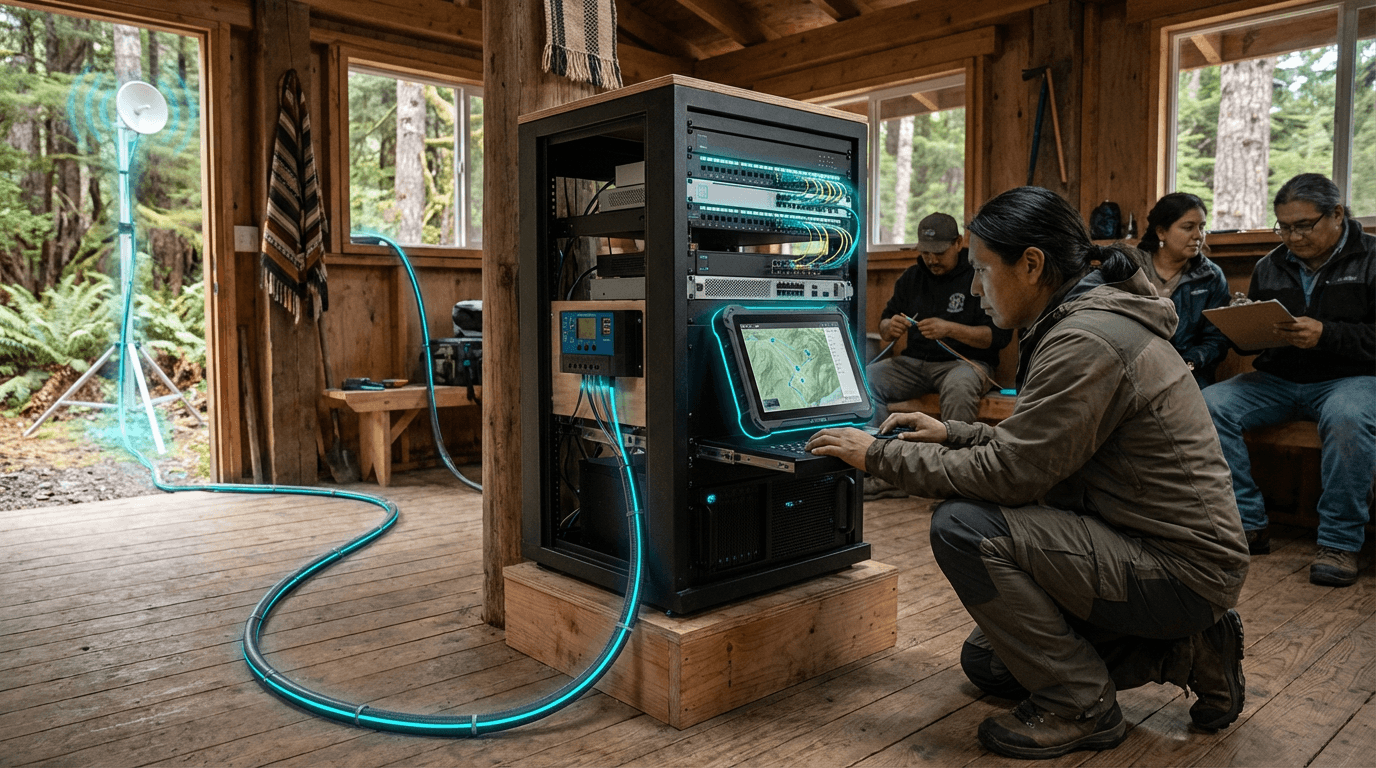
Indigenous Data Sovereignty & Community Networks represents a fundamental reimagining of telecommunications governance, rooted in the principle that indigenous peoples should exercise authority over the digital infrastructure and data flows within their territories. This approach combines legal frameworks—such as the OCAP principles (Ownership, Control, Access, and Possession) developed by First Nations communities and the CARE principles (Collective benefit, Authority to control, Responsibility, and Ethics)—with technical architectures that enable communities to own and operate their own network infrastructure. Unlike conventional telecommunications models where external providers control both the physical infrastructure and the data it carries, these frameworks establish indigenous communities as the primary decision-makers regarding network deployment, data routing protocols, and content governance. The technical implementation often involves community-owned fiber networks, locally-managed wireless systems, and data centers situated within indigenous territories, ensuring that information generated by and about these communities remains under their stewardship.
The telecommunications industry has historically replicated colonial patterns, with infrastructure decisions made by distant corporations and governments, often without meaningful consultation or benefit-sharing with indigenous communities. This has resulted in persistent connectivity gaps in indigenous territories, data extraction practices that commodify indigenous knowledge without consent, and surveillance capabilities that threaten cultural privacy and self-determination. Indigenous Data Sovereignty addresses these systemic inequalities by establishing communities as network operators rather than merely consumers of services. This shift enables indigenous peoples to determine what data is collected, how it is stored and shared, and who benefits from its use—critical considerations when dealing with culturally sensitive information, traditional knowledge, and community health data. By controlling the physical infrastructure, communities can also ensure network resilience during emergencies, prioritize local content and languages, and create economic opportunities through locally-managed telecommunications services.
Several indigenous communities have already implemented these principles through community-owned networks that provide both connectivity and data governance. These deployments demonstrate how technical sovereignty—controlling routers, servers, and transmission equipment—translates into practical self-determination, allowing communities to offer internet services that respect cultural protocols and privacy expectations distinct from mainstream commercial providers. The approach aligns with broader movements toward digital self-determination and challenges the assumption that telecommunications must follow centralized, corporate models. As concerns about data privacy, surveillance, and digital colonialism grow globally, indigenous-led frameworks offer valuable models for community-controlled infrastructure that prioritizes local needs over external commercial interests. The continued development of these networks represents not only a technical achievement but also a reclamation of sovereignty in an increasingly digital world, ensuring that the next generation of connectivity infrastructure serves rather than exploits the communities it reaches.
Related Organizations

An international network promoting Indigenous Data Sovereignty and Governance, known for creating the CARE Principles for Indigenous Data Governance.

Facilitates community-owned GSM/LTE cellular networks in rural areas of Latin America.

Māori media organization developing natural language processing (NLP) and AI tools for indigenous languages.

An association of First Nations Internet service providers in Canada advocating for policy changes and community-owned broadband.

A First Nations-owned telecommunications service provider supporting remote communities in Northern Ontario.

A nonprofit working with Native American tribes to design, build, and control their own high-speed internet networks.

A Mexican civil society organization focused on telecommunications for development and indigenous community networks.
South Africa's first community-owned wireless internet service provider, located in the Eastern Cape.

An international network of organizations that was founded to provide communication infrastructure and support to civil society.

Global non-profit that actively funds and trains community network operators.
Supporting Evidence
Research this in Signals
Signals turns a topic into a sourced research record you can inspect and rerun. Your first scan is free, and this one starts with Indigenous Data Sovereignty & Community Networks already loaded, so edit it or scan as is.