Interplanetary Internet (DTN)
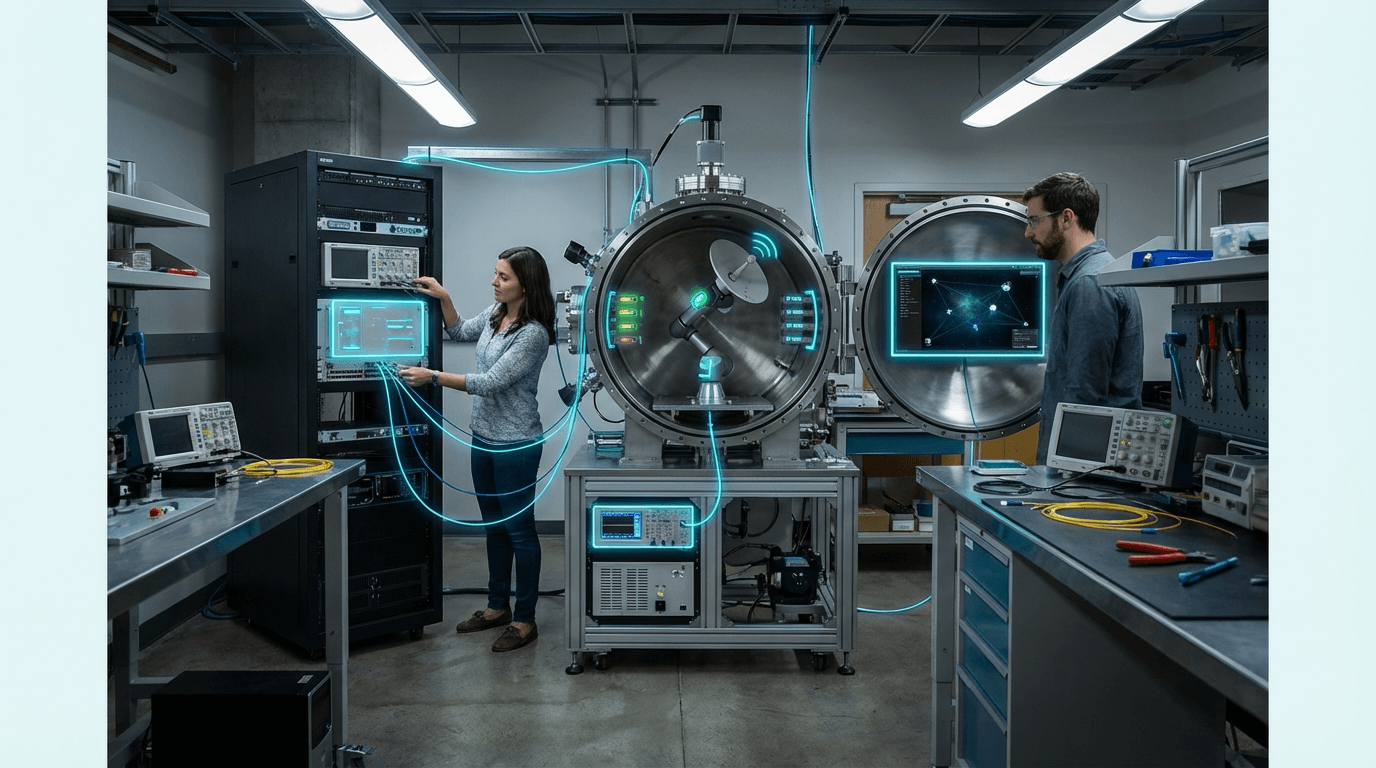
The Interplanetary Internet, formally known as Delay-Tolerant Networking (DTN), represents a fundamental reimagining of how data networks operate across the vast distances of space. Traditional internet protocols like TCP/IP were designed for terrestrial networks where communication delays are measured in milliseconds and connections remain relatively stable. However, these assumptions break down completely in space, where light-speed delays can stretch to minutes or hours, communication windows are intermittent as planets rotate and orbit, and signal paths are frequently blocked by celestial bodies. DTN addresses these challenges through the Bundle Protocol, a store-and-forward architecture that treats data packets as discrete "bundles" that can wait at intermediate nodes—whether on spacecraft, planetary surfaces, or orbital relays—until the next communication opportunity arises. This approach fundamentally decouples the sender and receiver, allowing messages to traverse networks where end-to-end paths may not exist simultaneously and where a round-trip acknowledgment could take over 40 minutes during Mars missions.
The development of DTN protocols solves critical problems that have long constrained space exploration and scientific research. Current space missions rely on point-to-point communication links that require constant human oversight and mission-specific protocols, creating inefficiencies and limiting the volume of data that can be returned from deep space. By establishing a standardised networking framework, DTN enables automated routing of scientific data through relay networks, allowing spacecraft to communicate with each other and with Earth without requiring direct line-of-sight. This capability becomes increasingly vital as space agencies and commercial entities plan more ambitious missions involving multiple spacecraft, lunar bases, and Mars settlements. The protocol's custody transfer mechanism ensures that data responsibility shifts from node to node, guaranteeing delivery even if individual links fail or spacecraft enter safe mode. This reliability is essential for transmitting irreplaceable scientific observations and maintaining operational control over distant assets.
NASA has already demonstrated DTN's viability through operational deployments on the International Space Station and testing with deep-space missions, validating the protocol's ability to handle real-world space communication challenges. Research institutions and space agencies worldwide are now working to establish DTN as the foundation for future space infrastructure, envisioning networks that will eventually span cislunar space, Mars, and beyond. As humanity's presence in space expands from occasional robotic missions to sustained human settlements and commercial activities, the need for robust, automated communication networks will only intensify. The Interplanetary Internet represents not just a technical solution but a critical infrastructure investment that will enable everything from coordinating multi-spacecraft scientific campaigns to supporting future space economies. By extending internet-like connectivity beyond Earth, DTN is laying the groundwork for an era when space exploration becomes less about isolated missions and more about interconnected systems operating across the solar system.
Related Organizations

Developers of EELS (Exobiology Extant Life Surveyor), a snake-like modular robot designed for diverse terrains.

An international organization developing standards for space data handling, including the Bundle Protocol for DTN.

A chapter of the Internet Society dedicated to the expansion of the internet to space.

Spun out of Google's Project Loon, they develop 'Spacetime', a software platform for orchestrating complex mesh networks in space.


Leads the EAGLE-1 mission and the SAGA program to build a European quantum communication infrastructure in space.

Develops internet standards, including the GEOPRIV working group which focuses on protocols for transmitting location information securely.

Developed the Modular Prosthetic Limb (MPL), one of the most advanced robotic limbs designed for BCI control.

Uses a constellation of nanosatellites to collect radio occultation data, fed into ML models for forecasting.
Supporting Evidence
Research this in Signals
Signals turns a topic into a sourced research record you can inspect and rerun. Your first scan is free, and this one starts with Interplanetary Internet (DTN) already loaded, so edit it or scan as is.