





APIs and the API economy
This page is a narrower case of it.
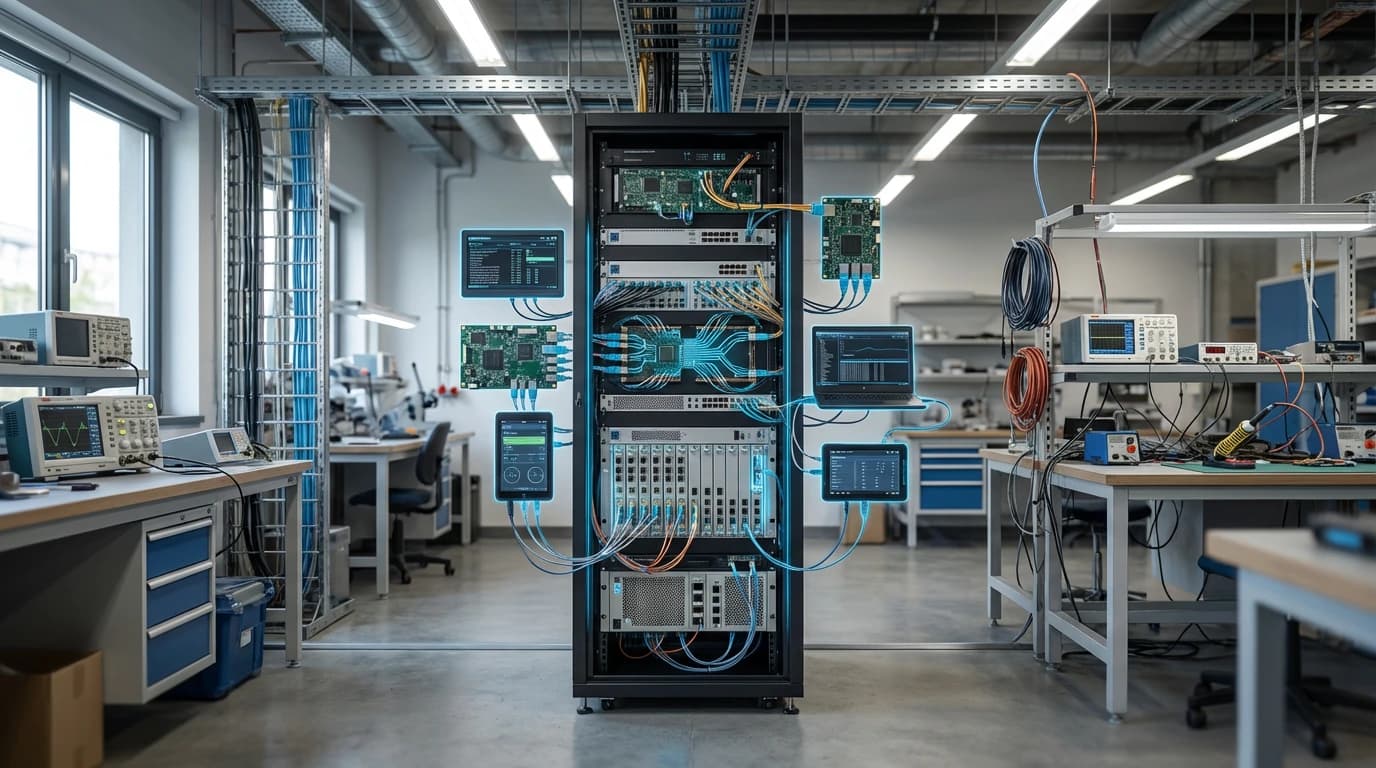
The telecommunications industry has historically operated as a closed ecosystem, where network capabilities remained locked within the infrastructure of major carriers. This created a significant barrier for developers and enterprises seeking to build applications that could leverage network intelligence—such as real-time quality of service adjustments, precise location data, or edge computing resources. Network API Exposure & Programmability addresses this challenge by providing standardized interfaces that expose core network functions to external developers and applications. Through frameworks like CAMARA (an industry initiative for unified telecom APIs), Network Exposure Function (NEF) in 5G architectures, and Service Capability Exposure Function (SCEF) in LTE networks, these interfaces create a bridge between the complex internal workings of telecommunications networks and the application layer. The technical mechanism involves abstracting network capabilities into well-defined API endpoints that developers can call using standard protocols, much like they would interact with cloud services. This abstraction layer handles authentication, authorization, and the translation of high-level requests into network-specific commands.
This approach fundamentally transforms the telecom business model by enabling a new category of network-aware applications without requiring developers to understand the underlying network protocols or own telecommunications infrastructure. Startups and enterprises can now programmatically request network slices with guaranteed bandwidth, discover the nearest edge computing nodes for latency-sensitive applications, or authenticate users through SIM-based verification—all through simple API calls. This democratization of network capabilities addresses long-standing industry challenges around innovation velocity and service differentiation. Traditional telecom operators gain new revenue streams by monetizing their network assets as programmable services, while developers can create applications that were previously impossible or prohibitively expensive. For instance, a video streaming service could dynamically request higher quality of service during peak viewing moments, or an autonomous vehicle application could ensure ultra-low latency connections by programmatically connecting to edge computing resources along a route.
Early commercial deployments of these standardized APIs are already emerging across multiple markets, with telecom operators beginning to expose capabilities through developer portals and partnerships with cloud providers. Use cases span industries from gaming and entertainment, where real-time QoS adjustments enhance user experience, to industrial IoT, where edge discovery APIs enable factory automation systems to maintain reliable connectivity. The automotive sector is exploring these interfaces for vehicle-to-everything (V2X) communications, while healthcare providers are investigating how network APIs could support remote surgery applications requiring guaranteed low latency. This trend aligns with the broader movement toward network-as-a-service models and the convergence of telecommunications with cloud computing. As 5G networks mature and standardization efforts like CAMARA gain industry-wide adoption, the programmability of network functions is expected to become a fundamental expectation rather than a differentiator, potentially reshaping competitive dynamics in both the telecom and application development sectors.

GSMA
United Kingdom · Consortium
The industry organization for mobile operators, which runs the 'Connected Women' and 'Mobile for Development' programs supporting m-learning.
Nonprofit consortium fostering open source innovation.
A leading operator in the API space, launching the 'MagentaBusiness API' portal to expose network functions to developers.
Global communications platform that has signed agreements with major telcos to expose CAMARA-compliant network APIs.
Telecommunications giant developing the connectivity layer (5G, IoT) required to track π-containers in a Physical Internet system.
Leading CPaaS provider that is integrating network-level APIs (like Silent Authentication) into its developer platform.
A partnership of 34 mobile operators in Asia-Pacific/Middle East/Africa, launching a regional API exchange (BAEx).
Offers Vertex AI NAS, a managed service for automating the design of neural network architectures.
Published forecasts about this technology, graded against what happened in Hindsight.
APIs and the API economy
This page is a narrower case of it.
Signals turns a topic into a sourced research record you can inspect and rerun. Your first scan is free, and this one starts with Network API Exposure & Programmability already loaded, so edit it or scan as is.