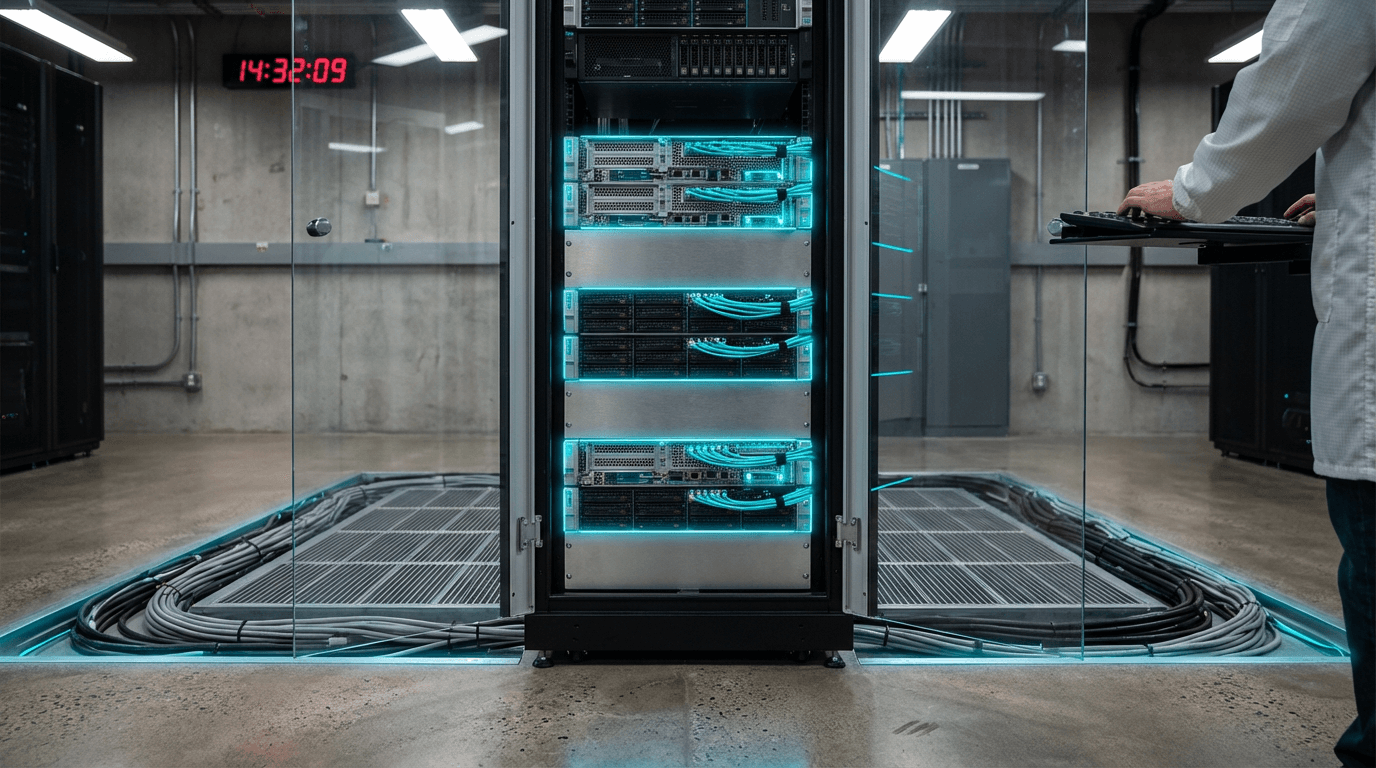
Secure Network Slicing Isolation
Network slicing represents one of the most significant architectural innovations in modern telecommunications, enabling a single physical network infrastructure to support multiple independent virtual networks, each tailored to specific service requirements. However, this multiplexing of diverse services—ranging from autonomous vehicle coordination to industrial automation and public safety communications—introduces critical security challenges. The fundamental problem is ensuring that these virtual slices remain truly isolated despite sharing the same underlying hardware, preventing scenarios where a compromised slice could affect others or where resource contention in one slice degrades performance in another. Secure network slicing isolation addresses this challenge through a combination of cryptographic techniques, hardware-based security features, and rigorous verification methods. At the technical level, this involves implementing strong logical boundaries between slices using technologies such as trusted execution environments, hardware security modules, and network function virtualization with mandatory access controls. These mechanisms work together to create what security researchers call "hard isolation"—guarantees that are mathematically verifiable rather than merely probabilistic. The architecture typically incorporates multiple layers of defense, including encrypted inter-slice communications, dedicated resource pools for critical services, and continuous monitoring systems that can detect and respond to isolation breaches in real time.
For telecommunications operators and enterprise customers, secure network slicing isolation solves several pressing business challenges. It enables operators to offer differentiated service guarantees to customers with vastly different security and performance requirements without building separate physical networks for each use case. This is particularly crucial for mission-critical applications where service disruption could have severe consequences—emergency response communications cannot be degraded by congestion from consumer video streaming, and industrial control systems cannot be vulnerable to attacks originating from compromised consumer devices on the same infrastructure. The technology also addresses regulatory compliance requirements in sectors like healthcare and finance, where data isolation is mandated by law. By providing verifiable isolation guarantees, operators can confidently serve multiple tenants, including direct competitors, on shared infrastructure while maintaining contractual service level agreements. This capability fundamentally changes the economics of network deployment, allowing operators to monetize their infrastructure more effectively while reducing capital expenditure.
Early deployments of secure network slicing are already underway in advanced 5G networks, particularly in scenarios involving public safety organizations and industrial partners. Research initiatives are exploring formal verification methods that can mathematically prove isolation properties, moving beyond traditional testing approaches that can only demonstrate the absence of known vulnerabilities. Industry analysts note that as 6G development accelerates, isolation mechanisms are being designed into the architecture from the ground up rather than added as afterthoughts. The technology is also converging with zero-trust security models and confidential computing paradigms, creating defense-in-depth strategies that assume breaches will occur and design systems to contain their impact. As critical infrastructure increasingly relies on shared telecommunications networks, and as the Internet of Things expands to include billions of connected devices with varying security profiles, the importance of provably secure isolation will only grow. This positions secure network slicing isolation as a foundational technology for the next generation of telecommunications infrastructure, enabling the vision of truly programmable networks that can safely support everything from consumer entertainment to life-critical emergency services on a common platform.
Related Organizations

The 3rd Generation Partnership Project unites telecommunications standard development organizations.


Multinational telecommunications, information technology, and consumer electronics company.

European standards organization that launched the Industry Specification Group on Reconfigurable Intelligent Surfaces (ISG RIS).

Provides cloud-native network software and Open RAN solutions for both public and private 5G networks.

Provides a software-based mobile core network specifically designed for private LTE and 5G deployments.

Provides a fully programmable and automated cloud-native edge center networking software solution, including a P4-based 5G UPF.

Provides physical, virtual, and cloud-native broadband and wireless infrastructure.

Global leader in broad, integrated, and automated cybersecurity solutions.

Offers Cortex XSIAM, an autonomous security operations platform driven by AI.

Through its subsidiary CTOne, provides specialized security for private 5G networks using AI to detect anomalies in industrial protocols.
Supporting Evidence
Research this in Signals
Signals turns a topic into a sourced research record you can inspect and rerun. Your first scan is free, and this one starts with Secure Network Slicing Isolation already loaded, so edit it or scan as is.