Next-generation methods for predicting future values in time-dependent data, critical for demand forecasting, financial modeling, and operations.
Autonomous systems capable of planning and coordinating multi-step goals.
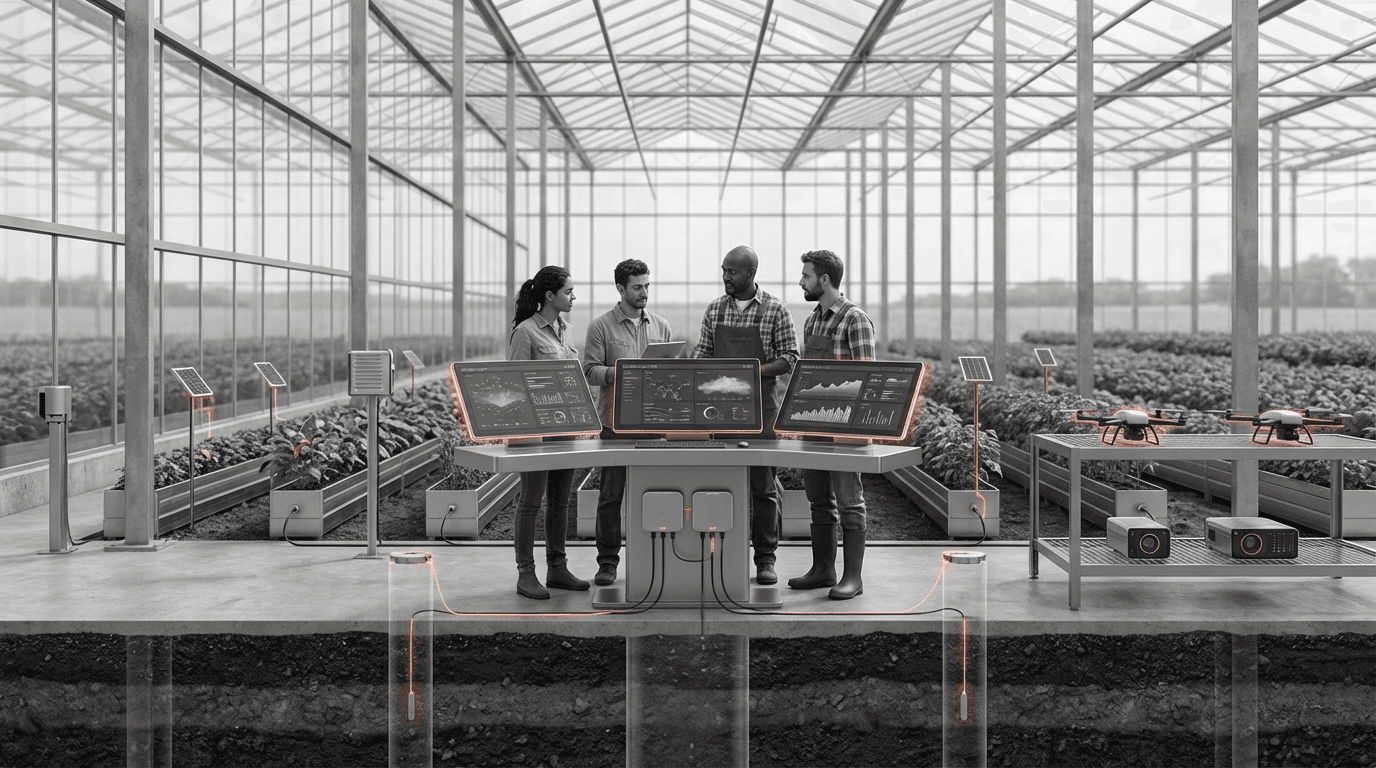
Optimizing farming through soil, weather, and crop health sensor data.
Core enabler of automation and innovation through machine learning and advanced analytical techniques.
Analyzing how AI systems influence and are influenced by behavioral patterns in social, economic, and communication networks.
AI-powered programming assistants that generate, analyze, and optimize code, transforming software development workflows.
Emerging frameworks addressing algorithmic bias, fairness, and ethical AI deployment across diverse socioeconomic contexts.
The emergence of AI ethics as a competitive differentiator and essential practice for AI startups building responsible technology.
Analyzing the dual nature of AI in education as both a valuable learning ally and a potential facilitator of academic dishonesty.
Using AI to analyze medical images for disease detection, diagnosis, and treatment planning, improving accuracy and efficiency in healthcare.
International cooperation and analytical frameworks for identifying, assessing, and mitigating global risks from advanced AI systems.
Using AI and analytics to improve food safety through smart inspections, contamination detection, and supply chain monitoring.
Frameworks and practices for measuring the business value and return on investment of analytics initiatives.
AI-powered analytics that automates insight discovery, data preparation, and natural language interactions, making analytics more accessible.
Democratizing machine learning by automating model selection, feature engineering, and hyperparameter tuning.
Moving beyond correlation to understand cause-and-effect relationships, enabling more reliable predictions and decision-making.
Using computer vision and image analysis to understand customer behavior, optimize store operations, and enhance retail experiences.
Hardware and software technologies that protect data and analytics workloads in use, enabling secure processing of sensitive information.
Active metadata management enabling data discovery, lineage tracking, and intelligent data asset organization.
Unified logical data layer enabling seamless access and integration across distributed data environments.
Decentralized data architecture enabling domain-oriented data ownership and self-service analytics in large organizations.
Monitoring and understanding data health, quality, and lineage across systems to ensure reliable analytics and prevent data incidents.
Agile automation and real-time monitoring of data health in motion.
Self-service data preparation tools enabling business users to clean, transform, and prepare data without IT dependency.
Treating data assets as products with clear ownership, documentation, and service levels, improving data discoverability and usability.
Treating data as a tailored product with owners, SLAs, and a focus on user needs.
A top global priority driven by professionalized cyber-attacks and strict regulatory requirements.
Regulatory requirements for data storage and processing within national borders, impacting cloud analytics strategies globally.
Measuring and maximizing data's economic worth through services and data ecosystems.
Transforming legacy data warehouse architectures to support modern analytics and cloud-native operations.
Organizational change initiatives to build data-driven decision-making culture, moving from intuition-based to evidence-based approaches.
E-commerce platforms using advanced analytics for product recommendations, dynamic pricing, and personalized shopping experiences.
Real-time analytics at the edge enabling smart agriculture, industrial IoT, and smart city applications.
Integrating insights directly into business apps to close the action loop.
Reclaimed the #1 global position; recognized as the non-negotiable prerequisite for trustworthy AI.
Optimizing energy generation, distribution, and consumption using analytics for smart grids, demand forecasting, and sustainability.
Stable key trend empowering business teams to answer their own questions independently.
Developing frameworks for ethical behavior and decision-making when multiple AI agents interact in autonomous systems.
Techniques and requirements for making AI and analytics models interpretable, enabling understanding of how decisions are made.
Training machine learning models across decentralized data sources without centralizing sensitive information, enabling collaborative analytics.
Regulatory requirements driving advanced analytics for risk management, fraud detection, and regulatory reporting in financial services.
Using mobile and e-commerce transactions to score underserved populations.
Data protection regulations driving new analytics governance frameworks and privacy-preserving data practices across industries.
Lowering technical barriers through natural language interfaces and automated data engineering.
Analyzing massive genomic datasets to understand genetics, advance personalized medicine, and address ethical challenges in genetic data usage.
Analyzing relationships and networks in social media, supply chains, fraud detection, and knowledge graphs.
Balancing healthcare analytics innovation with patient privacy under data protection regulations and medical confidentiality requirements.
Analyzing patient records to predict outbreaks and optimize hospital resource allocation.
Organizations strategically limiting information consumption and filtering noise to improve decision-making quality and competitive advantage.
Measuring, understanding, and managing the cognitive and organizational impacts of excessive information on decision-making and productivity.
Using data analytics for risk assessment, pricing, fraud detection, and claims processing in the insurance industry.
Federated frameworks ensuring transparency and accountability for automated AI agents.
Optimizing transportation networks, delivery routes, and fleet management using analytics to improve efficiency and reduce costs.
Embedding a data mindset as a leadership imperative to drive operational agility.
Data-driven manufacturing using IoT, analytics, and AI to optimize production, predict maintenance, and improve quality.
Cloud-native, modular data infrastructure enabling faster analytics development with best-of-breed tools for ingestion, transformation, and visualization.
Analyzing and integrating multiple data types (text, images, audio, video) to generate richer insights and enable new applications.
Conversational and natural language interfaces that enable users to interact with analytics systems using everyday language instead of technical queries.
Using brain-computer interfaces and neural implants for healthcare applications, including restoring communication and motor function.
Processing data the moment it is created for operational alerts.
The convergence of data and AI to manage decision complexity at scale.
Analyzing sensor data to predict failures before they occur in heavy industry.
Government-developed AI language models designed for public sector applications, addressing sovereignty, transparency, and domain-specific needs.
Government initiatives to improve data governance, transparency, and open data practices across public institutions.
Analyzing and optimizing digital retail experiences, including online shopping, virtual stores, and immersive retail environments.
Regionalized adoption balancing scalability against cost and regulatory concerns.
Equipping employees with the skills to leverage data and AI responsibly in daily work.
Optimizing supply chains using data analytics for demand forecasting, inventory management, logistics optimization, and risk mitigation.
Generating artificial datasets that preserve statistical properties while protecting individual privacy, enabling analytics without exposing sensitive data.
Examining how AI and algorithms are reshaping governance structures, decision-making authority, and power dynamics in organizations and societies.
Optimizing city safety and traffic through integrated city sensor networks.
Follow us for weekly foresight in your inbox.