AI Medical Imaging Diagnostics
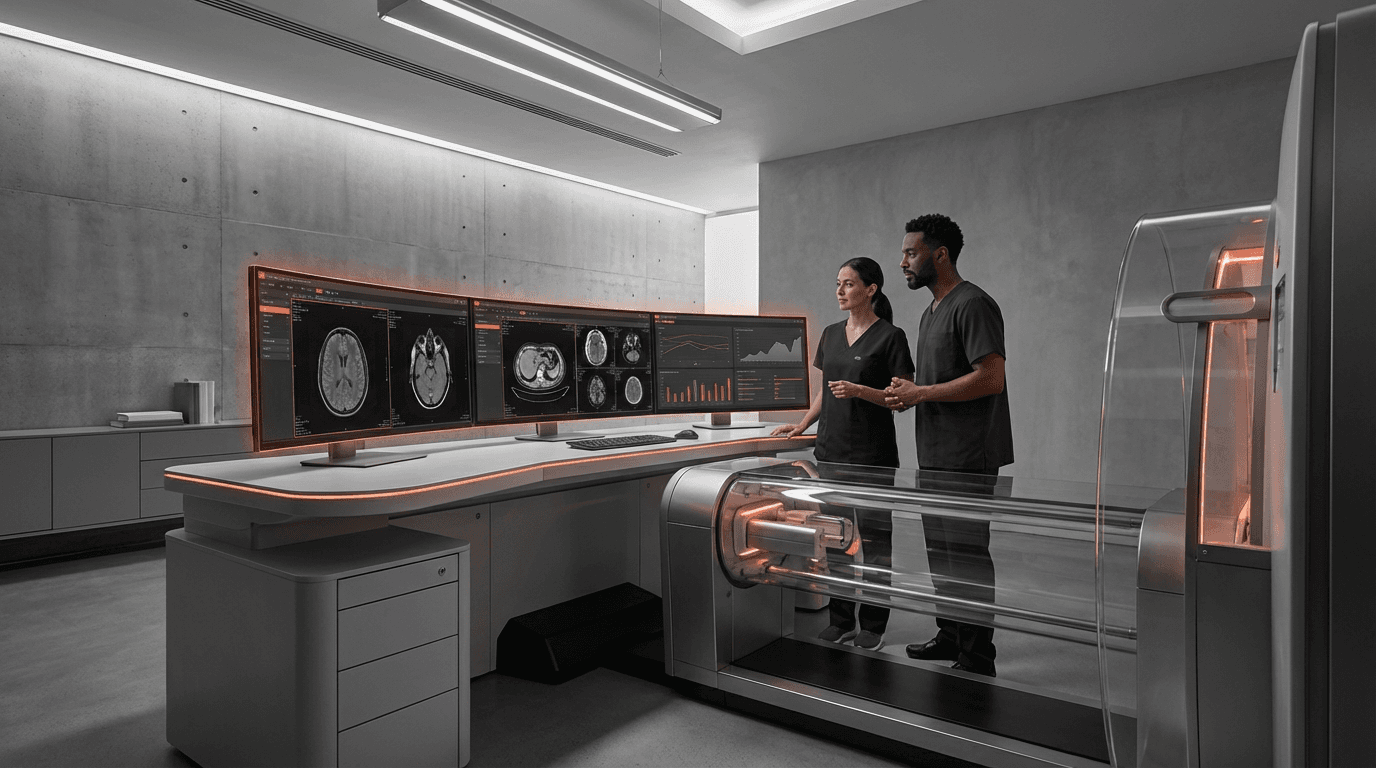
AI medical imaging diagnostics uses machine learning to analyze X-rays, MRIs, CT scans, and other medical images to detect diseases, identify abnormalities, and assist with diagnosis. Systems like AI for breast cancer detection demonstrate how AI can identify conditions that might be missed by human radiologists or detected earlier in disease progression. The technology combines computer vision, deep learning, and medical domain knowledge.
Applications include cancer detection, identifying fractures, detecting eye diseases, and analyzing pathology slides. Healthcare organizations are deploying AI imaging systems to improve diagnostic accuracy, reduce radiologist workload, and enable earlier disease detection. The analytics enables processing large volumes of images quickly, identifying subtle patterns, and providing second opinions to support clinical decision-making.
At the Incremental Innovation to Sustaining Performance stage, AI medical imaging is deployed in healthcare settings globally, with FDA-approved systems in use. The technology is advancing with better accuracy, support for more imaging modalities, and integration with radiology workflows. Challenges include ensuring AI doesn't miss rare conditions, maintaining radiologist skills, and addressing regulatory and liability questions.
Related Organizations

Develops AI solutions for radiologists that flag acute abnormalities in medical scans (CT, etc.) to prioritize life-threatening cases.
Uses AI to detect suspected strokes in brain imaging and synchronize care teams for rapid intervention.
Uses CT scan data to create a digital model of coronary arteries and simulate blood flow (FFRct) to diagnose heart disease.

A South Korean medical AI company specializing in cancer diagnostics through deep learning analysis of chest X-rays and mammography.

Develops AI-powered research tools and services for pathology to improve the accuracy of diagnosis and treatment.
Provides AI solutions for interpreting chest X-rays and head CT scans, with a focus on tuberculosis screening and emergency care.
A major medical technology company offering 'AI-Rad Companion', a family of AI-powered, cloud-based augmented workflow solutions.

Develops 'Mia', an AI solution for breast cancer screening that acts as an independent second reader for radiologists.

Harrison.ai
Australia · Startup
An Australian clinician-led technology company developing AI diagnostic tools for IVF and Radiology (Annalise.ai).
A Chinese high-tech enterprise using deep learning to assist medical image diagnosis, particularly in chest CTs.
Supporting Evidence
Research this in Signals
Signals turns a topic into a sourced research record you can inspect and rerun. Your first scan is free, and this one starts with AI Medical Imaging Diagnostics already loaded, so edit it or scan as is.