AgTech Precision Analytics
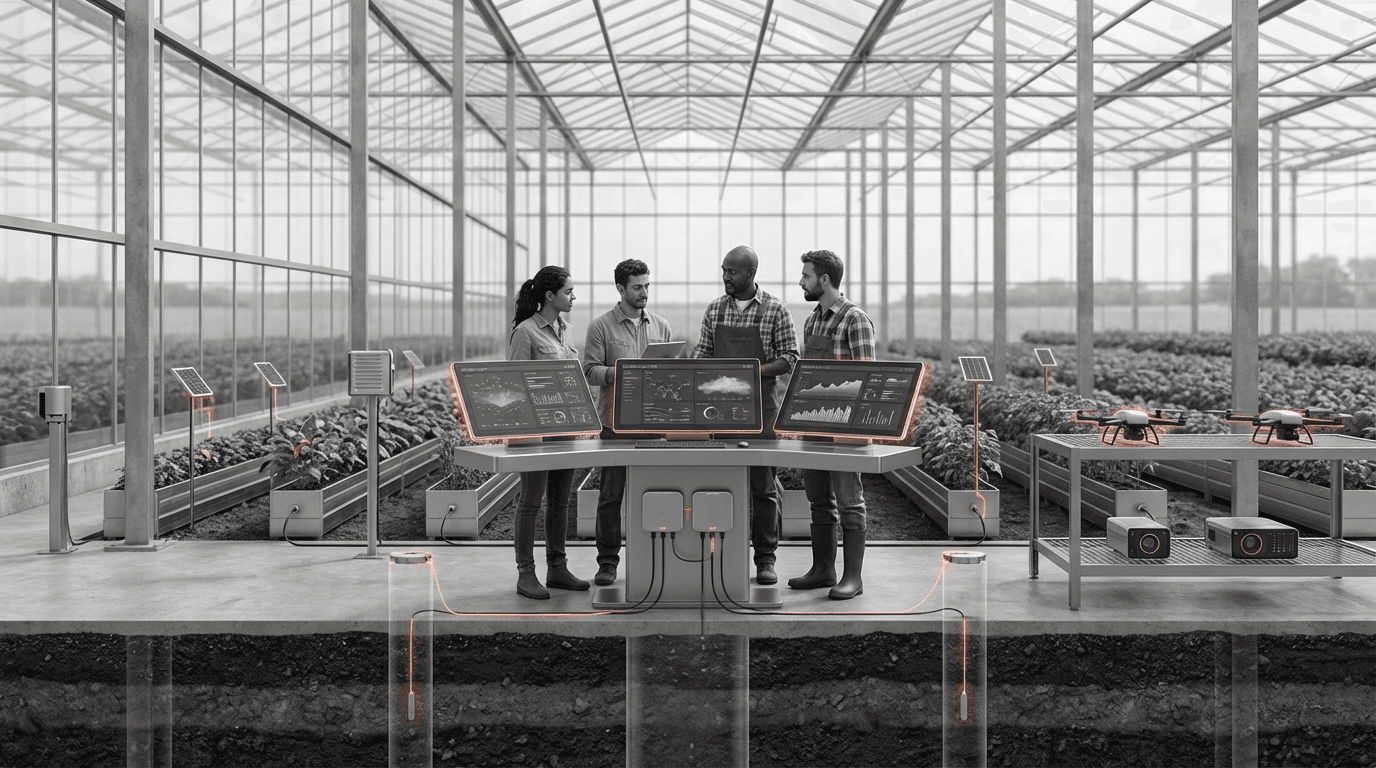
Agriculture faces mounting pressures from climate variability, resource scarcity, and the imperative to feed a growing global population while minimizing environmental impact. Traditional farming methods, which often rely on uniform treatment of entire fields and historical intuition, struggle to address the heterogeneity of soil conditions, microclimates, and crop health variations that exist even within small parcels of land. AgTech precision analytics addresses these challenges by transforming raw data from diverse sources into actionable intelligence that enables farmers to treat each section of their fields according to its specific needs. The technology operates by integrating streams of information from soil moisture sensors embedded throughout fields, weather stations that track localized conditions, drone-mounted multispectral cameras that assess plant health through leaf reflectance patterns, and satellite imagery that monitors vegetation indices across entire growing seasons. Machine learning algorithms process this multi-layered data to identify patterns invisible to human observation, such as early signs of nutrient deficiency, pest pressure, or water stress that manifest in subtle changes to crop canopy characteristics.
The agricultural sector has historically operated with significant inefficiencies, applying fertilizers, pesticides, and water uniformly across fields despite vast differences in actual need from one area to another. This approach not only wastes expensive inputs but also contributes to environmental degradation through nutrient runoff and excessive water consumption. Precision analytics fundamentally transforms this paradigm by enabling variable rate application technologies that adjust input delivery in real-time based on precise location data. Research suggests that farmers adopting these systems can reduce fertilizer usage by fifteen to twenty percent while maintaining or improving yields, translating to substantial cost savings and reduced environmental footprint. The technology also addresses the challenge of optimal timing for critical farming operations—analytics platforms can predict narrow windows when soil conditions are ideal for planting or when crop maturity indicators suggest harvest readiness, helping farmers avoid costly delays or premature actions. Furthermore, by creating detailed digital records of field performance over multiple seasons, these systems enable continuous improvement through data-driven experimentation with different crop varieties, planting densities, and management practices.
Commercial adoption of precision analytics has accelerated significantly in recent years, moving beyond early pilot programs to become standard practice among progressive farming operations across major agricultural regions. Large-scale grain producers in North America and Europe have integrated these systems into their operational workflows, while the technology is increasingly accessible to smaller operations through cloud-based platforms that reduce upfront infrastructure costs. Current deployments demonstrate particular value in high-value crops where input optimization directly impacts profitability, as well as in water-scarce regions where irrigation efficiency can determine farming viability. The technology connects to broader trends in agricultural digitalization, including autonomous machinery that executes precision recommendations without human intervention and blockchain-based traceability systems that document sustainable farming practices for increasingly conscious consumers. As climate patterns become less predictable and regulatory pressure around agricultural environmental impact intensifies, precision analytics positions itself not as an optional enhancement but as an essential infrastructure for the future of farming, enabling the sector to meet productivity demands while transitioning toward regenerative practices that restore rather than deplete natural resources.
Related Organizations
A global machinery giant that operates the Operations Center, one of the largest repositories of agronomic and machine data in the world.

A subsidiary of Bayer, providing the Climate FieldView platform which helps farmers analyze data to maximize yield.

Uses sub-millimeter aerial imagery and AI to detect crop diseases and pests at leaf-level resolution.

A precision agriculture platform for permanent crops that deploys sensor networks (including camera/trap modules) to monitor pests.

Develops Tekla Structures, a leading BIM software for structural engineering and steel detailing, along with hardware for connecting BIM to the field.

Creator of the Arable Mark, an in-field device that collects weather, plant health, and soil moisture data simultaneously.

Provides a digital agriculture platform combining field-centric data, easy-to-use software, and state-of-the-art processing technology.

Utilizes hyperspectral imaging and AI to detect crop stress and disease before it is visible to the human eye.

Improves grower profitability and environmental sustainability using microbiology and digital technologies.

Sentera
United States · Company
Delivers time-sensitive agricultural insights via drones, sensors, and analytics software.
Supporting Evidence
Research this in Signals
Signals turns a topic into a sourced research record you can inspect and rerun. Your first scan is free, and this one starts with AgTech Precision Analytics already loaded, so edit it or scan as is.