Urban Digital Twins
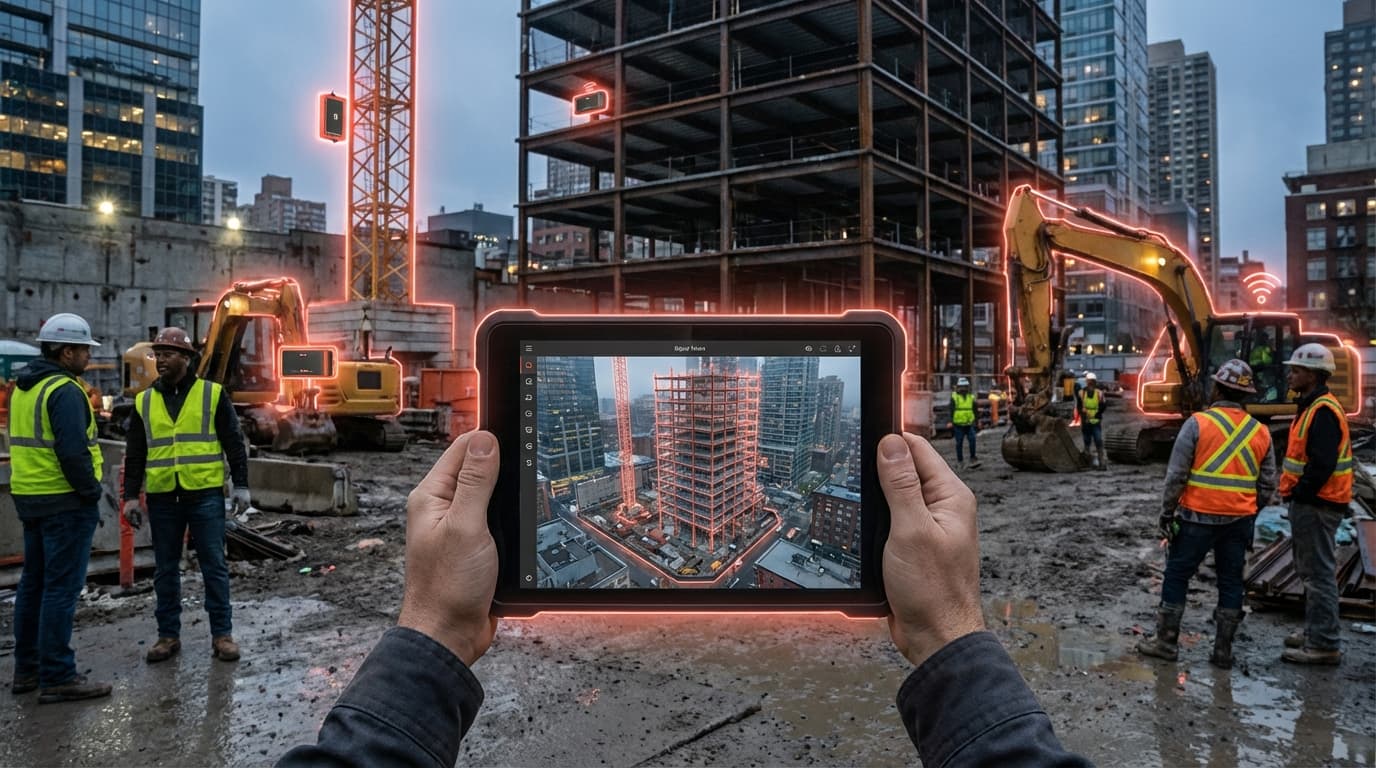
Urban Digital Twins represent a convergence of sensor networks, 3D modeling, and real-time data analytics to create living digital replicas of physical construction sites and urban environments. Unlike static architectural models or traditional building information modeling (BIM), these systems continuously ingest data from Internet of Things (IoT) sensors, drones, laser scanners, and other monitoring devices embedded throughout a physical space. This constant data flow enables the digital twin to reflect current conditions—from structural stress and material temperatures to worker locations and equipment status—creating a synchronized virtual counterpart that evolves alongside its physical twin. The underlying architecture typically combines cloud computing infrastructure for data processing with advanced visualization engines that render complex 3D environments accessible through standard web browsers or immersive virtual reality interfaces.
The construction industry faces persistent challenges around cost overruns, schedule delays, and safety incidents, many of which stem from insufficient visibility into project status and limited ability to anticipate problems before they manifest physically. Urban Digital Twins address these issues by enabling stakeholders to simulate construction sequences, test logistics scenarios, and identify potential conflicts or structural concerns in the virtual environment before committing resources to physical execution. This predictive capability extends beyond individual projects to entire city districts, where municipal planners can model the impact of new developments on traffic patterns, utility loads, and environmental conditions. The technology also facilitates unprecedented coordination among the fragmented stakeholders typical in construction—architects, engineers, contractors, and building owners can all access a shared, authoritative representation of project status, reducing miscommunication and rework that plague traditional workflows.
Early deployments in major infrastructure projects and smart city initiatives demonstrate the technology's practical value, with construction firms reporting improved safety outcomes through virtual hazard identification and municipalities using district-scale twins to optimize maintenance schedules and emergency response planning. The technology shows particular promise in retrofitting existing urban infrastructure, where digital twins help building owners understand aging systems and plan interventions with minimal disruption. As sensor costs decline and 5G networks enable faster data transmission, the granularity and responsiveness of these digital replicas continue to improve. This trajectory aligns with broader industry movements toward data-driven construction management and the development of smart cities that can adapt dynamically to changing conditions, positioning Urban Digital Twins as foundational infrastructure for the next generation of urban development and building lifecycle management.
Related Organizations


Cityzenith
United States · Startup
Develops the SmartWorldOS digital twin platform for cities and large building portfolios.

Software corporation specializing in 3D design and digital mock-ups.


Hexagon AB
Sweden · Company
A global leader in sensor, software, and autonomous solutions, providing reality capture for digital twins.

Global leader in GIS software (ArcGIS), providing the spatial analytics layer used by thousands of local governments for urban planning and policy.

Provides 3D digital twins of cities to assist in the planning application and assessment process.


Developing foundation models for robotics (Project GR00T) and vision-language models like VILA.

The agency behind 'Virtual Singapore', one of the world's most advanced 3D city model projects.
Supporting Evidence
Research this in Signals
Signals turns a topic into a sourced research record you can inspect and rerun. Your first scan is free, and this one starts with Urban Digital Twins already loaded, so edit it or scan as is.