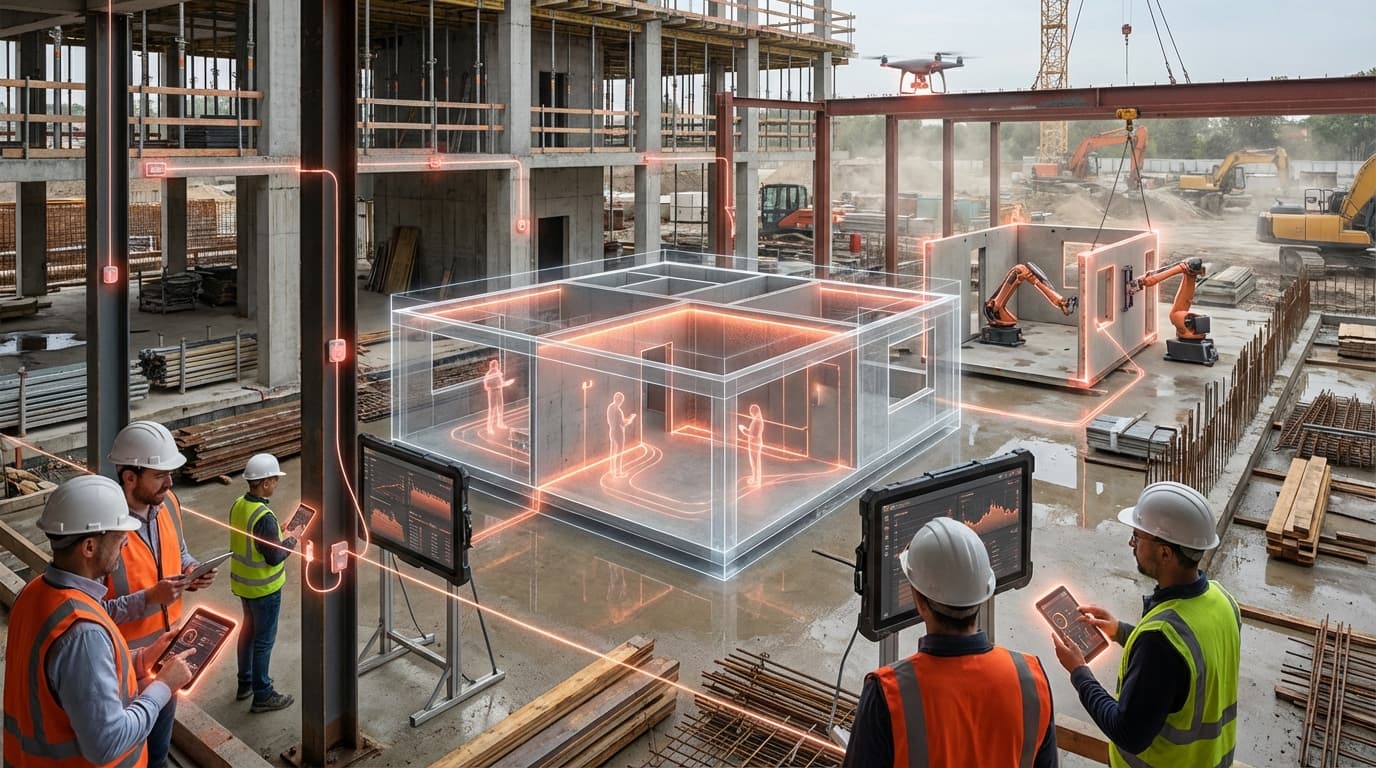
Cognitive Digital Twins (Neuro-Architecture)
Cognitive Digital Twins in neuro-architecture represent a convergence of neuroscience, environmental psychology, and advanced simulation technology to predict how built environments will affect human cognition and emotional states. This approach extends traditional digital twin technology—which creates virtual replicas of physical structures—by incorporating biometric data, neuroscientific research, and behavioral modeling to simulate how occupants will actually experience a space before a single brick is laid. The system integrates data from electroencephalography (EEG), eye-tracking studies, heart rate variability measurements, and other physiological indicators collected from test subjects exposed to virtual environments. These inputs feed machine learning algorithms that can predict stress responses, attention patterns, wayfinding behaviors, and emotional reactions to specific architectural features such as ceiling heights, natural light exposure, spatial layouts, and material choices.
The construction industry has long grappled with the disconnect between design intentions and actual occupant wellbeing, often discovering problematic spaces only after buildings are occupied and modifications become prohibitively expensive. Research suggests that poorly designed environments contribute to workplace stress, reduced productivity, and even long-term health issues, yet traditional design processes rely heavily on aesthetic judgment and building codes that prioritize safety and efficiency over psychological impact. Cognitive Digital Twins address this gap by enabling architects and developers to test multiple design iterations virtually, identifying which configurations promote focus in office environments, reduce anxiety in healthcare settings, or enhance learning in educational facilities. This capability transforms architecture from an art guided primarily by experience and intuition into a more evidence-based practice where design decisions can be validated against predicted human responses. Early deployments indicate that this approach can help justify investments in features like biophilic design elements, optimized acoustic treatments, and circadian lighting systems by quantifying their expected impact on occupant wellbeing and performance.
Pilot programs in healthcare facility design and corporate office development have begun incorporating these simulation tools into their planning processes, though widespread adoption remains limited by the need for extensive baseline data and validation studies. The technology shows particular promise for environments where occupant mental state directly impacts outcomes—hospitals where patient recovery rates correlate with environmental factors, schools where spatial design affects learning, and workplaces where cognitive performance drives productivity. As urban populations spend increasing amounts of time indoors and awareness of mental health challenges grows, the ability to design spaces that actively support psychological wellbeing becomes increasingly valuable. This approach aligns with broader industry trends toward human-centric design and the growing recognition that buildings should be optimized not just for energy efficiency or structural performance, but for the humans who inhabit them. The integration of cognitive simulation into the design process represents a fundamental shift toward creating built environments that are measurably better for human flourishing.
Related Organizations

Promotes and advances knowledge that links neuroscience research to a growing understanding of human responses to the built environment.

Nonprofit dedicated to understanding the human experience of the built environment.

Home of the Affective Computing research group led by Rosalind Picard.

International architecture and design firm.


PLP Architecture
United Kingdom · Company
London-based architecture firm known for smart buildings.

Global architecture firm collaborating with ESA and NASA on lunar habitation concepts involving 3D printing with regolith.

Developers of Unreal Engine 5, which features Lumen, a fully dynamic global illumination and reflection system designed for next-gen consoles and PC.

Developer of V-Ray and Corona Renderer, integrating AI denoising and upscaling to drastically reduce render times for architectural and VFX visualization.

An international property and infrastructure group that has pioneered the construction of commercial timber office buildings.
Supporting Evidence
Research this in Signals
Signals turns a topic into a sourced research record you can inspect and rerun. Your first scan is free, and this one starts with Cognitive Digital Twins (Neuro-Architecture) already loaded, so edit it or scan as is.