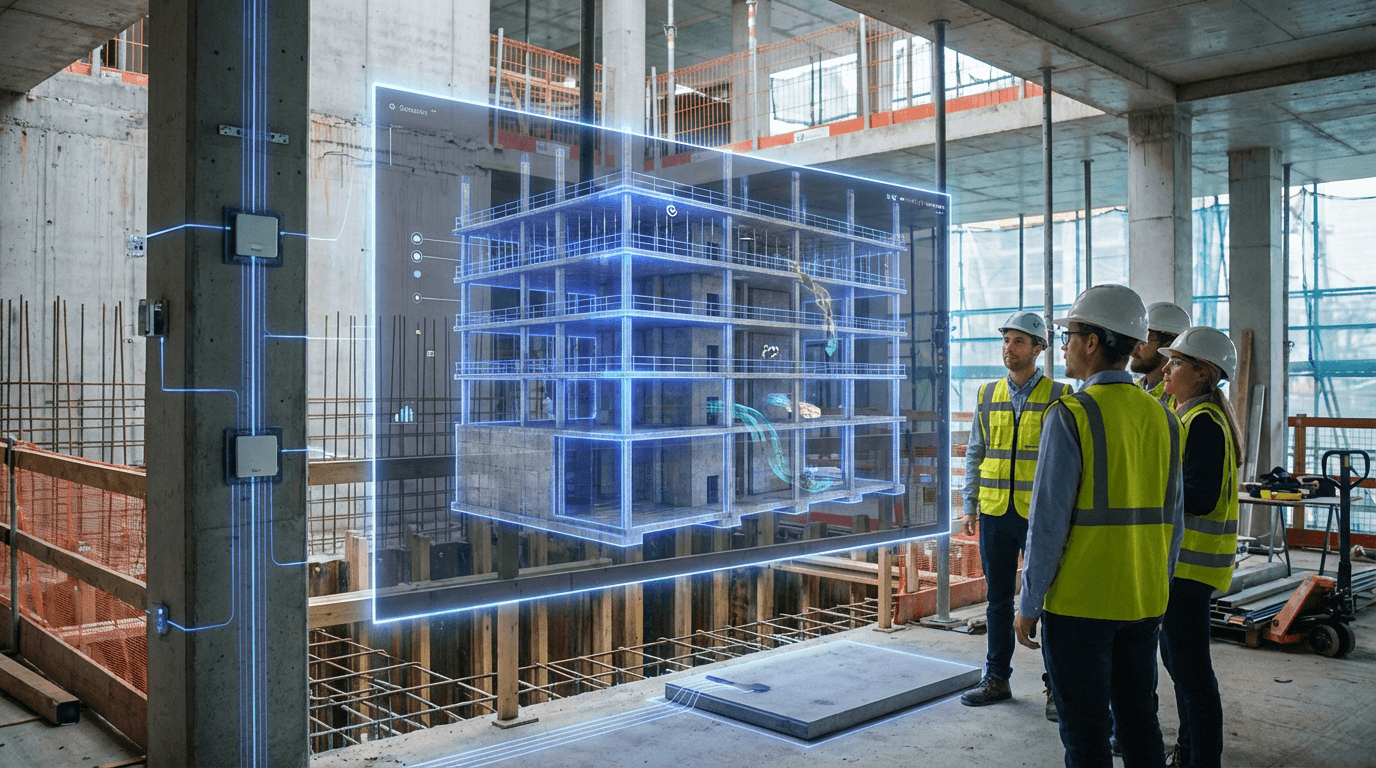
Construction Digital Twins
Construction Digital Twins represent a fundamental shift in how large-scale building projects are monitored, coordinated, and optimized throughout their execution phase. Unlike static building information models (BIM) that serve primarily as design references, these systems create dynamic, data-rich replicas of active construction sites by continuously ingesting information from multiple sources—including drone surveys, IoT sensors on equipment and materials, worker location trackers, weather stations, and real-time schedule updates from project management software. The underlying architecture combines 3D geometric models with live telemetry streams, enabling the digital twin to reflect current site conditions with remarkable fidelity. Advanced platforms employ physics-based simulation engines that can model structural loads, material curing times, equipment movement patterns, and environmental factors, transforming the twin from a passive visualization into an active decision-support environment where proposed changes can be tested virtually before committing resources on the ground.
The construction industry has long struggled with cost overruns, schedule delays, and safety incidents that stem from poor coordination among the dozens of specialized trades working simultaneously on complex projects. Traditional methods rely on weekly progress meetings, paper-based punch lists, and reactive problem-solving that often discovers conflicts only after expensive rework becomes necessary. Construction Digital Twins address these challenges by providing all stakeholders—general contractors, subcontractors, suppliers, engineers, and safety managers—with a shared, continuously updated view of project status. When a structural steel delivery is delayed or a concrete pour must be rescheduled due to weather, the twin can immediately recalculate downstream impacts on electrical rough-in, HVAC installation, and inspection milestones. This capability enables proactive replanning rather than crisis management. The technology also enhances safety oversight by identifying congestion zones where multiple crews will operate in close proximity, flagging fall hazards created by temporary conditions, and ensuring that heavy equipment paths remain clear of personnel.
Early deployments on large infrastructure projects and commercial developments indicate substantial reductions in schedule variance and material waste, with some implementations reporting double-digit percentage improvements in labor productivity. General contractors are beginning to incorporate digital twin capabilities into bid proposals for complex projects where coordination risk is high, such as hospital expansions that must maintain operations during construction or urban high-rises with constrained staging areas. The technology is particularly valuable in modular and prefabricated construction workflows, where off-site manufacturing schedules must synchronize precisely with on-site assembly sequences. As sensor costs decline and 5G connectivity reaches more job sites, the granularity and responsiveness of construction digital twins will continue to improve, positioning them as standard practice for projects above a certain complexity threshold and contributing to the broader digital transformation of an industry that has historically lagged other sectors in technology adoption.
Related Organizations

A partnership between the University of Cambridge and the UK government.


An international property and infrastructure group that has pioneered the construction of commercial timber office buildings.

Spatial data company that integrated mobile LiDAR support into their capture app, democratizing real estate digital twins.

An ESG-first digital twin platform that tracks and optimizes building performance, energy, and waste management using real-time data.

Software corporation specializing in 3D design and digital mock-ups.

Provides the Intelligent Communities Lifecycle (ICL) digital twin technology for energy efficient city planning.

A leading vendor of software for the AEC industry, owning major BIM brands like Graphisoft (Archicad), Allplan, and Vectorworks.

Industrial giant offering the 'Senseye Predictive Maintenance' suite and MindSphere IoT platform.
Supporting Evidence
Research this in Signals
Signals turns a topic into a sourced research record you can inspect and rerun. Your first scan is free, and this one starts with Construction Digital Twins already loaded, so edit it or scan as is.