Digital Twin Platforms
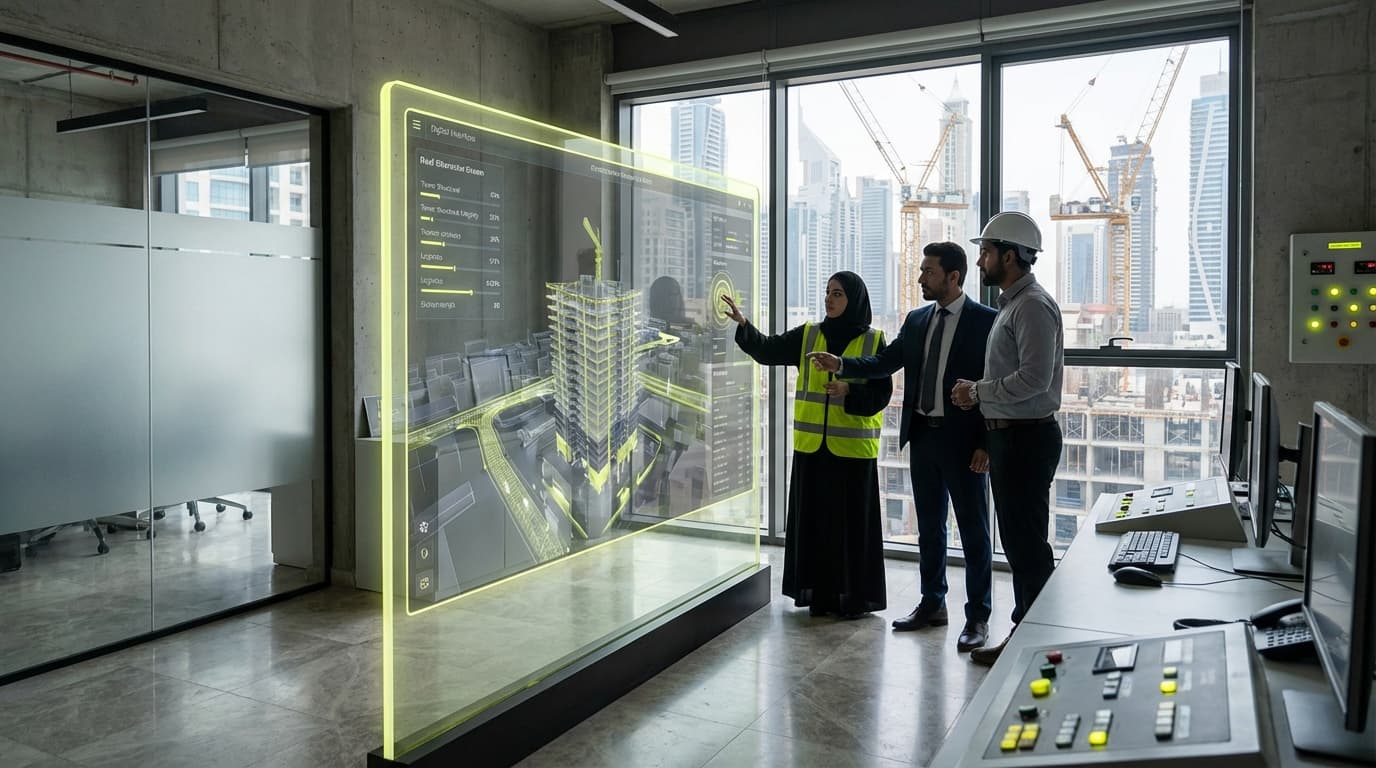
Digital twin platforms address a fundamental challenge in urban management: the inability to test decisions, predict outcomes, or understand complex system interactions before committing resources in the physical world. As Gulf cities pursue ambitious smart city visions and grapple with rapid development pressures, the gap between planning intentions and operational reality has widened. Traditional urban management relies on historical data and static models that cannot capture the dynamic, interconnected nature of modern cities. Digital twins offer a solution by creating continuously updated virtual replicas of physical environments—from individual buildings to entire urban districts—that mirror real-world conditions in real time and enable scenario testing, optimization, and predictive intervention before problems emerge in the built environment.
The technology works by integrating multiple data streams into a unified virtual model. Building Information Modeling (BIM) data from construction provides the geometric foundation, while Internet of Things sensors, building management systems, traffic monitors, and utility networks feed operational data into the platform. Machine learning algorithms process this information to simulate system behaviors, predict maintenance needs, and model the cascading effects of proposed changes. Singapore's Virtual Singapore platform demonstrated early viability, creating a dynamic 3D city model that planners use to test everything from pedestrian flow to solar panel placement. This success inspired Gulf initiatives, with Dubai's digital twin supporting development review processes and NEOM positioning virtual modeling as core infrastructure from inception. Industry analysts note growing adoption beyond showcase projects, with developers using building-scale twins to optimize energy performance and municipalities testing traffic interventions before physical implementation. The pattern suggests movement from experimental visualization tools toward operational decision-support systems, though deployment remains concentrated in well-resourced jurisdictions with strong technical capacity.
The implications for Gulf urban development are substantial but uneven. Digital twins could accelerate the region's transition from construction-focused growth to performance-oriented management, enabling cities to optimize existing infrastructure rather than continually building new capacity. For developers, the technology promises reduced operational costs through predictive maintenance and energy optimization, potentially shifting business models toward long-term asset performance. However, realizing these benefits requires overcoming significant integration challenges—connecting proprietary building systems, legacy infrastructure, and fragmented data sources into coherent platforms. Governance questions around data ownership, access rights, and privacy protections remain largely unresolved, particularly for platforms spanning public and private assets. Critical monitoring points include the emergence of standardized data protocols that reduce integration costs, policy frameworks defining digital twin governance, and evidence of operational savings that justify platform investments beyond prestige projects. The technology's trajectory will likely depend less on technical capability than on institutional capacity to manage complex data ecosystems and translate simulation insights into coordinated action.
Related Organizations

A G42 company leading the TXAI initiative, the first fleet of autonomous taxis deployed in Abu Dhabi.


A region in northwest Saudi Arabia being built as a living laboratory for future technologies.

Software corporation specializing in 3D design and digital mock-ups.

Global leader in GIS software (ArcGIS), providing the spatial analytics layer used by thousands of local governments for urban planning and policy.
Cityzenith
United States · Startup
Develops the SmartWorldOS digital twin platform for cities and large building portfolios.

Provides the Intelligent Communities Lifecycle (ICL) digital twin technology for energy efficient city planning.

Multidisciplinary urban planning and design consultancy with strong GIS/Digital Twin integration capabilities.

Developing foundation models for robotics (Project GR00T) and vision-language models like VILA.


Spatial data company that integrated mobile LiDAR support into their capture app, democratizing real estate digital twins.