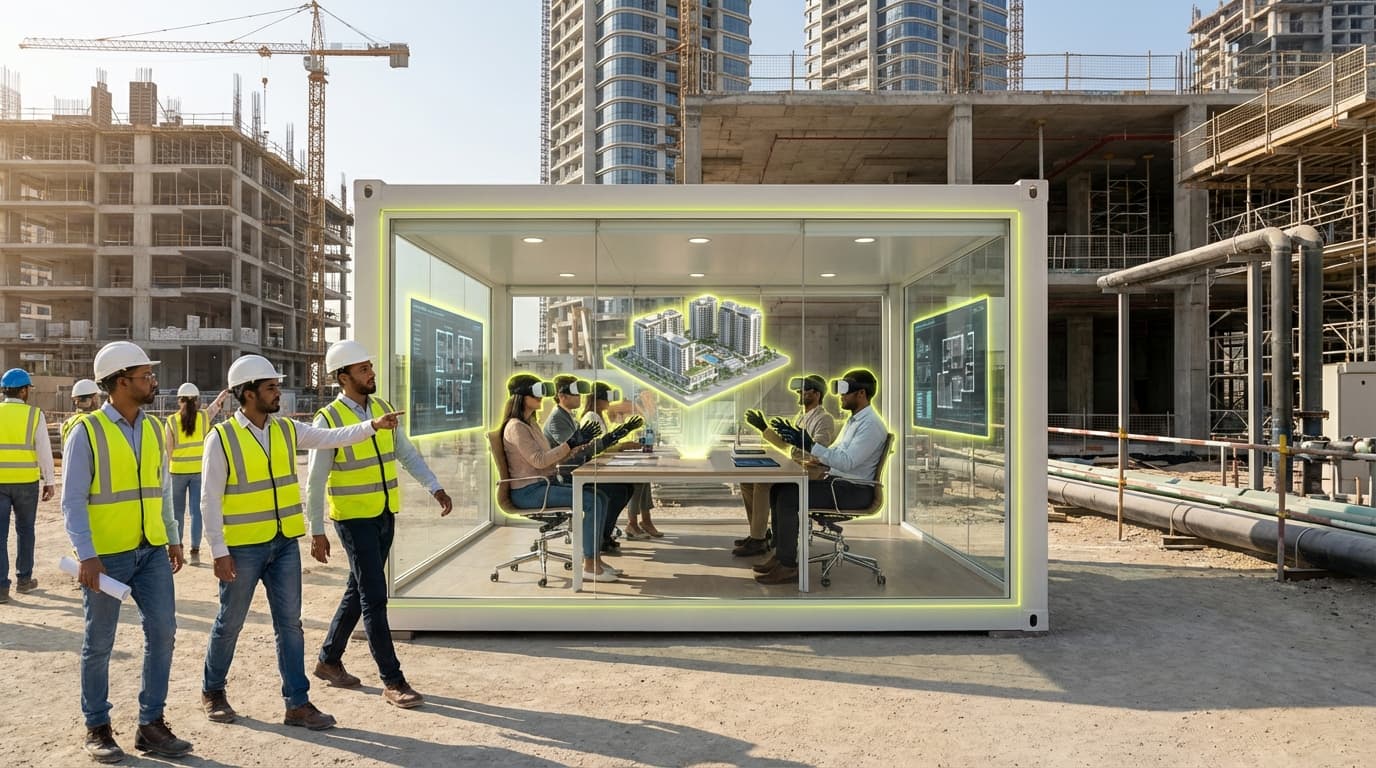
Immersive Off-Plan Sales (Metaverse/VR)
The Gulf's real estate sector has long relied on off-plan sales—marketing properties years before construction completes—to finance mega-developments and attract international capital. Traditionally, this model required physical sales centers, scale models, and investor site visits, creating friction for overseas buyers and limiting the geographic reach of marketing campaigns. Immersive off-plan sales technologies address this structural challenge by deploying virtual reality headsets, augmented reality applications, and persistent metaverse environments to create fully interactive digital representations of unbuilt properties. This shift matters because it fundamentally alters the economics and geography of real estate investment: developers can now reach global capital pools without the overhead of international roadshows or maintaining expensive physical showrooms across multiple cities. For GCC nations pursuing ambitious urbanization agendas—from Saudi Arabia's NEOM to Dubai's new waterfront districts—the ability to convert digital engagement into binding purchase commitments represents a critical competitive advantage in attracting foreign direct investment.
Early deployments indicate this is moving beyond experimental marketing toward core sales infrastructure. Major developers in Dubai and Riyadh now routinely offer VR walkthroughs that allow prospective buyers to navigate apartment layouts, adjust finishes in real time, and experience simulated views from balconies that won't exist for three years. Some platforms integrate live video feeds from construction sites, overlaying planned interiors onto current build progress. Industry analysts note that metaverse showrooms—persistent virtual spaces where multiple buyers can tour properties simultaneously with remote sales agents—are gaining traction among developers targeting Asian and European investors. The pattern suggests a transition from physical-first sales models to digital-native approaches, though adoption remains uneven: high-value luxury segments show stronger uptake than mid-market developments, and regulatory frameworks around virtual contracts and deposits are still evolving across GCC jurisdictions.
The implications extend beyond sales efficiency to reshape how capital flows into regional real estate. If immersive technologies successfully reduce buyer hesitation and compress decision timelines, developers may accelerate project launches and reduce reliance on local investor bases. This could amplify market volatility if digital hype outpaces delivery, or conversely, democratize access to Gulf property markets for smaller international investors previously excluded by travel costs. Monitoring points include: adoption rates among Tier 2 developers (not just flagship projects), regulatory clarity on virtual sales contracts, and whether conversion rates from virtual tours to deposits match or exceed traditional methods. Watch also for integration with tokenization platforms—if immersive experiences combine with blockchain-based fractional ownership, the Gulf's off-plan model could export globally as a standardized digital product rather than a regional sales practice.
Related Organizations

Creators of photorealistic metaverse ecosystems, partnering with the Sharjah government to create 'Sharjahverse' for tourism and real estate.
DAMAC Properties
United Arab Emirates · Company
A major luxury real estate developer in the Middle East that utilizes the 'DAMAC Living' app for community management.

One of the largest real estate developers in Saudi Arabia.

Spatial data company that integrated mobile LiDAR support into their capture app, democratizing real estate digital twins.

An architectural visualization company with a strong presence in the GCC, specializing in 3D walkthroughs and VR for real estate.


A VR/AR platform company providing immersive technology solutions across various industries, including architecture and real estate.

A prominent real estate developer in Bahrain.