Integrated Smart City Platforms
Integrated smart city platforms represent a fundamental shift in urban governance, moving from fragmented departmental operations toward unified, data-driven management of city services. The core challenge these platforms address is the inefficiency and delayed response times that result from siloed municipal systems—where transportation authorities, utility providers, emergency services, and environmental monitoring agencies operate independently with limited information sharing. This fragmentation creates blind spots in crisis response, prevents optimization across interconnected systems, and limits cities' ability to anticipate cascading failures. As Gulf cities pursue ambitious development targets and manage rapid population growth, the pressure to coordinate complex urban systems in real-time has made integrated platforms a strategic priority rather than a technological luxury.
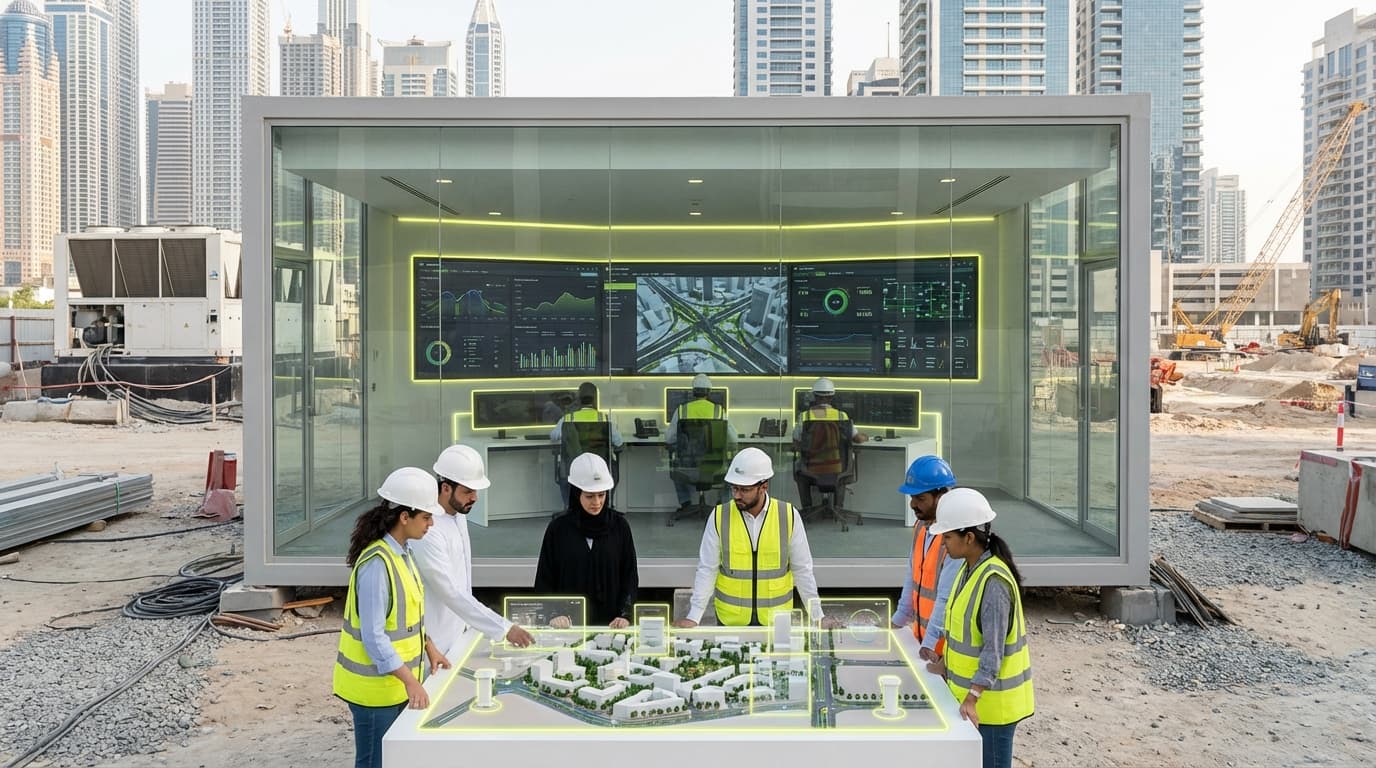
These platforms function as centralized nervous systems for urban operations, aggregating sensor data, service requests, infrastructure status, and environmental conditions into unified command centers. Early implementations in Dubai and Abu Dhabi demonstrate the operational model: traffic sensors, building management systems, utility meters, and public safety cameras feed data into visualization dashboards that allow operators to monitor city-wide conditions and coordinate responses across agencies. Saudi Arabia's development of similar capabilities for NEOM and existing cities suggests regional momentum toward this approach. The platforms typically combine real-time monitoring with predictive analytics, enabling cities to anticipate maintenance needs, optimize resource allocation during peak demand, and coordinate multi-agency responses to incidents. However, evidence from early deployments indicates that technical integration is often easier than organizational change—municipal agencies may resist sharing data or ceding operational autonomy, and platform effectiveness depends heavily on governance frameworks that mandate coordination.
The implications extend beyond operational efficiency to fundamental questions about urban governance and accountability. Successfully implemented platforms can reduce emergency response times, optimize energy and water consumption across city systems, and provide citizens with transparent access to service performance data. Yet cities must monitor several critical factors: the risk of vendor dependency as platforms become mission-critical infrastructure, the capacity gap between platform capabilities and staff expertise to interpret complex data, and the governance mechanisms needed to ensure data sharing without compromising security or privacy. The transition from pilot deployments to city-wide operations will test whether Gulf cities can build the institutional frameworks and workforce capabilities required to operate these systems effectively, making organizational readiness as important as technological sophistication in determining platform success.
Related Organizations

The government office leading Dubai's blockchain strategy, including the migration of land registry and title deeds to blockchain infrastructure.

A subsidiary of DEWA (Dubai Electricity and Water Authority) providing digital solutions and IoT platforms for Dubai's smart city initiatives.

An Abu Dhabi-based AI and cloud computing company.

Offers the Desigo and Building X platforms for smart building automation.

Leading digital enabler in KSA, deploying IoT infrastructure for smart cities like Riyadh and NEOM.

Multinational conglomerate operating in aerospace and building technologies.


Johnson Controls
United States · Company
Multinational conglomerate producing HVAC and building control systems, notably the OpenBlue digital platform.

The B2B division of Orange Group, offering the 'Flux Vision' solution.

Global specialist in energy management and automation that integrates cybersecurity into its industrial hardware and software.