Industrial Exoskeletons
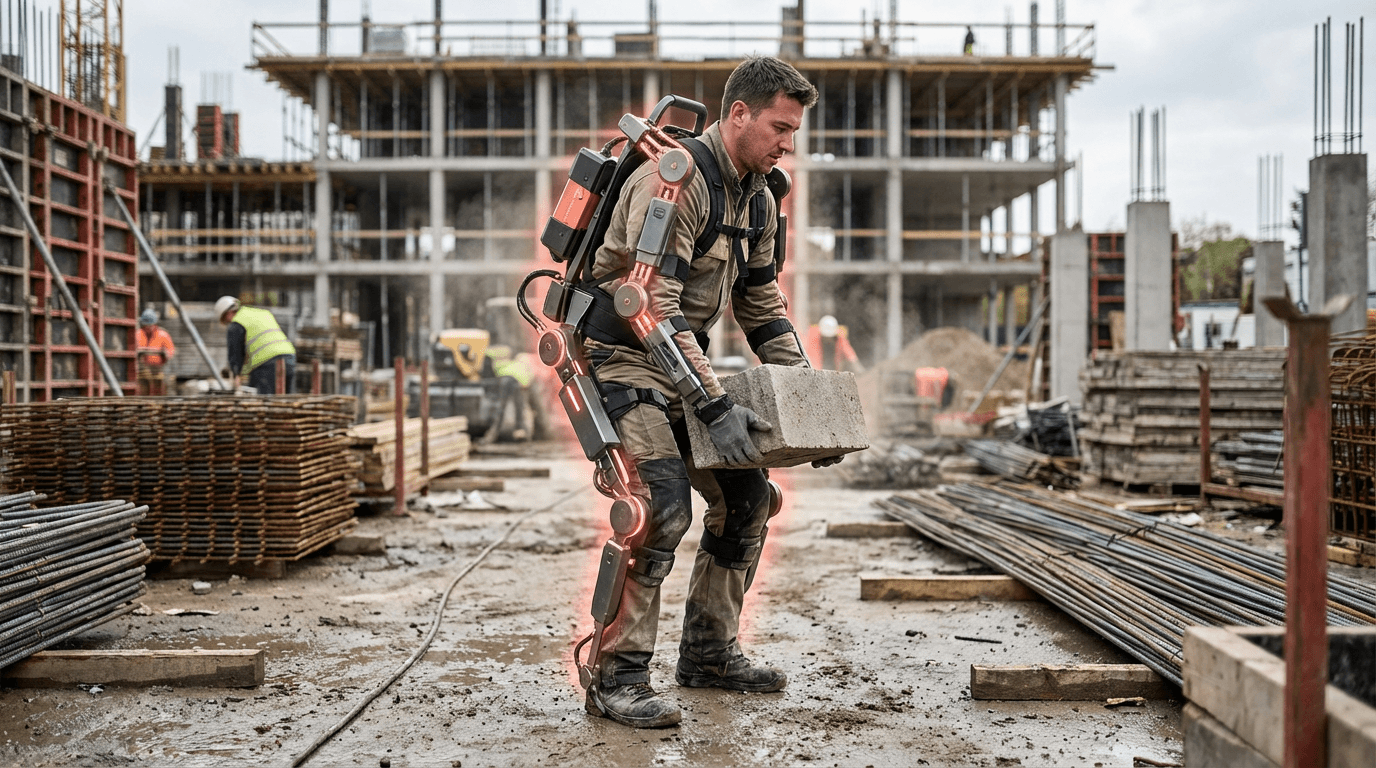
Industrial exoskeletons represent a significant advancement in worker safety technology, combining robotics, biomechanics, and wearable computing to augment human physical capabilities on construction sites. These powered or passive mechanical frameworks are worn by workers to provide additional support, strength, and endurance during physically demanding tasks. The technology operates through a combination of sensors that detect the wearer's movements and intentions, actuators or spring mechanisms that provide assistive force, and control systems that coordinate the device's response to match natural human motion. Powered exoskeletons typically use electric motors or pneumatic systems to amplify force, while passive versions rely on springs, counterweights, and clever mechanical design to redistribute loads across the body's stronger muscle groups. The devices are engineered to work in harmony with the human musculoskeletal system, supporting joints and muscles during lifting, overhead work, or prolonged standing without restricting natural movement patterns.
The construction industry faces persistent challenges related to worker safety and long-term occupational health, with musculoskeletal disorders representing one of the leading causes of workplace injury and lost productivity. Traditional approaches to reducing physical strain—such as mechanical lifts and team lifting protocols—are not always practical in the dynamic, space-constrained environments typical of construction sites. Industrial exoskeletons address this gap by providing worker-level assistance that moves with the individual, enabling safer handling of materials in confined spaces, on scaffolding, or in areas where larger equipment cannot operate. Research suggests that these devices can reduce muscle fatigue by up to 60% during repetitive tasks and significantly decrease the biomechanical load on the lower back and shoulders. This technology also enables aging workers to remain productive longer in physically demanding roles, addressing labor shortage concerns while reducing the risk of career-ending injuries. By preventing the cumulative strain that leads to chronic conditions, exoskeletons offer potential long-term cost savings through reduced workers' compensation claims and decreased absenteeism.
Early deployments of industrial exoskeletons have occurred across various construction applications, from shipbuilding and heavy manufacturing to residential construction and infrastructure projects. Workers have used these devices for tasks ranging from overhead drilling and installation work to repetitive material handling and concrete finishing. The technology has progressed from laboratory prototypes to commercially available systems, with several manufacturers now offering devices tailored to specific construction tasks. Current adoption remains limited but growing, as companies conduct pilot programs to evaluate return on investment and worker acceptance. Industry analysts note that the technology aligns with broader trends toward construction site digitization and worker-centric safety innovations, suggesting that exoskeletons may become standard equipment as costs decrease and designs become more refined. The integration of these devices with other emerging technologies—such as IoT sensors for monitoring worker fatigue and AI systems for optimizing work patterns—points toward a future where construction sites leverage comprehensive human augmentation systems to create safer, more productive work environments.
Related Organizations

A pioneer in the field of robotic exoskeletons for medical and industrial use.

Produces the Cray X, a connected power suit that supports lifting movements and provides data analytics.

Construction giant that acquired 'Concrete Sensors' to integrate IoT structural monitoring into their portfolio.

The world market leader in technical orthopedics and prosthetics.

Develops highly advanced powered exoskeletons like the Guardian XO for heavy lifting.

Develops lightweight passive exoskeletons like the LiftSuit and CarrySuit for load support.

Develops flexible manufacturing systems and open automation solutions for the automotive and battery industries.

Develops the Apex exosuit, a back-assist device for workers who lift and bend.

Levitate Technologies
United States · Company
Manufactures the AIRFRAME exoskeleton, a lightweight passive device for upper extremity support.

Global standards organization that develops and publishes voluntary consensus technical standards.
Supporting Evidence
Research this in Signals
Signals turns a topic into a sourced research record you can inspect and rerun. Your first scan is free, and this one starts with Industrial Exoskeletons already loaded, so edit it or scan as is.