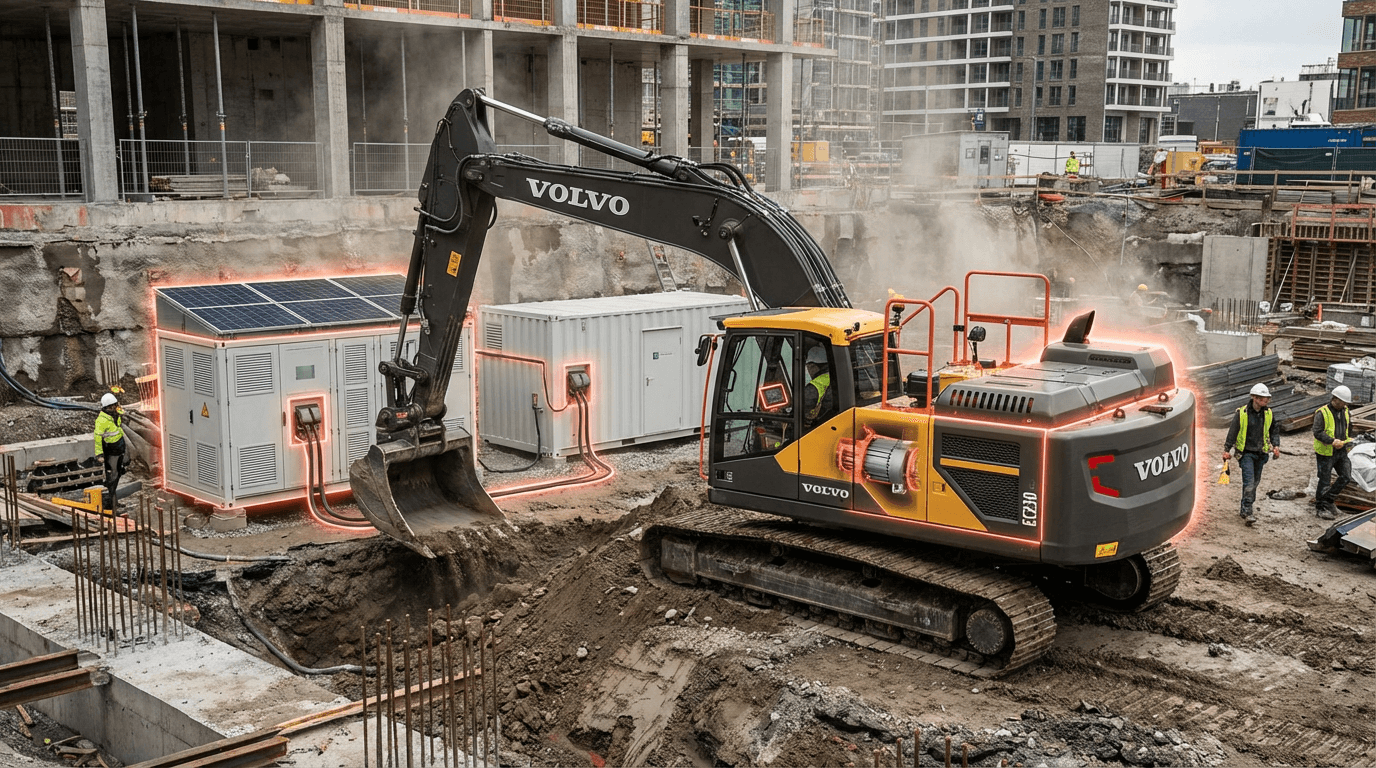
Electrified Construction Equipment
Construction sites have long been synonymous with diesel fumes, persistent engine noise, and the logistical challenges of fuel delivery and storage. Traditional heavy machinery—excavators, loaders, bulldozers, and aerial lifts—relies almost exclusively on internal combustion engines, creating significant local air pollution and contributing to the industry's substantial carbon footprint. These diesel-powered fleets also expose workers to harmful particulate matter and create noise levels that restrict operating hours, particularly in dense urban settings where residential areas abut active construction zones. Electrified construction equipment addresses these challenges by replacing or augmenting diesel engines with battery-electric or hybrid powertrains. These machines draw energy from onboard battery packs that can be recharged through temporary site infrastructure, including mobile charging stations and containerized battery storage systems. The core technical shift involves high-capacity lithium-ion batteries paired with electric motors that deliver instant torque, often matching or exceeding the performance characteristics of their diesel counterparts while eliminating tailpipe emissions entirely.
The construction industry faces mounting pressure from urban air-quality regulations, noise ordinances, and corporate sustainability commitments that make diesel dependence increasingly untenable. Electrified equipment enables contractors to bid on projects in emission-controlled zones, work extended hours in noise-sensitive areas, and meet the environmental standards now common in public procurement contracts. Early deployments indicate that electric machines can reduce operating costs over their lifecycle, as electricity proves less volatile in price than diesel fuel and electric drivetrains require less frequent maintenance due to fewer moving parts. The integration of temporary microgrids—combining solar arrays, battery storage, and grid connections—allows construction sites to function as self-contained energy ecosystems, reducing reliance on diesel generators for both equipment and auxiliary power needs. This infrastructure also supports load balancing, ensuring that charging schedules align with off-peak electricity rates and available renewable generation, further improving the economic case for electrification.
Commercial electric excavators and loaders are now available from major equipment manufacturers, with pilot programs underway on infrastructure projects across Europe, North America, and parts of Asia. These deployments reveal practical challenges, including the need for robust charging logistics, battery swapping protocols for continuous operation, and workforce training on high-voltage systems. However, the trajectory is clear: as battery energy density improves and charging infrastructure becomes more standardized, electrified fleets will transition from niche applications to mainstream adoption. This shift aligns with broader decarbonization efforts in the built environment sector, where reducing embodied and operational carbon has become a central focus. The convergence of stricter emissions standards, falling battery costs, and the maturation of site-level energy management systems positions electrified construction equipment as a foundational element of the industry's transition toward cleaner, quieter, and more adaptable building practices.
Related Organizations

Develops the 'Enertainer', an advanced battery energy storage system (BESS) designed specifically to replace diesel generators on construction sites.
Major international builder of heavy equipment.

Released the T7X, the world's first all-electric compact track loader (eliminating hydraulics).

British manufacturer with a dedicated 'E-Tech' range of electric excavators, dumpsters, and telehandlers.

Industrial giant using thermoelectric generators via its subsidiary KELK to harvest waste heat in steel and manufacturing plants.

Chinese heavy equipment giant producing electric mixer trucks, excavators, and port machinery.

Offers a broad 'zero emission' portfolio including electric rammers, plates, excavators, and wheel loaders.

A major equipment manufacturer that has developed its own autonomous haulage solution, recently partnering with Fortescue to develop zero-emission autonomous trucks.

French manufacturer offering the 'e-Series' of electric excavators, loaders, and dumpers for urban sites.

A designer and manufacturer of precision control components and systems, including haptic simulators for medical and dental training.
Supporting Evidence
Research this in Signals
Signals turns a topic into a sourced research record you can inspect and rerun. Your first scan is free, and this one starts with Electrified Construction Equipment already loaded, so edit it or scan as is.