Safety Standards for Autonomous Machines
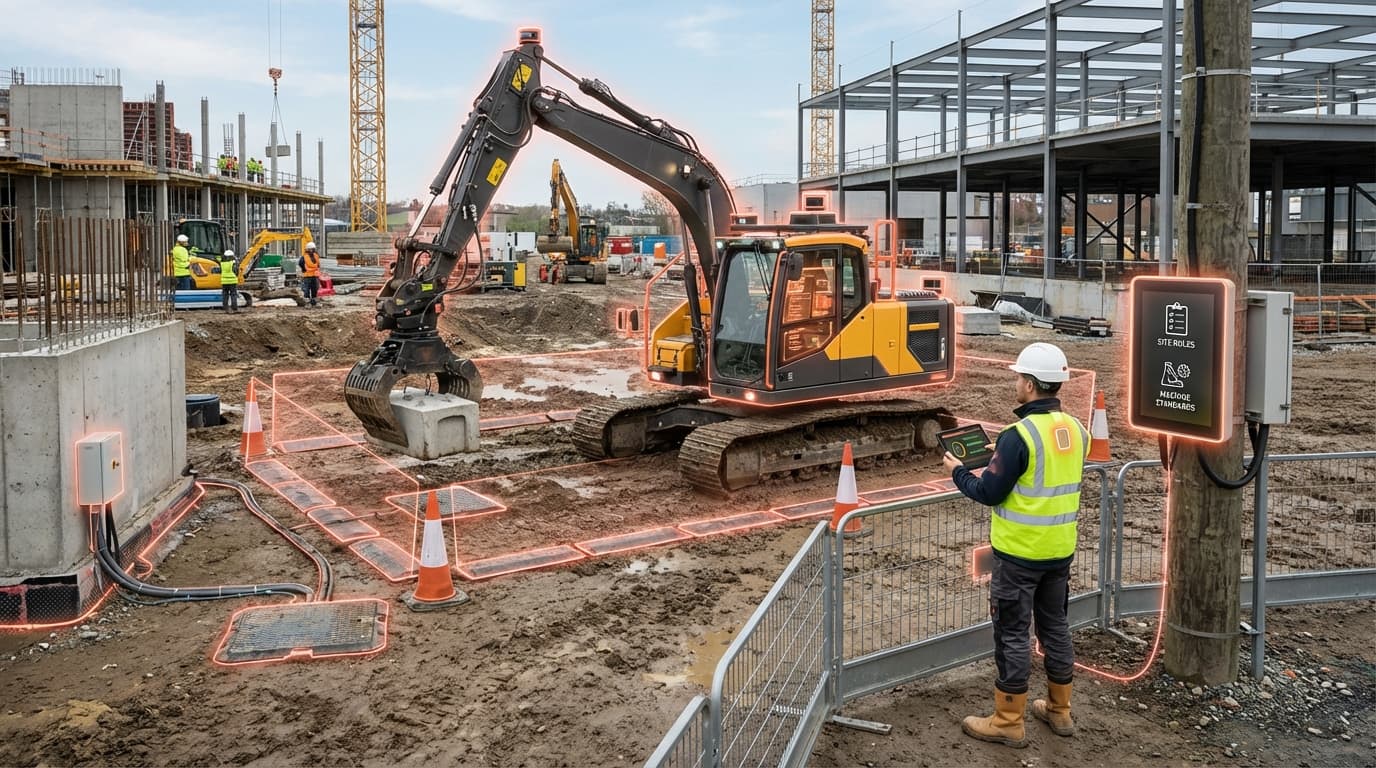
The construction industry faces a fundamental challenge as it adopts autonomous machinery: how to ensure that robots, drones, and self-driving equipment can operate safely alongside human workers in unpredictable, high-risk environments. Traditional safety frameworks were designed for human-operated equipment with clear lines of responsibility and predictable failure modes. Autonomous systems, however, introduce new complexities—machines that make independent decisions, operate beyond direct line of sight, and may encounter edge cases their programming did not anticipate. Safety standards for autonomous machines address this gap by establishing comprehensive protocols that govern everything from pre-deployment risk assessment to real-time monitoring and post-incident analysis. These frameworks typically require hazard identification specific to autonomous operation, such as sensor degradation in dusty conditions or navigation failures near dynamic obstacles like moving workers or materials. They mandate fail-safe behaviors—predetermined actions the machine must take when it detects anomalies or loses connectivity—and specify how autonomous systems should signal their intentions to nearby humans through lights, sounds, or digital interfaces. Critically, these standards also define the boundaries of machine authority, clarifying when human oversight is required and how control can be safely transferred between automated and manual modes.
Industry adoption of these standards is driven by multiple stakeholders with converging interests. Insurers require auditable safety protocols before underwriting projects that deploy autonomous equipment, as traditional liability models struggle to assign responsibility when a machine acts independently. Regulatory bodies, particularly in jurisdictions with strong labor protections, are developing certification pathways that verify both the technology and the organizational processes surrounding its use—ensuring that companies have trained personnel who understand how to supervise autonomous systems and intervene when necessary. Labor unions have become active participants in shaping these standards, advocating for transparency in how machines make decisions and insisting on worker input during deployment planning. The standards also solve practical coordination problems on multi-contractor job sites, where different companies' autonomous equipment must coexist safely. By establishing common protocols for geofencing, priority hierarchies when machines encounter each other, and standardized emergency stop procedures, these frameworks enable interoperability and reduce the risk of conflicting autonomous behaviors in shared spaces.
Early implementations of these safety standards are appearing in controlled environments such as mines, ports, and large-scale earthmoving projects, where autonomous haul trucks and excavators operate within defined zones. Certification programs are beginning to emerge, with some focusing on the technology itself—validating that sensors, algorithms, and redundancy systems meet minimum performance thresholds—while others assess organizational readiness, including operator training curricula and incident response plans. As the technology matures, the standards are evolving to address increasingly complex scenarios, such as autonomous systems working in close proximity to manual equipment or adapting to weather conditions that affect sensor reliability. This regulatory infrastructure is essential for scaling autonomy beyond pilot projects, providing the assurance that construction sites can integrate machine intelligence without compromising the safety culture that protects human workers. The trajectory points toward a future where autonomous machines are not merely tolerated as experimental additions but are fully integrated into site safety management systems, with their performance continuously monitored and their operating parameters adjusted based on real-world experience and evolving best practices.
Related Organizations

International standard-setting body composed of representatives from various national standards organizations.

Global standards organization that develops and publishes voluntary consensus technical standards.

US regulatory agency ensuring safe working conditions; currently adapting guidelines for human-robot collaboration.

UK government regulator for workplace health and safety, conducting research on the safe use of AI and robotics in industry.

Federal research agency conducting studies on occupational safety, including the Center for Occupational Robotics Research.

Offers the AWS Truepower suite, a leading platform for renewable energy project design and operational forecasting.
Association for Advancing Automation (A3)
United States · Consortium
Trade association that develops robot safety standards (ANSI/RIA R15.06) for industrial environments.

Famous for Spot and Atlas, now integrating reinforcement learning for dynamic movement.

Built Robotics
United States · Startup
Creates the Exosystem, an aftermarket kit that transforms heavy construction equipment like excavators into autonomous robots.

UK innovation accelerator for cities, transport, and place leadership, setting standards for digital twins and urban data.
Supporting Evidence
Research this in Signals
Signals turns a topic into a sourced research record you can inspect and rerun. Your first scan is free, and this one starts with Safety Standards for Autonomous Machines already loaded, so edit it or scan as is.