Wearables for Safety & Ergonomics
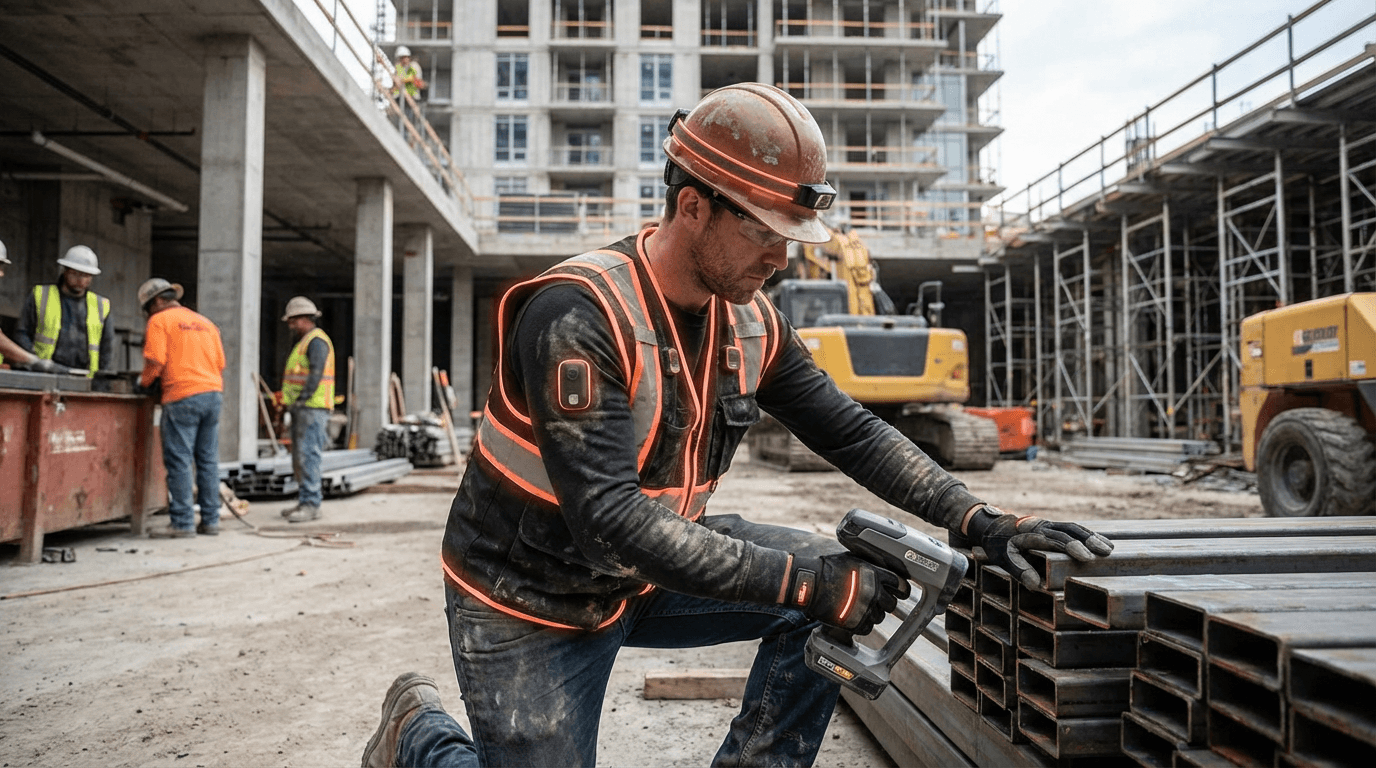
Construction sites remain among the most hazardous work environments, with workers facing risks ranging from falls and equipment collisions to heat-related illnesses and repetitive strain injuries. Traditional safety protocols rely heavily on training, visual inspections, and reactive incident reporting—methods that often fail to prevent accidents in fast-paced, dynamic environments where conditions change by the hour. Wearable safety and ergonomics devices address these limitations by continuously monitoring workers' physiological states, movements, and proximity to potential hazards. These connected devices typically incorporate multiple sensors—accelerometers to detect falls or awkward postures, biometric monitors to track heart rate and core temperature, and proximity sensors that communicate with equipment or designated danger zones. When integrated with site management systems, these wearables can trigger immediate alerts to both the worker and supervisors when thresholds are exceeded, whether that's elevated heat stress indicators, dangerous proximity to moving machinery, or postures that increase injury risk.
The construction industry faces mounting pressure to reduce injury rates while managing increasingly complex projects with tighter schedules and diverse workforces. Wearable safety technology offers a proactive approach to risk management that extends beyond compliance checkboxes. By providing real-time visibility into worker conditions across large or multi-level sites, these systems enable supervisors to intervene before incidents occur—rotating workers showing signs of fatigue, adjusting schedules during heat waves, or identifying equipment operators who may be working in close proximity to ground crews. The data captured also supports more accurate incident reconstruction when accidents do occur, helping companies identify systemic issues rather than simply attributing blame. Perhaps most significantly, aggregated ergonomics data can reveal patterns of strain associated with specific tasks or tools, informing equipment purchases, workflow redesigns, and targeted training programs that reduce long-term injury rates and associated workers' compensation costs.
Early deployments of wearable safety technology have demonstrated measurable reductions in incident rates, though adoption remains uneven across the industry. Larger contractors and industrial construction firms have been quicker to implement these systems, particularly for high-risk activities like work at height or in extreme temperatures. However, the technology's value proposition depends critically on how it's governed and communicated to workers. Research suggests that programs framed as surveillance tools face resistance and may even be counterproductive, while those implemented with transparent policies on data use, retention limits, and explicit commitments to non-punitive applications see higher compliance and genuine safety improvements. As the construction workforce ages and labor shortages intensify, wearable safety and ergonomics systems are likely to become standard components of site management platforms, particularly as integration with building information modeling and autonomous equipment creates opportunities for more sophisticated hazard prediction and prevention strategies that protect workers while maintaining productivity.
Related Organizations

wearable device platform that predicts and prevents heat stress, overexertion, and injury.

Developers of wearable sensors for head impact monitoring (SIM-G).

Creates the FUSE sensor platform, an IoT wearable for industrial workers that tracks physiological and environmental risk factors.

IoT-enabled smart helmet solution specifically designed for construction site safety and productivity tracking in the Gulf region.

Connected safety wearables providing gas detection, fall detection, and lone worker monitoring.

Produces a wearable wristband called 'Voltage' that alerts users to energized equipment to prevent electrical contact injuries.

Specializes in monitoring Hand Arm Vibration Syndrome (HAVS) and proximity hazards for construction and engineering workers.

Develops a smart belt buckle wearable that tracks employee location, motion, and environmental conditions to prevent injury.

Creates plug-and-play IoT wearables for worker safety, focusing on collision avoidance and access control in ports and logistics.
Supporting Evidence
Research this in Signals
Signals turns a topic into a sourced research record you can inspect and rerun. Your first scan is free, and this one starts with Wearables for Safety & Ergonomics already loaded, so edit it or scan as is.