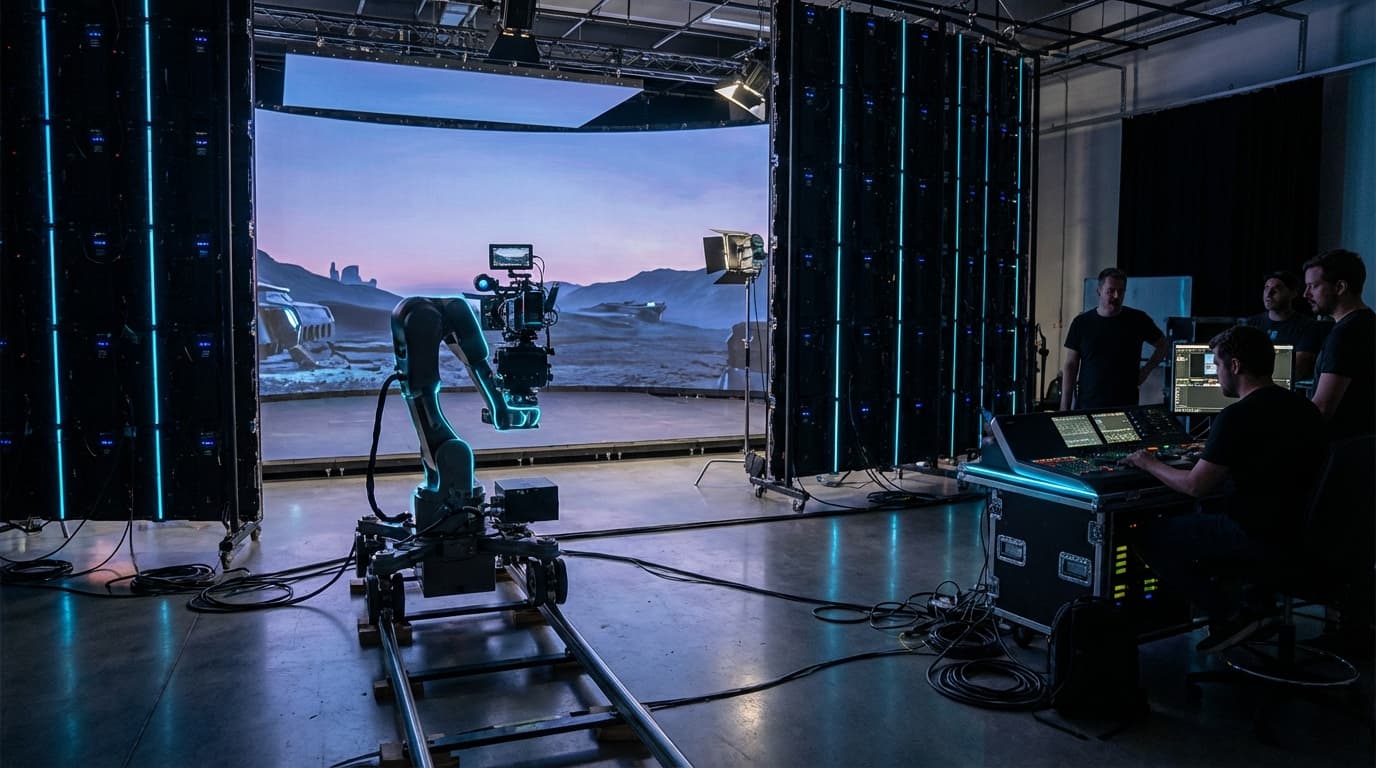
Virtual Production Pipelines
Virtual production pipelines represent a fundamental shift in how visual content is created, merging physical filmmaking with real-time digital environments. At their core, these systems utilize massive LED walls—often spanning hundreds of square feet—that display photorealistic backgrounds rendered in real-time by game engines such as Unreal Engine or Unity. Unlike traditional green screen workflows, the LED volumes emit actual light that illuminates actors and physical sets, creating natural reflections, shadows, and color spill that would otherwise require extensive post-production work. The technology relies on camera tracking systems that adjust the displayed perspective in real-time as the camera moves, maintaining proper parallax and depth relationships. This synchronization between physical camera movement and virtual environment response creates convincing in-camera visual effects that are captured directly during principal photography rather than added later.
The entertainment industry has long struggled with the inefficiencies of traditional VFX workflows, where actors perform against green screens with minimal environmental context, and final visual effects may not be completed until months after filming wraps. Virtual production addresses these challenges by providing immediate visual feedback to directors, cinematographers, and performers. Actors can see and react to their actual surroundings rather than imagining them, leading to more authentic performances. Directors can make creative decisions on set rather than discovering limitations during post-production, when changes become exponentially more expensive. The technology also enables location flexibility—crews can shoot desert scenes, arctic landscapes, or alien worlds without leaving a controlled studio environment, reducing travel costs and carbon footprints while maintaining schedule predictability. Perhaps most significantly, these pipelines compress production timelines by reducing the traditional separation between principal photography and post-production, allowing for more iterative creative processes.
Major film and television productions have already demonstrated the commercial viability of virtual production, with several purpose-built LED volume facilities now operating globally. The technology has proven particularly valuable for episodic television, where tight schedules and budget constraints make traditional location shooting or extensive post-production challenging. Beyond narrative entertainment, virtual production is finding applications in commercial advertising, live broadcasts, and even corporate presentations, where the ability to create convincing environments quickly justifies the infrastructure investment. As LED technology becomes more affordable and game engines continue advancing in photorealistic rendering capabilities, industry analysts note a trajectory toward virtual production becoming standard practice rather than a premium option. The convergence of real-time rendering, LED display technology, and traditional cinematography represents a broader trend in entertainment production toward more integrated, technology-enabled workflows that blur the boundaries between physical and digital filmmaking.
Related Organizations

Developers of Unreal Engine 5, which features Lumen, a fully dynamic global illumination and reflection system designed for next-gen consoles and PC.

VFX studio owned by Lucasfilm (Disney), creators of StageCraft.

Provides the platform and media servers that power xR (Extended Reality) stages and real-time concert visuals.


Manufacturer of LED video processing products.


Mo-Sys Engineering
United Kingdom · Company
Developer of camera tracking solutions (StarTracker) for virtual production.



Supporting Evidence
Research this in Signals
Signals turns a topic into a sourced research record you can inspect and rerun. Your first scan is free, and this one starts with Virtual Production Pipelines already loaded, so edit it or scan as is.