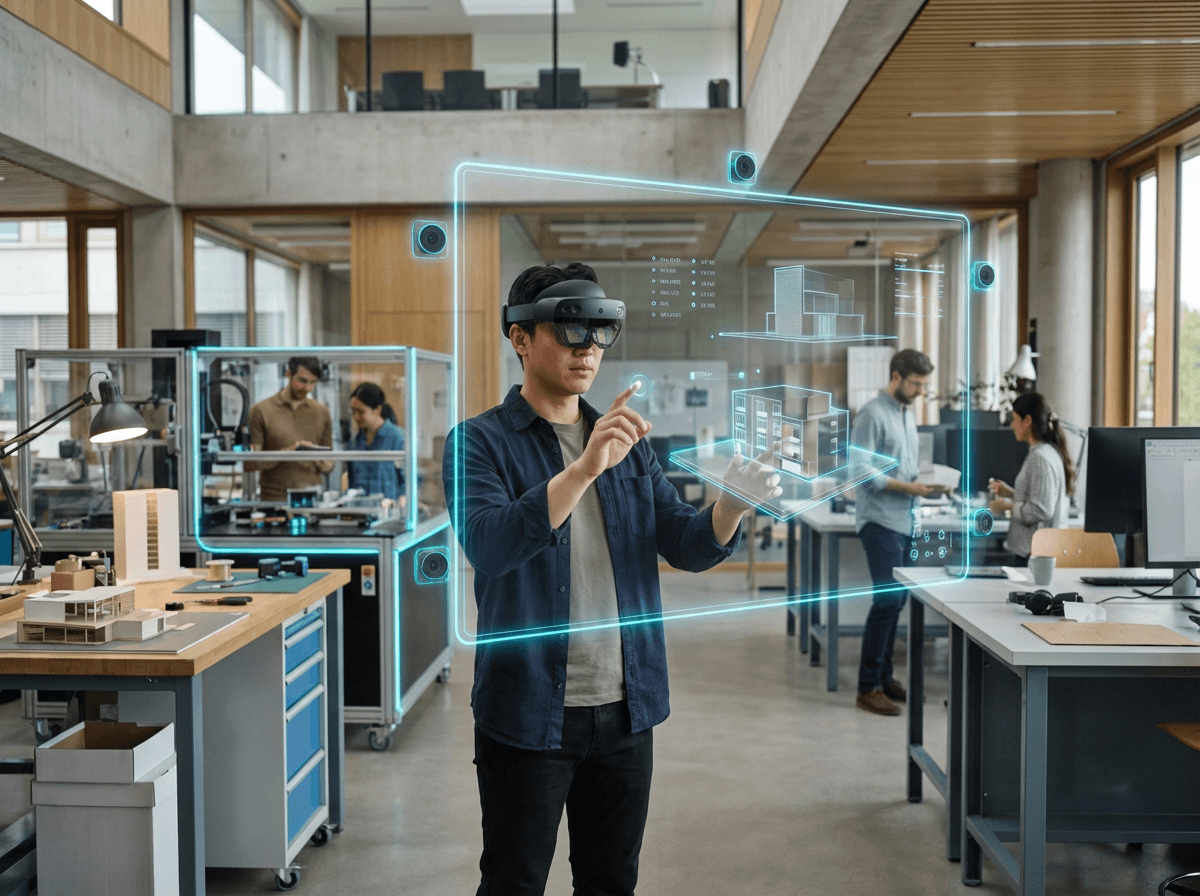
Spatial Computing Headsets
Spatial computing headsets represent a convergence of advanced display technology, environmental sensing, and real-time processing that fundamentally transforms how audiences experience entertainment content. These devices employ arrays of high-resolution cameras, depth sensors, and LiDAR systems to capture and digitally reconstruct the user's physical surroundings with unprecedented fidelity. Unlike earlier virtual reality systems that completely occluded the real world, spatial computing headsets utilize sophisticated passthrough technology—processing camera feeds through machine learning algorithms to deliver low-latency, color-accurate video of the environment directly to high-pixel-density displays positioned mere centimeters from the viewer's eyes. This technical foundation enables the seamless blending of computer-generated imagery with real-world spaces, where virtual characters can appear to walk across actual furniture, digital effects can react to physical lighting conditions, and narrative elements can be precisely anchored to specific locations within a room.
The entertainment industry has long grappled with the challenge of creating truly immersive experiences that transcend the limitations of traditional screens while remaining accessible in home environments. Spatial computing headsets address this by transforming any physical space into a potential venue for premium content experiences. For content creators, this technology unlocks new storytelling possibilities where narrative elements can respond to the unique characteristics of each viewer's environment—a horror story that uses the viewer's own hallway, a concert experience where performers appear life-sized in the living room, or interactive game scenarios that incorporate real furniture as gameplay elements. This capability fundamentally shifts the economics of immersive entertainment, eliminating the need for dedicated physical venues while enabling distribution models that combine the intimacy of home viewing with the spectacle previously reserved for theme parks or specialized installations.
Early adoption of spatial computing headsets in entertainment contexts has focused on premium narrative experiences and live event broadcasting, with several technology companies and content studios exploring hybrid formats that combine traditional cinematography with spatial elements. Music performances, sports events, and serialized storytelling experiments have demonstrated the technology's potential to create shared viewing experiences where multiple users in the same physical space can simultaneously engage with synchronized digital content. As display resolution continues to improve and processing capabilities advance, industry observers note a trajectory toward increasingly photorealistic passthrough quality that could make the boundary between physical and digital elements nearly imperceptible. This evolution aligns with broader entertainment trends toward personalized, interactive content consumption, positioning spatial computing headsets as a potential successor to traditional television and cinema screens for certain categories of premium content, particularly as production tools and distribution platforms mature to support this emerging medium.
Related Organizations

Developing 'Apple Intelligence', a personal intelligence system integrated into iOS/macOS that uses on-device context to mediate tasks and information.


Offers the AI Stack which includes tools for hardware-aware model efficiency and architecture search.

Manufacturer of 'bionic display' headsets that use a high-density focus display inside a peripheral context display.

Produces VR headsets and actively partners with BCI companies (like OpenBCI and MyndPlay) to integrate brain-sensing into their hardware ecosystem.

AR headset manufacturer utilizing dynamic dimming and eye-tracking for optimized rendering.

A VR/XR headset manufacturer owned by ByteDance, producing the Pico 4 which competes directly with Meta Quest.

VR productivity software company developing the 'Visor' hardware.

Creators of the Lynx R-1, a standalone Mixed Reality headset.

Manufacturer of consumer AR glasses (Air, Light) that tether to phones or computing pucks.
Supporting Evidence
Research this in Signals
Signals turns a topic into a sourced research record you can inspect and rerun. Your first scan is free, and this one starts with Spatial Computing Headsets already loaded, so edit it or scan as is.