Portable Volumetric Capture Rigs
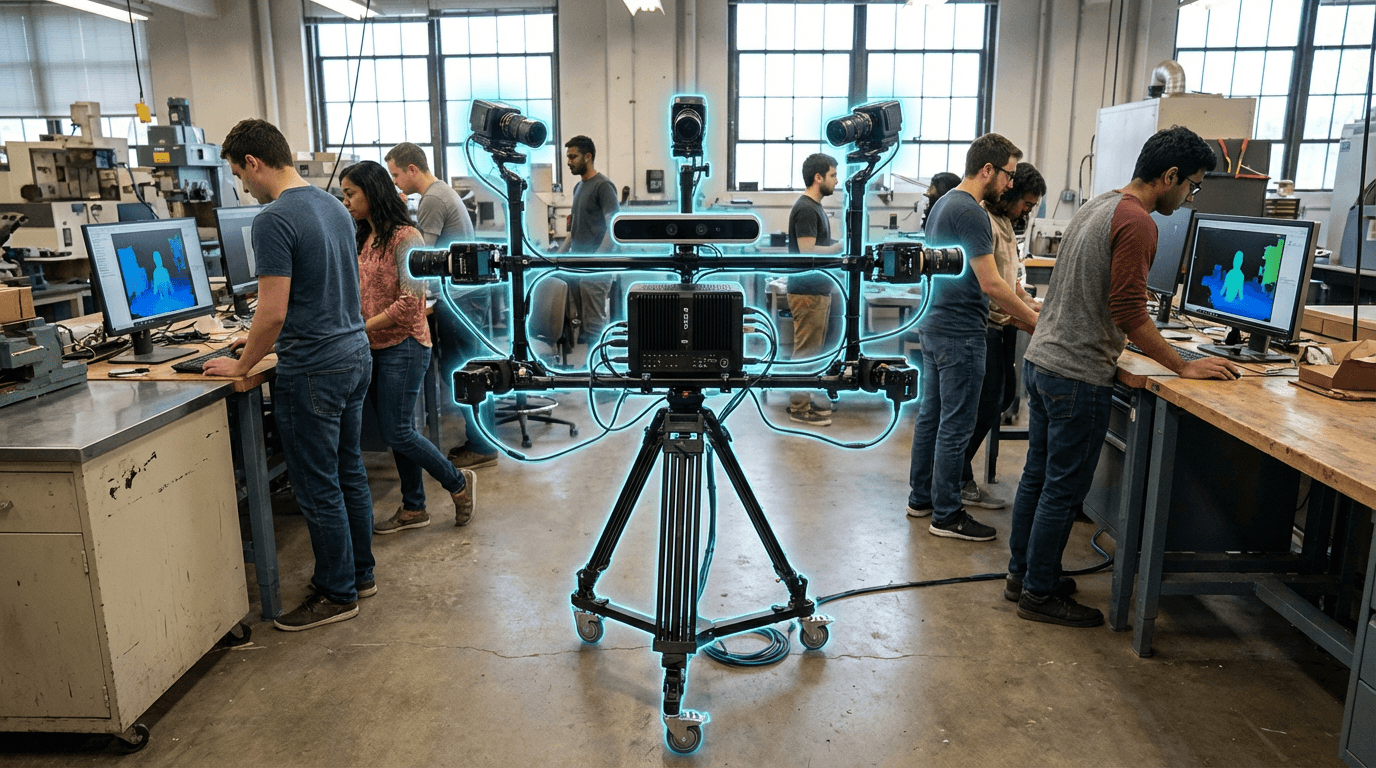
Portable volumetric capture rigs represent a significant evolution in three-dimensional content creation technology, enabling creators to record subjects from multiple angles simultaneously and reconstruct them as navigable 3D models or holograms. Unlike traditional fixed-installation volumetric studios that require dozens of synchronized cameras in controlled environments, these portable systems utilize compact arrays of RGB cameras combined with depth sensors—often leveraging technologies like LiDAR or structured light—to capture spatial data. The rigs typically employ sophisticated software pipelines that process multiple video streams in real-time or near-real-time, using photogrammetry and computer vision algorithms to generate point clouds and textured mesh models. This approach allows creators to capture performances, objects, or environments with six degrees of freedom (6DoF), meaning viewers can later move around and through the captured content rather than being confined to a fixed perspective.
The entertainment and streaming industries have long recognized the potential of volumetric content for creating immersive experiences, but the technology has historically been confined to high-budget productions with access to specialized facilities. Traditional volumetric studios can cost millions to construct and require dedicated technical teams to operate, creating a significant barrier to entry for independent filmmakers, content creators, and smaller production companies. Portable rigs address this fundamental accessibility challenge by reducing both the capital investment and operational complexity required to produce volumetric content. This democratization enables new creative possibilities across multiple sectors: musicians can create holographic performances for virtual concerts, educators can develop interactive 3D lessons, and storytellers can craft narrative experiences where viewers actively explore scenes rather than passively watching. The technology also supports emerging distribution platforms that demand spatial content, including virtual reality headsets, augmented reality applications, and autostereoscopic displays that don't require special glasses.
Early adopters of portable volumetric capture systems include independent filmmakers experimenting with mixed reality narratives, sports broadcasters seeking novel replay perspectives, and cultural heritage organizations documenting artifacts and performances for digital preservation. Research initiatives at universities and media labs have demonstrated successful deployments of backpack-mounted rigs and wheeled cart systems that can be transported in standard vehicles and set up in non-studio environments within hours. As processing power continues to increase and depth-sensing technology becomes more affordable through smartphone integration and automotive applications, the quality gap between portable and studio-based systems continues to narrow. This trajectory aligns with broader industry movements toward virtual production techniques and the growing demand for spatial content across streaming platforms, social media, and emerging metaverse applications. The technology represents a crucial stepping stone toward a future where three-dimensional storytelling becomes as accessible and ubiquitous as traditional video production is today.
Related Organizations

Creators of Depthkit, a software tool allowing volumetric capture using accessible depth sensors.

An app developer focusing on volumetric video recording using iOS LiDAR sensors.

Manufacturers of the ZED camera series, which are passive stereo depth cameras used for portable 3D capture and spatial mapping.

A major manufacturer of 3D cameras and depth sensors that serve as the hardware foundation for many portable capture rigs.

A software developer providing tools to record and stream point cloud and skeleton data from portable sensors like Kinects and Orbbecs.

EF EVE
UK · Startup
Developers of volumetric capture software designed to work with arrays of commodity depth cameras (like Azure Kinect/Orbbec).

Creators of the OAK (OpenCV AI Kit) series of spatial AI cameras, which are small, portable, and capable of on-device depth processing.

Developing 'Apple Intelligence', a personal intelligence system integrated into iOS/macOS that uses on-device context to mediate tasks and information.

A company specializing in high-precision, portable 3D scanners for consumers and professionals.

Pioneers in mobile computer vision and depth sensing (Structure Sensor), now focused on SDKs for depth.
Supporting Evidence
Research this in Signals
Signals turns a topic into a sourced research record you can inspect and rerun. Your first scan is free, and this one starts with Portable Volumetric Capture Rigs already loaded, so edit it or scan as is.