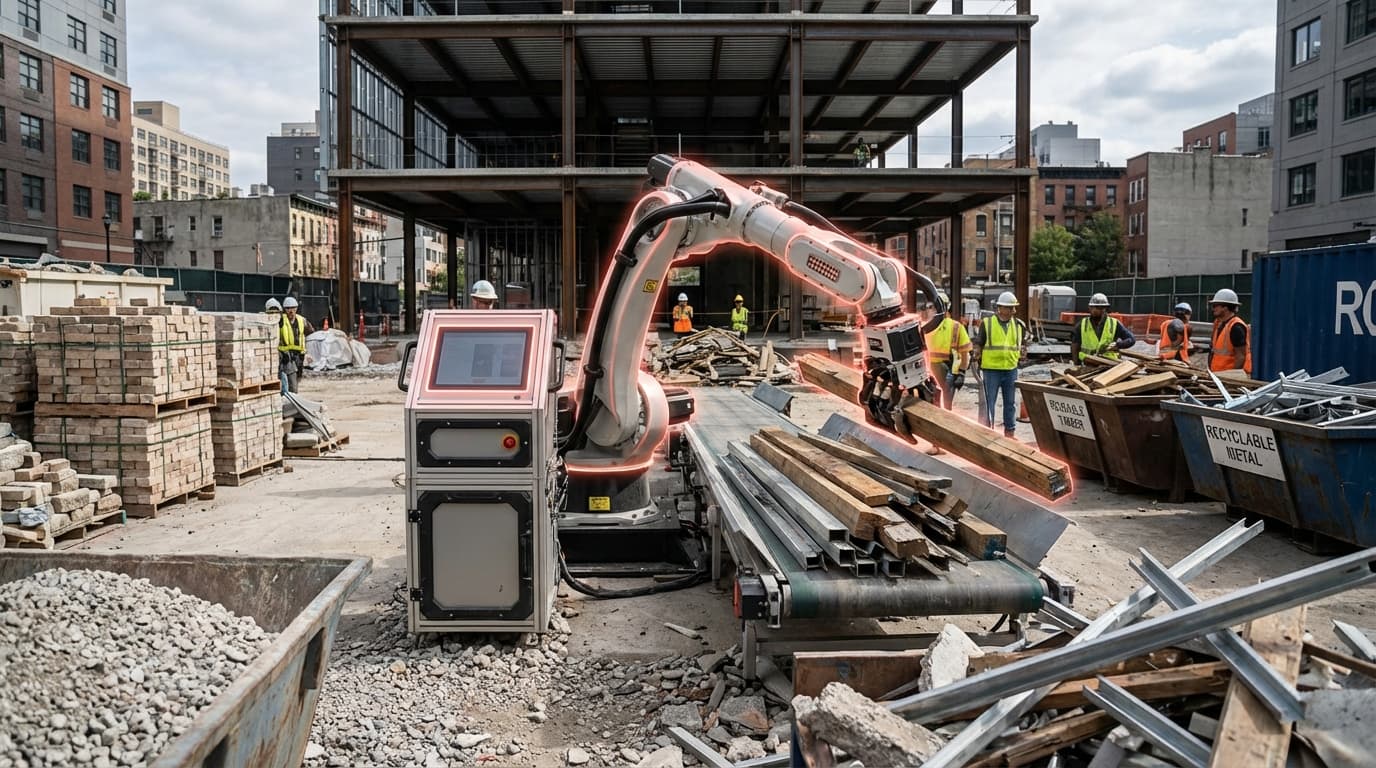
Circular Economy Frameworks
The construction industry faces a mounting crisis of waste and resource depletion. Traditional building practices operate on a linear "take-make-dispose" model, where materials are extracted, used once, and then discarded at the end of a structure's life. This approach generates enormous volumes of construction and demolition waste—research suggests that buildings account for a significant portion of global material consumption and waste generation. Circular Economy Frameworks represent a fundamental reimagining of this process, treating buildings not as permanent fixtures but as temporary assemblies of valuable materials. At their core, these frameworks establish design principles, material tracking systems, and regulatory structures that enable the recovery and reuse of building components. This involves designing for disassembly from the outset, using reversible connections like bolts instead of permanent adhesives, maintaining detailed material passports that document every component's specifications and location, and creating standardised building elements that can be easily repurposed. The technical foundation includes digital tools for material tracking, design guidelines that prioritise modularity, and assessment methodologies that evaluate a building's potential for future material recovery.
The shift toward circular construction addresses several critical industry challenges simultaneously. It reduces dependence on virgin material extraction, which is becoming increasingly expensive and environmentally costly. It also tackles the problem of landfill capacity, as construction waste represents a substantial burden on waste management systems worldwide. Beyond waste reduction, circular frameworks enable new business models within the construction sector. Material banks and component marketplaces are emerging where salvaged building elements can be bought and sold, creating economic value from what would otherwise be waste. Design-for-disassembly principles also encourage manufacturers to retain ownership of their products, leasing rather than selling building components and taking responsibility for their eventual recovery and refurbishment. This shift from ownership to stewardship fundamentally changes the incentive structures within construction, rewarding durability and reusability over planned obsolescence.
Early implementations of circular construction principles are already demonstrating viability across various building types. Pilot projects in Europe and North America have successfully incorporated material passports and reversible connections, proving that buildings can be designed for eventual disassembly without compromising structural integrity or aesthetic quality. Regulatory frameworks are beginning to evolve to support these practices, with some jurisdictions introducing requirements for end-of-life planning and material documentation. The construction industry's adoption of Building Information Modeling (BIM) provides a natural platform for integrating circular economy data, allowing material information to be embedded directly into digital building models. As resource scarcity intensifies and environmental regulations tighten, circular economy frameworks are positioned to become standard practice rather than experimental approaches. This transition aligns with broader sustainability goals within the built environment sector, contributing to reduced carbon emissions, resource conservation, and the development of more resilient supply chains that can adapt to material availability fluctuations and environmental constraints.
Related Organizations

EU-funded consortium that developed the framework and prototypes for Materials Passports and Reversible Building Design.

Administers the Cradle to Cradle Certified Product Standard, which assesses circularity, material health, and social fairness.

A global thought leader promoting the circular economy, working with cities to implement strategies that design out waste and keep products in use.

An online registry for materials and products, generating 'material passports' for buildings.

An architecture and consultancy firm specialized in circular economy and upcycling in the built environment.

A consulting and research organization that advises cities and companies on circular economy strategies.

Resource exchange platform helping organizations visualize, quantify, and utilize their physical assets and materials.

Arup
United Kingdom · Company
A multinational professional services firm dedicated to sustainable development, known for pioneering the use of BIM in complex engineering projects.

Global leader in innovative and sustainable building solutions.

Saint-Gobain
France · Company
A multinational corporation producing high-performance materials (glass, insulation) essential for building envelopes in ZEBs.
Supporting Evidence
Research this in Signals
Signals turns a topic into a sourced research record you can inspect and rerun. Your first scan is free, and this one starts with Circular Economy Frameworks already loaded, so edit it or scan as is.