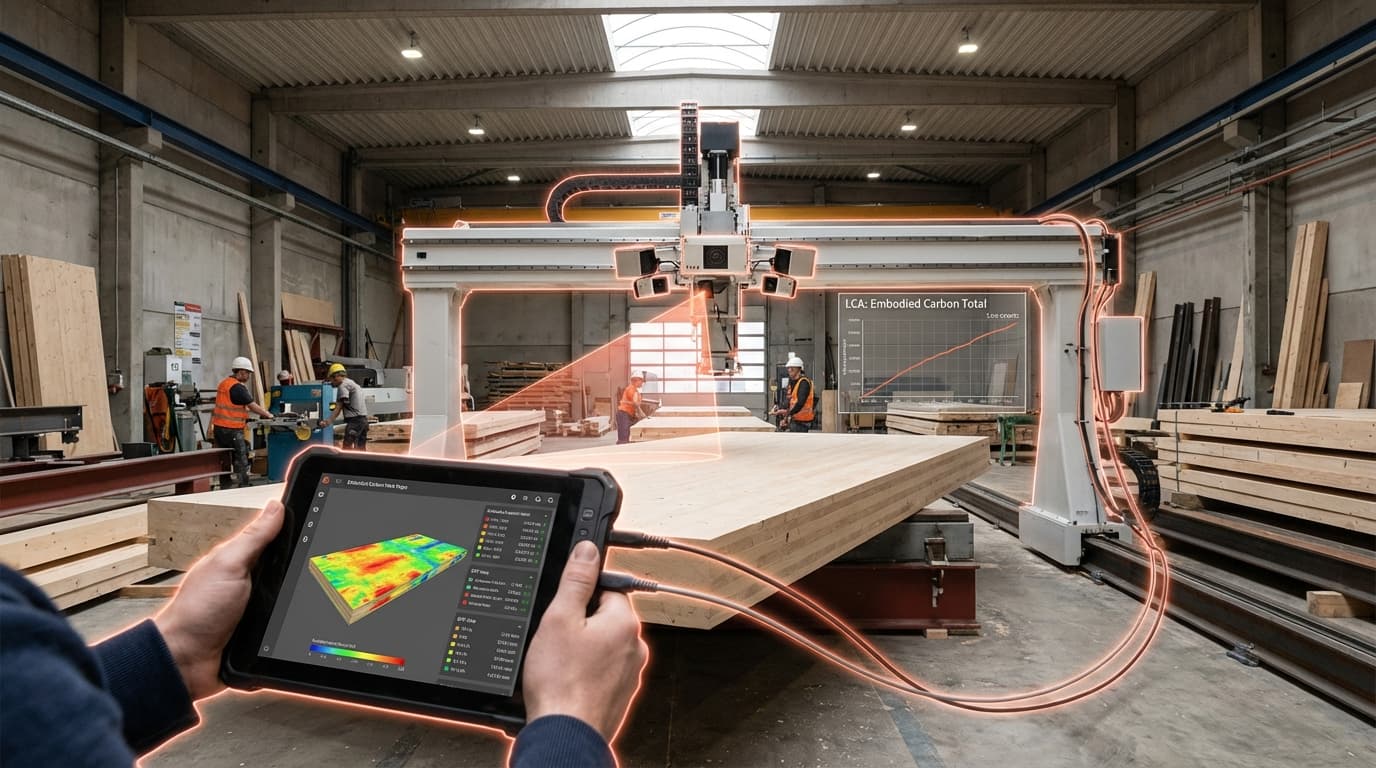
Embodied Carbon Accounting (LCA + EPD Automation)
The construction industry faces mounting pressure to quantify and reduce the carbon emissions embedded in building materials—emissions generated during extraction, manufacturing, transportation, and installation, long before a structure becomes operational. Traditional lifecycle assessment (LCA) methods require manual data collection, spreadsheet calculations, and time-consuming cross-referencing between material specifications and environmental databases. This fragmented process makes it difficult for architects, engineers, and contractors to evaluate the carbon impact of design decisions in real time or to meet emerging regulatory requirements that mandate embodied carbon disclosure. As jurisdictions introduce carbon limits for new construction and as institutional investors demand transparent environmental reporting, the need for automated, accurate embodied carbon accounting has become critical.
Embodied carbon accounting platforms address this challenge by integrating directly with Building Information Modeling (BIM) software and procurement systems to automatically extract material quantities, match them with verified Environmental Product Declarations (EPDs), and calculate lifecycle carbon footprints. These tools draw from standardized databases that catalog the global warming potential of thousands of building products—from structural steel and concrete mixes to insulation and glazing systems. By automating the linkage between digital models and environmental data, the software enables design teams to compare the carbon intensity of alternative materials during early design phases, when changes are least costly. The systems also generate compliance documentation for green building certifications, municipal carbon reporting mandates, and corporate sustainability commitments, transforming what was once a post-design audit into an active design constraint.
Early adoption is concentrated among large architecture and engineering firms working on public sector projects, where embodied carbon limits are increasingly written into procurement requirements. Several jurisdictions in North America and Europe now require lifecycle carbon assessments for buildings above certain size thresholds, driving demand for tools that can produce auditable reports without adding weeks to project timelines. The technology is also gaining traction in the private sector as developers recognize that lower embodied carbon can reduce financing costs and attract tenants with sustainability mandates. As material manufacturers expand EPD coverage and regulatory frameworks mature, embodied carbon accounting is poised to become a standard feature of the design workflow, fundamentally reshaping how the industry evaluates material choices and measures project success beyond cost and schedule alone.
Related Organizations

Developer of the EC3 (Embodied Carbon in Construction Calculator) tool, a free database of construction EPDs.

Industry-academic collaboration at the University of Washington focused on reducing embodied carbon.

Software platform for Life Cycle Assessment (LCA) and Environmental Product Declarations (EPD).

Provides automated EPD generation specifically for the concrete industry.

An architecture firm that developed 'Tally', a plugin for Revit to calculate embodied carbon.

An AI platform for early-stage whole life carbon assessment in building design.

ESG and risk management software provider (acquired riskmethods) that models supply chain threats including regulatory and country risk.

Platform enabling architects to compare and specify sustainable building materials based on climate data.

A platform for real estate developers to track and manage embodied carbon across their portfolios.

AI-powered product data management tool that creates digital twins of supply chains for LCA and cost analysis.
Supporting Evidence
Research this in Signals
Signals turns a topic into a sourced research record you can inspect and rerun. Your first scan is free, and this one starts with Embodied Carbon Accounting (LCA + EPD Automation) already loaded, so edit it or scan as is.