Carbon-Negative Construction Processes
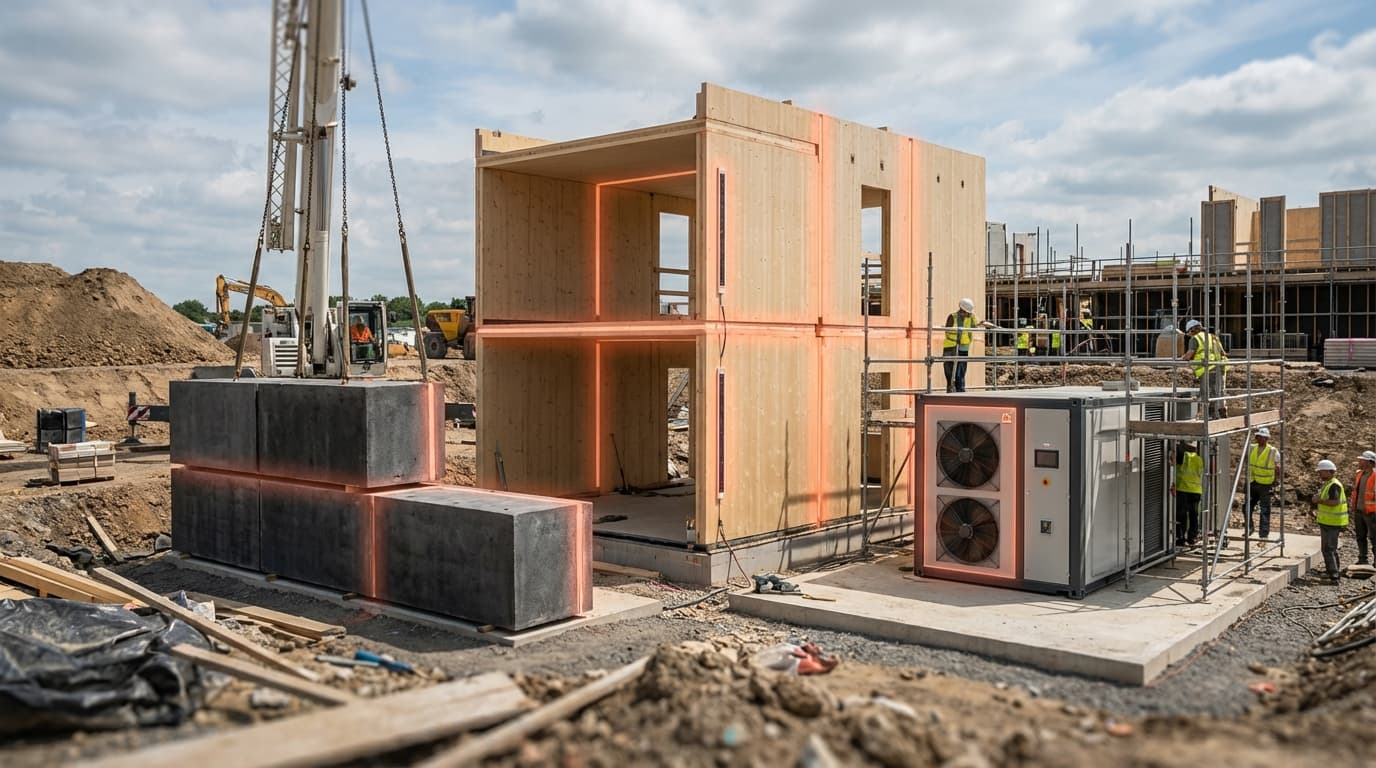
Carbon-negative construction processes represent a fundamental shift in how the built environment can contribute to climate mitigation, moving beyond carbon neutrality to actively remove atmospheric CO₂. These processes integrate three complementary approaches: biogenic materials that sequester carbon during growth, carbon mineralization technologies that permanently lock CO₂ into building materials, and direct air capture systems that offset remaining emissions. Biogenic materials like mass timber, hempcrete, and biochar-enhanced concrete store carbon absorbed during plant growth, effectively turning buildings into carbon sinks. Carbon mineralization, particularly in concrete curing, involves injecting captured CO₂ into fresh concrete where it undergoes a chemical reaction to form stable calcium carbonate, permanently sequestering the carbon while simultaneously improving the concrete's strength and durability. When combined with direct air capture (DAC) units integrated into construction sites or building operations, these approaches can achieve net-negative carbon footprints across a project's entire lifecycle, from material extraction through construction and eventual demolition.
The construction industry faces mounting pressure to address its substantial carbon footprint, which accounts for a significant portion of global greenhouse gas emissions. Traditional building materials, particularly concrete and steel, are carbon-intensive to produce, while conventional construction practices generate substantial waste and energy consumption. Carbon-negative processes address these challenges by transforming buildings from climate liabilities into climate assets. This approach solves the fundamental problem of embodied carbon—the emissions associated with material production, transportation, and construction—which persists even in highly energy-efficient buildings. By enabling projects to remove more carbon than they emit, these processes create new pathways for developers to meet increasingly stringent environmental regulations and corporate sustainability commitments. The integration of carbon accounting into construction workflows also drives innovation in supply chain transparency and lifecycle assessment methodologies, establishing new industry standards for environmental performance.
Early demonstrations across Scandinavia, Canada, and the European Union are establishing the technical and economic feasibility of carbon-negative construction at scale. These pilot projects are testing various material combinations and carbon capture configurations while developing robust monitoring, reporting, and verification (MRV) protocols essential for carbon credit markets and regulatory compliance. Research initiatives are exploring optimal ratios of biogenic materials, refinements to carbon mineralization processes, and cost-effective DAC integration strategies. As carbon pricing mechanisms expand and green building certifications evolve to recognize carbon sequestration, market demand for carbon-negative construction is expected to accelerate. The technology aligns with broader industry trends toward circular economy principles and regenerative design, positioning it as a cornerstone of future sustainable development strategies that view buildings not merely as shelters but as active participants in atmospheric carbon management.
Related Organizations

Develops technology to inject captured CO2 into fresh concrete, where it mineralizes and strengthens the material.

Captures CO2 and converts it into limestone aggregate for concrete, mimicking the natural biomineralization process of shellfish.

Develops carbon-negative concrete solutions by using steel slag and curing with CO2, avoiding cement entirely.

Industry-academic collaboration at the University of Washington focused on reducing embodied carbon.

Produces ordinary Portland cement that is carbon-negative by using calcium silicate rocks instead of limestone.

Produces a carbon-negative building material that avoids Portland cement entirely, using brine and slag.

A company developing zero-carbon building materials using microalgae.

A biotechnology company that grows cement tiles using bacteria, eliminating the need for firing.

The pioneer of mycelium technology, developing the 'MycoComposite' platform used to grow sustainable building materials and packaging.

A manufacturer of hemp-based building materials, specifically HempWool insulation.

A materials company transforming wood waste into carbon-negative biochar thermoplastics.

Uses limestone (calcium carbonate) looping to capture CO2 from the air at low cost.
Supporting Evidence
Research this in Signals
Signals turns a topic into a sourced research record you can inspect and rerun. Your first scan is free, and this one starts with Carbon-Negative Construction Processes already loaded, so edit it or scan as is.