Urban Mining & Material Passports
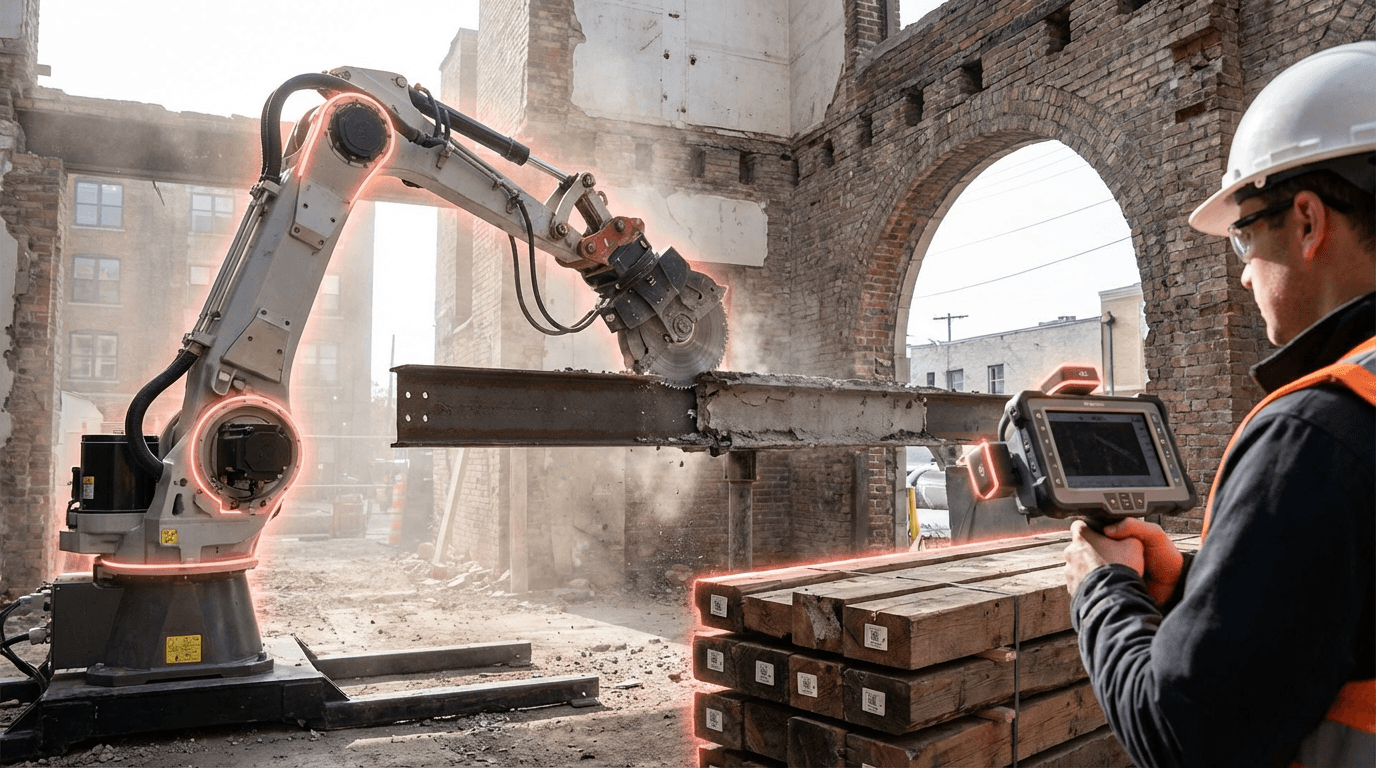
Urban mining represents a fundamental shift in how the construction industry approaches material sourcing, treating the existing built environment as a vast repository of valuable resources rather than waste destined for landfills. At its core, this approach recognizes that cities contain enormous quantities of embedded materials—steel beams, copper wiring, aluminum facades, concrete aggregates, and timber framing—that can be systematically recovered and reintegrated into new construction projects. The process relies heavily on Material Passports, comprehensive digital records that document the composition, location, and specifications of building components throughout a structure's lifecycle. These passports function as detailed inventories, cataloging everything from the grade of structural steel used in a building's frame to the chemical composition of insulation materials, along with crucial information about fastening methods and disassembly sequences. By maintaining this data from initial construction through occupancy and eventual deconstruction, Material Passports transform buildings from opaque assemblies into transparent material banks with known quantities and qualities of recoverable resources.
The construction industry faces mounting pressure from resource scarcity, volatile commodity prices, and increasingly stringent environmental regulations around embodied carbon and waste generation. Traditional linear construction models—extract, manufacture, build, demolish, dispose—are becoming economically and environmentally untenable as virgin material costs rise and landfill capacity diminishes. Urban mining addresses these challenges by establishing formalized workflows for selective deconstruction rather than demolition, enabling contractors to carefully dismantle buildings in ways that preserve material value and integrity. This approach solves the fundamental problem of information asymmetry that has long plagued material recovery efforts; without knowing what materials exist within a building or how to safely extract them, recovery operations remain speculative and inefficient. Material Passports eliminate this uncertainty, allowing deconstruction teams to plan operations with precision, identify high-value recovery opportunities, and connect salvaged materials with buyers before demolition even begins. This creates new business models around material brokerage, certified deconstruction services, and secondary material marketplaces that can compete economically with virgin extraction.
Early implementations of urban mining principles are emerging across Europe and North America, with several cities incorporating Material Passport requirements into building codes and green building certification programs. Pilot projects have demonstrated that systematic material recovery can divert significant percentages of construction waste from landfills while generating revenue streams that offset deconstruction costs. The approach proves particularly valuable for high-grade materials like structural steel and copper, where recovered materials can meet the same performance standards as virgin alternatives at competitive prices. As digital building information modeling becomes standard practice and regulatory frameworks increasingly mandate circular economy principles, urban mining is positioned to transition from niche practice to industry standard. The convergence of this approach with broader trends in sustainable construction—including embodied carbon accounting, circular economy mandates, and resource efficiency targets—suggests that future cities will be designed not just for their intended use, but as carefully curated material reserves for generations to come.
Related Organizations

EU-funded consortium that developed the framework and prototypes for Materials Passports and Reversible Building Design.

An online registry for materials and products, generating 'material passports' for buildings.

Provides a digital ecosystem for circular construction, matching materials from demolition sites to new projects.

A digital marketplace and consultancy for the reuse of building materials, founded by Egis and Icade.

A cooperative that organizes the reuse of construction materials, dismantling buildings and salvaging components for resale.

Consultancy and research institute founded by Michael Braungart, developing Cradle to Cradle design principles for the built environment.

The innovation unit of 3XN Architects, focusing on circular design, behavioral design, and digital technologies.

A consulting and research organization that advises cities and companies on circular economy strategies.
Upcycle
Denmark · Company
Provides a digital infrastructure for sharing and trading waste materials between construction sites and industries.

Resource exchange platform helping organizations visualize, quantify, and utilize their physical assets and materials.
Supporting Evidence
Research this in Signals
Signals turns a topic into a sourced research record you can inspect and rerun. Your first scan is free, and this one starts with Urban Mining & Material Passports already loaded, so edit it or scan as is.