Precision Fermentation
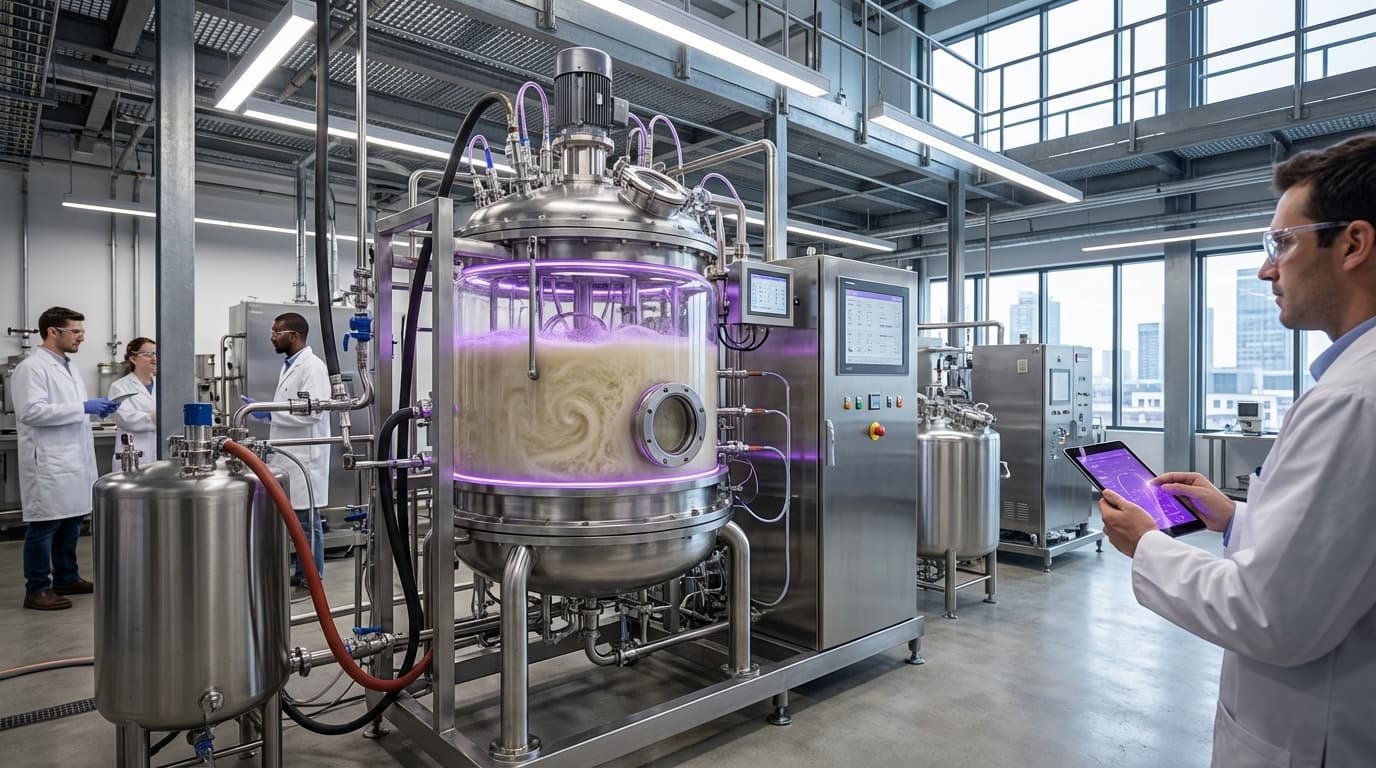
Precision fermentation uses genetically engineered microorganisms—bacteria, yeast, or fungi—as biological factories to produce specific target molecules through controlled fermentation processes. The technology involves designing DNA sequences that program microorganisms to produce desired proteins, enzymes, fats, flavors, or other compounds, then optimizing fermentation conditions (temperature, nutrients, pH, oxygen) to maximize yield and quality. Unlike traditional fermentation that relies on natural microbial capabilities, precision fermentation enables production of virtually any biological molecule by engineering the production pathway.
The technology enables production of complex biological molecules that are difficult or expensive to produce through traditional methods, often with lower environmental impact and resource use. Precision fermentation can produce food ingredients (proteins, fats, flavors), pharmaceuticals, enzymes for industrial processes, and specialty chemicals. The approach can create products identical to those from plants or animals, or entirely new molecules with specific properties. Applications include alternative proteins for food, pharmaceutical production, industrial enzymes, and specialty ingredients. Companies like Perfect Day (dairy proteins), Impossible Foods (heme), and various biotech firms use precision fermentation.
At TRL 8, precision fermentation is commercially established in pharmaceuticals and is expanding into food and other sectors, with various products on the market. The technology faces challenges including scaling production economically, ensuring product quality and consistency, regulatory approval for food and pharmaceutical applications, and competing with established production methods on cost. However, as fermentation technology improves and production scales, costs decrease and applications expand. Precision fermentation could transform how we produce biological molecules, enabling more sustainable production of food ingredients, pharmaceuticals, and materials, potentially reducing dependence on agriculture and animal products while creating new capabilities for producing complex biological molecules with precise control over properties and composition.
Related Organizations

Produces animal-free dairy proteins (whey) using microflora fermentation, identical to cow's milk protein.

A horizontal platform for cell programming that enables other companies to develop precision fermentation strains.

Novonesis
Denmark · Company
The merger of Novozymes and Chr. Hansen, a global biosolutions giant supplying enzymes and microbes for fermentation.

Uses precision fermentation to create animal-free egg proteins (pepsin and egg white) for food ingredients.

A European food biotech company using precision fermentation to produce animal-free cheese proteins.

Designs and produces biodesigned collagen and elastin for the beauty and food industries via fermentation.

Building continuous fermentation manufacturing infrastructure to help biotech companies scale production.

A VTT spin-off producing animal-free egg white protein (ovalbumin) using Trichoderma reesei fungus.

An Israeli startup producing animal-free dairy proteins via microbial fermentation for the global food industry.

Produces Solein®, a protein made from air and electricity using gas fermentation (a subset of precision fermentation).
Supporting Evidence
Research this in Signals
Signals turns a topic into a sourced research record you can inspect and rerun. Your first scan is free, and this one starts with Precision Fermentation already loaded, so edit it or scan as is.