








Precision Fermentation
Precision Biological Production
Engineered microbes producing proteins, fats, and biomaterials through controlled fermentation
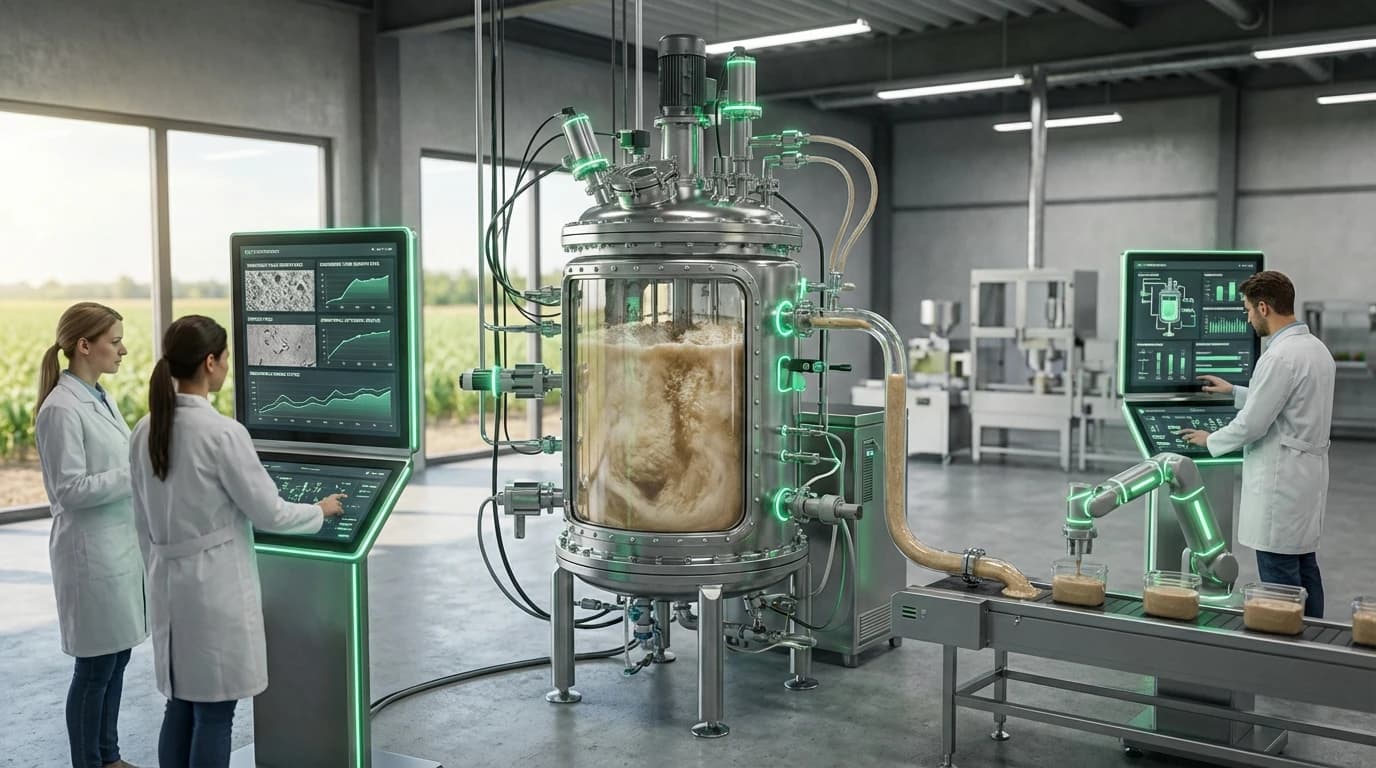
Precision biological production harnesses the metabolic capabilities of engineered microorganisms—primarily yeasts, fungi, and bacteria—to manufacture complex proteins, lipids, and specialty compounds traditionally derived from animals or resource-intensive agriculture. At its core, the process involves inserting genetic instructions into microbial hosts, which then express target molecules such as casein, whey, lactoferrin, collagen, or cocoa butter equivalents when cultured in controlled fermentation environments. These organisms are grown in bioreactors where temperature, pH, nutrient flow, and oxygen levels are precisely managed through software-defined protocols. Advanced perfusion systems continuously supply fresh growth media while removing metabolic waste, maintaining optimal conditions for sustained production. Downstream processing—including filtration, chromatography, and spray-drying—isolates and purifies the desired molecules to food-grade or pharmaceutical-grade standards, yielding ingredients that are molecularly identical to their conventional counterparts but produced without livestock, extensive land use, or the environmental burden of industrial animal agriculture.
The agricultural and food industries face mounting pressure from climate targets, supply chain volatility, and consumer demand for sustainable alternatives. Precision biological production addresses these challenges by decoupling ingredient supply from the constraints of seasonal harvests, animal welfare concerns, and geographic limitations. Consumer packaged goods companies can source fermentation-derived dairy proteins to formulate lactose-free products with authentic taste and functionality, while bakeries and confectioners gain access to cocoa butter alternatives that bypass deforestation-linked palm oil or climate-vulnerable cacao crops. Biomaterials manufacturers are exploring fungal mycelium and bacterial cellulose for leather substitutes and packaging films, opening new revenue streams beyond food. This approach also mitigates risks associated with zoonotic disease outbreaks and antibiotic resistance, issues endemic to concentrated animal feeding operations. By enabling production closer to end markets and reducing dependency on long, fragile supply chains, precision fermentation supports greater resilience and flexibility in ingredient sourcing.
Early commercial deployments are already underway, with companies integrating precision fermentation into contract manufacturing networks to accelerate product launches without the capital intensity of building new farms or processing plants. Industry observers note growing interest from multinational food corporations seeking to diversify protein portfolios and meet net-zero commitments. Pilot facilities are demonstrating the feasibility of running bioreactors on renewable energy, recycling nitrogen-rich media components, and capturing carbon dioxide from fermentation off-gases to further reduce emissions intensity. However, scaling remains constrained by the high cost of pharmaceutical-grade growth media, the need for GMP-certified production infrastructure, and ongoing regulatory discussions around labeling and safety assessments in different jurisdictions. As toll manufacturing marketplaces emerge and production volumes increase, analysts anticipate that precision biological ingredients will approach price parity with conventional inputs, positioning this technology as a cornerstone of future food systems that balance nutrition, sustainability, and economic viability.
TRL
7/9Operational
Impact
5/5
Investment
5/5
Category
Applications
Related Organizations
Uses precision fermentation to create animal-free egg proteins (pepsin and egg white) for food ingredients.
Developer
A European food biotech company using precision fermentation to produce animal-free cheese proteins.
Developer
An Israeli startup producing animal-free dairy proteins via microbial fermentation for the global food industry.
Developer
Designs and produces biodesigned collagen and elastin for the beauty and food industries via fermentation.
Developer
Uses AI and proprietary systems to increase the yield of fermentation-derived dairy proteins.
Developer
A VTT spin-off producing animal-free egg white protein (ovalbumin) using Trichoderma reesei fungus.
Developer
Building continuous fermentation manufacturing infrastructure to help biotech companies scale production.
Developer
Material solutions company that developed Mylo, a mycelium-based leather alternative.
Developer
The pioneer of mycelium technology platform (AirMycelium), providing the foundational biology for functional fungal applications.
Developer

Liberation Labs
United States · Startup
Developing purpose-built precision fermentation biomanufacturing facilities.
Developer
What was expected
Published forecasts about this technology, graded against what happened in Hindsight.
Supporting Evidence
Evidence data is not available for this technology yet.
Research this in Signals
Scan Precision Biological Production for yourself.
Signals turns a topic into a sourced research record you can inspect and rerun. Your first scan is free, and this one starts with Precision Biological Production already loaded, so edit it or scan as is.