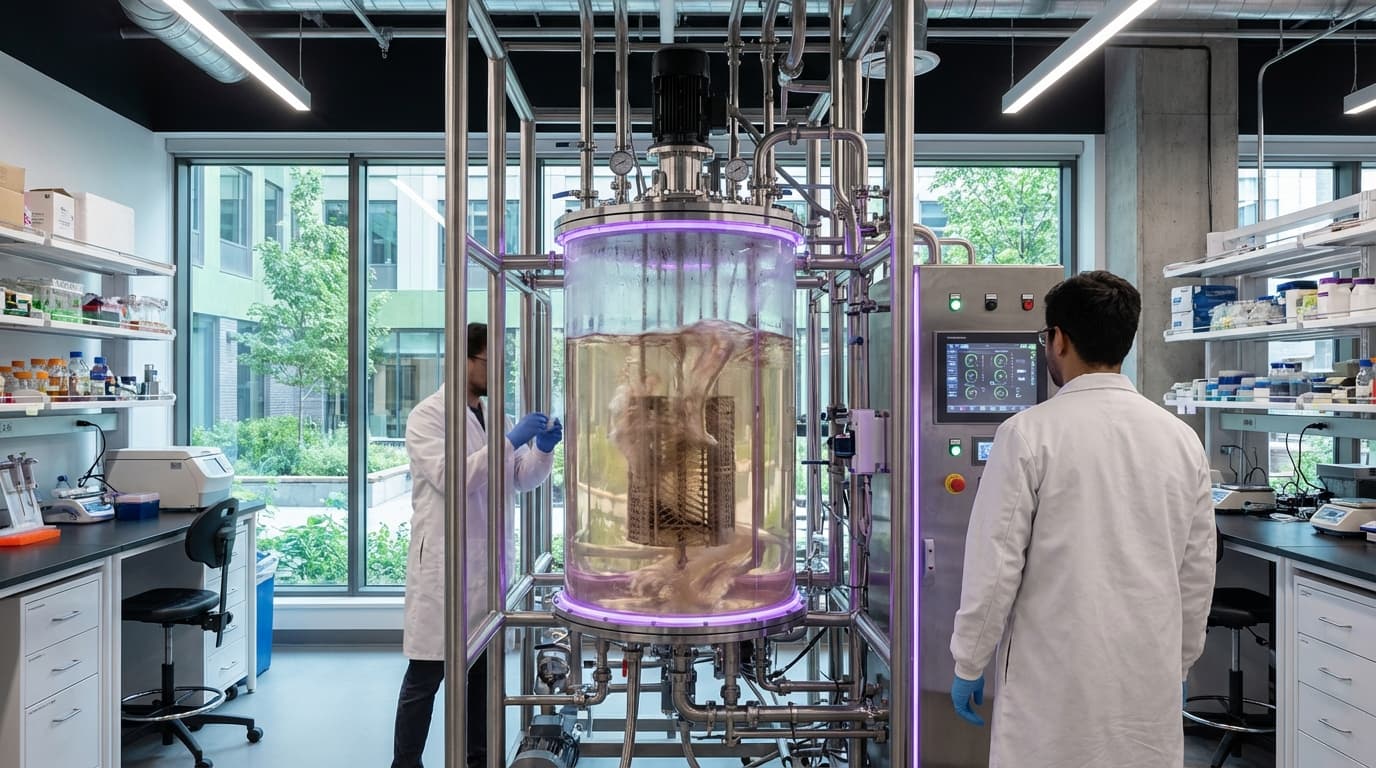
Cellular Agriculture
Cellular agriculture uses cell culture and bioprocessing techniques to produce agricultural products—meat, dairy, eggs, leather, and other animal-derived materials—without raising and slaughtering animals. The process involves taking cells from animals (or using stem cells), providing them with nutrients and growth factors in bioreactors, and encouraging them to grow into tissues or produce proteins. For meat production, cells are grown on scaffolds to create structured tissues, while for other products like milk or egg proteins, cells are engineered to produce specific molecules. This creates products that are biologically identical to conventional ones but produced through biotechnology rather than animal agriculture.
The technology addresses multiple challenges of conventional animal agriculture: environmental impact (greenhouse gas emissions, land use, water consumption), animal welfare concerns, food safety risks, and resource inefficiency. Cellular agriculture could produce meat and other products with dramatically lower environmental impact, eliminate animal suffering, reduce food safety risks, and use resources more efficiently. Applications include cultured meat production, dairy proteins produced through fermentation, egg proteins from cell culture, and leather and other materials grown from cells. Companies like Upside Foods, GOOD Meat, Perfect Day, and various startups are developing cellular agriculture products.
At TRL 5, cellular agriculture products are being commercialized, with some products approved for sale in limited markets, though costs and scale remain challenges. The technology faces obstacles including reducing production costs to compete with conventional products, scaling to industrial production volumes, developing growth media that don't require animal serum, ensuring product quality and safety, and gaining consumer acceptance. However, as the technology improves and scales, costs decrease and products become more viable. Cellular agriculture could transform food production by providing animal products without animals, potentially reducing the environmental impact of agriculture dramatically, improving animal welfare, and creating more sustainable and efficient food systems, though it requires overcoming technical, economic, and consumer acceptance challenges.
Related Organizations

A leader in the cultivated meat industry, being the first to receive FDA green light for cultivated chicken in the US.

Focuses on growing high-quality cultivated beef steaks using 3D tissue engineering.

Dutch food technology company that created the world's first cultivated beef burger.

International nonprofit think tank working to accelerate alternative protein innovation through open-access research and policy advocacy.

Formerly Future Meat Technologies, they are constructing one of the world's largest cultivated meat production facilities in North Carolina.

Develops cell-cultured seafood products, specifically focusing on high-value species like bluefin tuna.

Uses opti-ox technology with pluripotent stem cells to produce cultivated pork and beef rapidly.

Academic center dedicated to developing the scientific and engineering foundations of cellular agriculture.

Australian company creating new food categories using cells from exotic animals (e.g., quail, mammoth DNA).

French company reinventing foie gras through cellular agriculture to offer a cruelty-free alternative.
Supporting Evidence
Research this in Signals
Signals turns a topic into a sourced research record you can inspect and rerun. Your first scan is free, and this one starts with Cellular Agriculture already loaded, so edit it or scan as is.