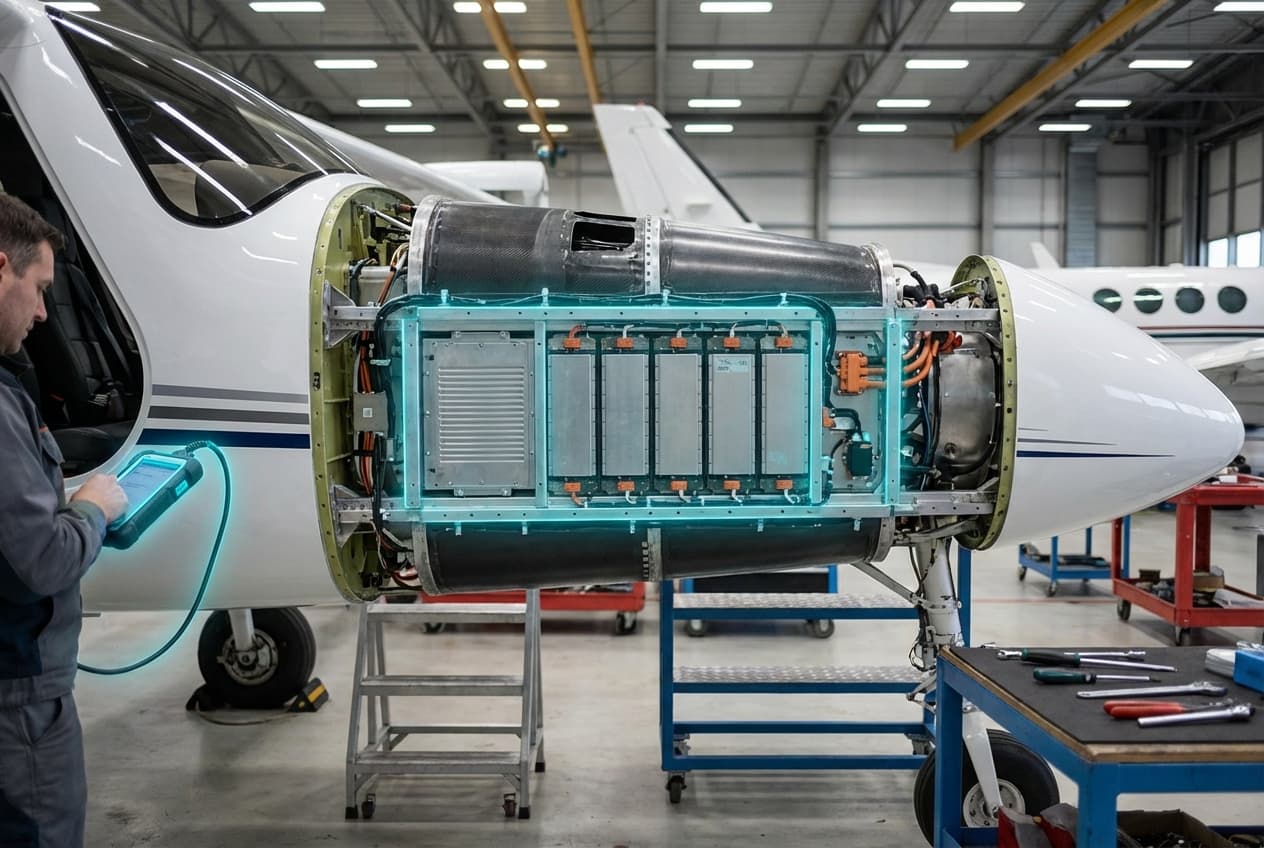
Solid-State Batteries
Solid-state batteries represent a fundamental shift in energy storage architecture, replacing the liquid or gel electrolytes found in conventional lithium-ion batteries with solid materials such as ceramics, glass, or solid polymers. This structural change addresses one of the most persistent challenges in battery technology: the trade-off between energy density and safety. In traditional lithium-ion cells, the liquid electrolyte is flammable and prone to thermal runaway under certain conditions, while also limiting how tightly energy can be packed into a given volume. Solid electrolytes eliminate these liquid components, allowing for thinner separators between electrodes and enabling the use of lithium metal anodes, which can store significantly more energy than the graphite anodes used in current batteries. The result is a battery architecture that can theoretically deliver two to three times the energy density of today's best lithium-ion cells, while also supporting faster charging rates and operating safely across a wider temperature range.
For the aviation industry, where every kilogram of weight directly impacts range, payload capacity, and operational economics, the energy density advantage of solid-state batteries could prove transformative. Electric aircraft today face severe range limitations due to the relatively low energy-to-weight ratio of conventional batteries compared to jet fuel. This constraint has largely confined electric flight to short-duration applications and small aircraft. Solid-state technology offers a pathway to extend flight times and enable new categories of electric aircraft, from urban air mobility vehicles requiring multiple daily cycles to regional aircraft serving routes currently dominated by turboprops. The improved safety profile is equally critical in aviation contexts, where battery failures at altitude pose catastrophic risks. The non-flammable nature of solid electrolytes and their resistance to dendrite formation—microscopic lithium structures that can cause short circuits—addresses fundamental safety concerns that have slowed the adoption of battery-electric propulsion in commercial aviation.
While solid-state batteries remain primarily in the research and development phase, several aerospace companies and battery manufacturers have announced partnerships aimed at bringing this technology to aviation applications within the next decade. Early prototypes have demonstrated the core principles in laboratory settings, though challenges remain in scaling production, reducing manufacturing costs, and achieving the cycle life required for commercial aircraft operations. The technology aligns with broader industry efforts to decarbonise aviation, as electric propulsion powered by high-density solid-state batteries could eliminate direct emissions for short and medium-haul flights. As regulatory frameworks evolve to accommodate electric aircraft and charging infrastructure develops at airports, solid-state batteries are positioned to become a cornerstone technology enabling the transition from experimental electric flight to mainstream commercial operations.
Related Organizations

Develops lithium-metal batteries specifically designed for aviation, offering high energy density and lightweight solutions; acquired by Northvolt.

Leads the SABERS (Solid-state Architecture Batteries for Enhanced Rechargeability and Safety) project.

Develops safe, high-energy density solid-state lithium metal batteries using a ceramic electrolyte.

Develops high-performance Li-Metal batteries with hybrid solid-state electrolytes.

Solid Power
United States · Company
Developer of all-solid-state rechargeable batteries using sulfide-based solid electrolytes.

Developing solid-state battery technology with their FEST (Factorial Electrolyte System Technology).

US Department of Energy multiprogram science and technology national laboratory.

Specializes in the development and manufacturing of ceramic solid-state batteries.


A subsidiary of Bolloré Group producing solid-state Lithium Metal Polymer (LMP) batteries, deployed in buses and stationary storage.
Supporting Evidence
Research this in Signals
Signals turns a topic into a sourced research record you can inspect and rerun. Your first scan is free, and this one starts with Solid-State Batteries already loaded, so edit it or scan as is.