Sustainable Aviation Fuels (SAF) & E-Fuels
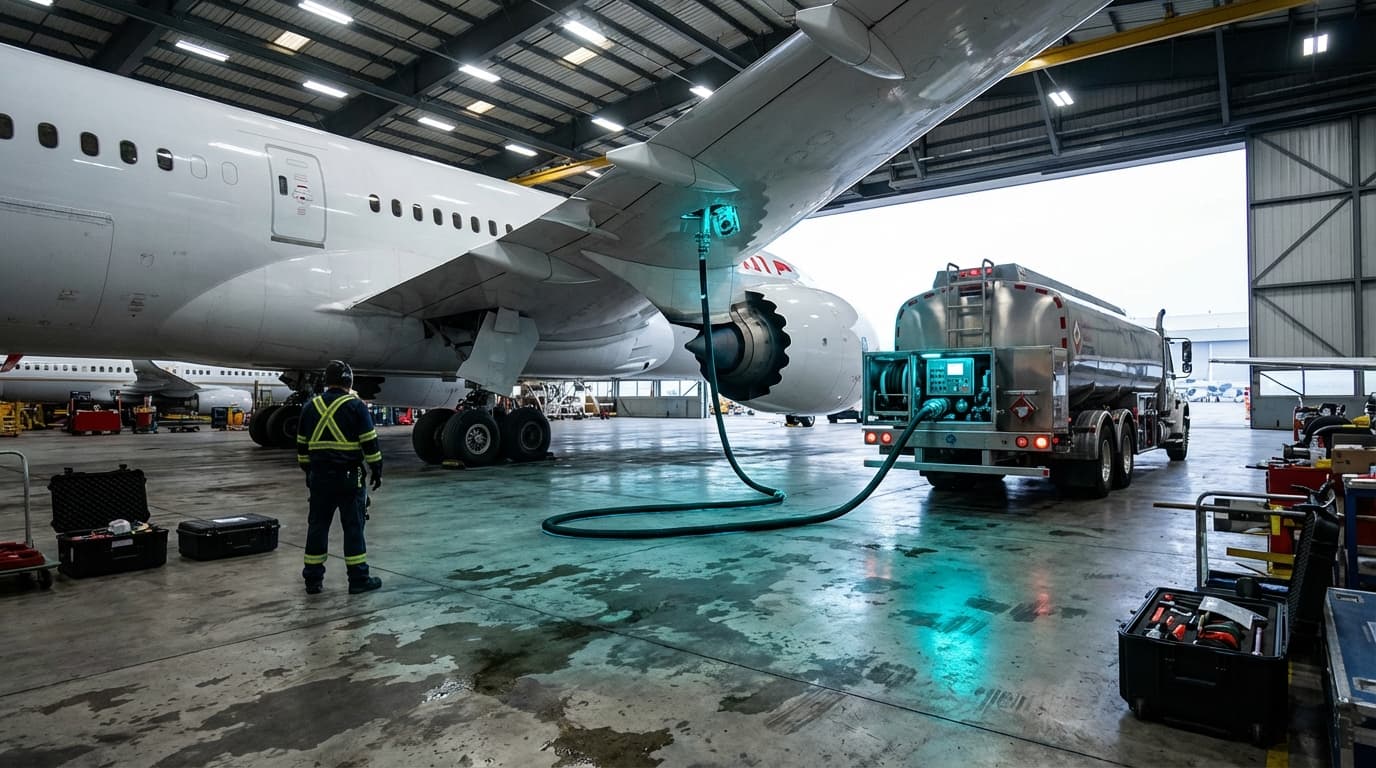
The aviation industry faces a fundamental challenge: jet engines require energy-dense liquid fuels, yet burning conventional kerosene contributes approximately 2-3% of global carbon emissions. Sustainable Aviation Fuels (SAF) and electrofuels (e-fuels) address this dilemma by offering chemically compatible alternatives that can be used in existing aircraft and infrastructure without modification—hence the term "drop-in" fuels. SAF encompasses several production pathways, including hydroprocessed esters and fatty acids (HEFA) derived from waste oils and agricultural residues, Fischer-Tropsch synthesis from biomass or municipal waste, and alcohol-to-jet processes. E-fuels, or power-to-liquid synthetic kerosene, take a different approach by combining captured carbon dioxide with hydrogen produced via electrolysis powered by renewable electricity, creating hydrocarbons that mirror conventional jet fuel at the molecular level. Both pathways aim to reduce lifecycle greenhouse gas emissions by 50-80% compared to fossil kerosene, though actual reductions depend heavily on feedstock sourcing, production methods, and the carbon intensity of the energy used in manufacturing.
The aviation sector's decarbonisation options are notably constrained compared to other transport modes. Battery-electric propulsion remains impractical for long-haul flights due to energy density limitations, and hydrogen faces significant infrastructure and aircraft redesign challenges that push widespread adoption decades into the future. SAF and e-fuels therefore represent the most viable near-term pathway for emissions reduction, particularly for the existing global fleet of aircraft that will remain in service for 20-30 years. Airlines and regulators increasingly recognise this reality, with blending mandates emerging in Europe and voluntary corporate commitments driving early adoption. However, the technology confronts serious scaling obstacles. Biogenic SAF production is limited by sustainable feedstock availability—using food crops raises ethical concerns, while waste oils and residues face supply constraints. E-fuel production, though theoretically unlimited, currently requires vast amounts of renewable electricity and remains prohibitively expensive, with production costs several times higher than conventional jet fuel. Refinery infrastructure capable of producing SAF at scale requires billions in capital investment, and certification processes for new feedstocks and production pathways can take years.
Early commercial deployments demonstrate both the promise and challenges ahead. Several airlines have begun purchasing SAF in small quantities, typically blending it at 1-5% with conventional fuel, while a handful of dedicated production facilities have come online in North America and Europe. Industry analysts note that achieving meaningful emissions reductions will require SAF to comprise 10-20% of global jet fuel supply by 2030 and potentially 50-65% by 2050, necessitating a massive scale-up from today's negligible production levels. The economics remain challenging without policy support—carbon pricing, tax incentives, and blending mandates are proving essential to bridge the cost gap and de-risk long-term investments. Research continues into novel feedstocks, more efficient catalytic processes, and integrated production systems that could lower costs. The trajectory of SAF and e-fuels will likely determine whether aviation can credibly decarbonise while maintaining current growth patterns, or whether more disruptive changes to air travel will become necessary to meet climate targets.
Related Organizations

The world's largest producer of renewable diesel and sustainable aviation fuel (SAF) from waste and residues.

SAF technology company scaling Alcohol-to-Jet (AtJ) production, backed by LanzaTech, Suncor, and Mitsui.
Pioneer in the SAF market, developing production capacity and managing supply chains for airlines.
Broad energy company producing and marketing energies on a global scale.

Carbon transformation company using CO2 electrolysis to produce E-Jet fuel and materials.

Major low-carbon fuel supplier operating the world's first commercial-scale SAF production facility in California.

Renewable chemicals and biofuels company focusing on isobutanol-to-jet technology.

Produces ultra-low carbon Electrofuels for heavy transport and chemical applications.

Creates carbon-negative alcohols and fuels by converting captured CO2 using renewable electricity.

Creates systems that use concentrated sunlight and catalysts to break down CO2 and water into syngas for fuel production.

Develops technology to filter CO2 from the air and convert it into zero-net-carbon gasoline and jet fuel.

Technology developer for micro-channel Fischer-Tropsch reactors to produce SAF from waste.

Manufacturer of synthetic non-biological fuel using direct air capture and hydrogen.
Supporting Evidence
Research this in Signals
Signals turns a topic into a sourced research record you can inspect and rerun. Your first scan is free, and this one starts with Sustainable Aviation Fuels (SAF) & E-Fuels already loaded, so edit it or scan as is.