Grid Integration & Energy Impacts of Electrified Aviation
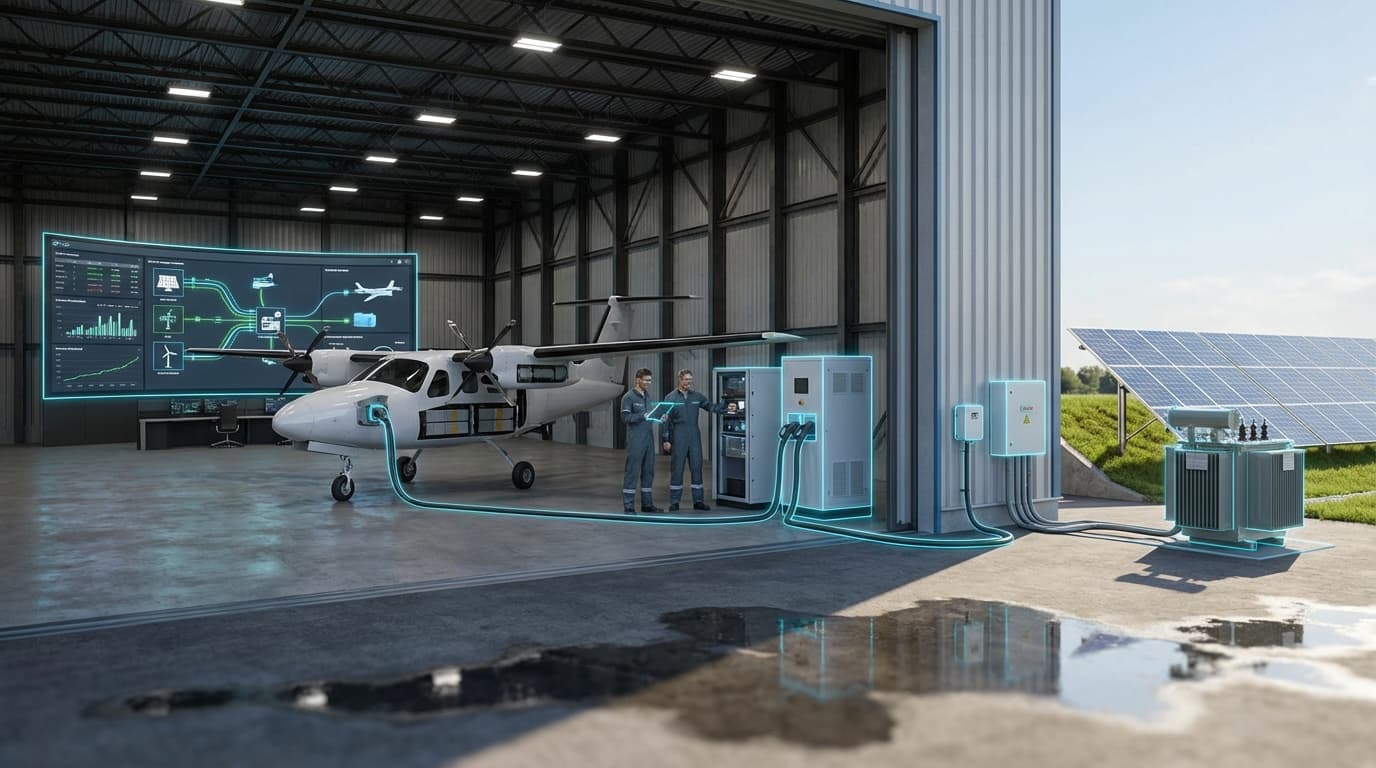
The transition from conventional jet fuel to electric propulsion systems represents one of aviation's most ambitious technological shifts, but it introduces a fundamental challenge: airports must evolve from fuel distribution points into massive electricity consumption nodes. At major international hubs, the charging infrastructure required to support fleets of electric aircraft could demand gigawatt-scale power delivery—comparable to serving a small city. This transformation necessitates sophisticated grid integration strategies that go far beyond simply connecting charging stations to existing utility networks. The technical mechanisms involve coordinating high-power charging cycles with grid capacity, implementing advanced load management systems that can predict and smooth demand spikes as aircraft arrive and depart, and deploying energy storage systems capable of buffering the intermittent, high-intensity power draws characteristic of aviation operations. Without careful architectural planning, the electrical infrastructure requirements could overwhelm regional grids, particularly during peak travel periods when dozens of aircraft might require simultaneous charging.
The aviation industry's electrification presents a paradox: while electric propulsion promises zero direct emissions, the environmental benefit depends entirely on how the electricity is generated and delivered. If airports draw power from grids dominated by fossil fuel generation, the carbon footprint merely shifts from aircraft exhaust to power plant smokestacks, potentially offering little net climate benefit. This challenge has driven airports and utilities to explore integrated renewable energy solutions, including expansive solar canopy installations over parking structures and terminal buildings, on-site wind generation where geography permits, and strategic partnerships with renewable energy developers. Battery energy storage systems emerge as critical enablers, allowing airports to store excess renewable generation during low-demand periods and discharge during peak charging cycles, effectively decoupling electricity consumption from real-time grid constraints. Demand-response strategies further enhance grid stability by enabling airports to modulate charging rates based on grid conditions, electricity prices, and renewable availability, transforming what could be a destabilising load into a flexible grid asset.
Early pilot programs at regional airports are already demonstrating both the challenges and opportunities of this transition. Some facilities are implementing microgrid architectures that combine on-site generation, storage, and intelligent load management to minimise grid impact while maximising renewable utilisation. Industry analysts note that airports with substantial land area and favourable solar or wind resources are particularly well-positioned to become net contributors to grid stability rather than merely consumers. The broader trajectory suggests that successful grid integration of electrified aviation will require unprecedented coordination between airport operators, utilities, renewable energy developers, and aviation authorities. As electric aircraft technology matures from short-range commuter applications toward larger commercial operations, the grid integration challenge will intensify, making early investments in renewable infrastructure and smart grid technologies essential. This convergence of aviation electrification with renewable energy deployment could ultimately accelerate the clean energy transition, with airports serving as anchor tenants for large-scale renewable projects that benefit surrounding communities while enabling genuinely sustainable air travel.
Related Organizations

Developing the ALIA-250 aircraft and an extensive charging network for electric aviation.

Maintains the efficiency charts for solar cells and conducts foundational research on perovskite stability.

An independent, non-profit energy research and development organization.

Operator of Paris airports, actively building a vertiport network in Paris for the 2024 Olympics and beyond.

Industrial giant offering the 'Senseye Predictive Maintenance' suite and MindSphere IoT platform.

Leading designer, developer, and operator of vertiport infrastructure for the advanced air mobility industry.


Provides the eMine portfolio, including charging infrastructure and trolley systems for electric mines.


Infrastructure giant establishing a network of vertiports in the US and Europe to support eVTOL operations.

Broad energy company producing and marketing energies on a global scale.
Supporting Evidence
Research this in Signals
Signals turns a topic into a sourced research record you can inspect and rerun. Your first scan is free, and this one starts with Grid Integration & Energy Impacts of Electrified Aviation already loaded, so edit it or scan as is.