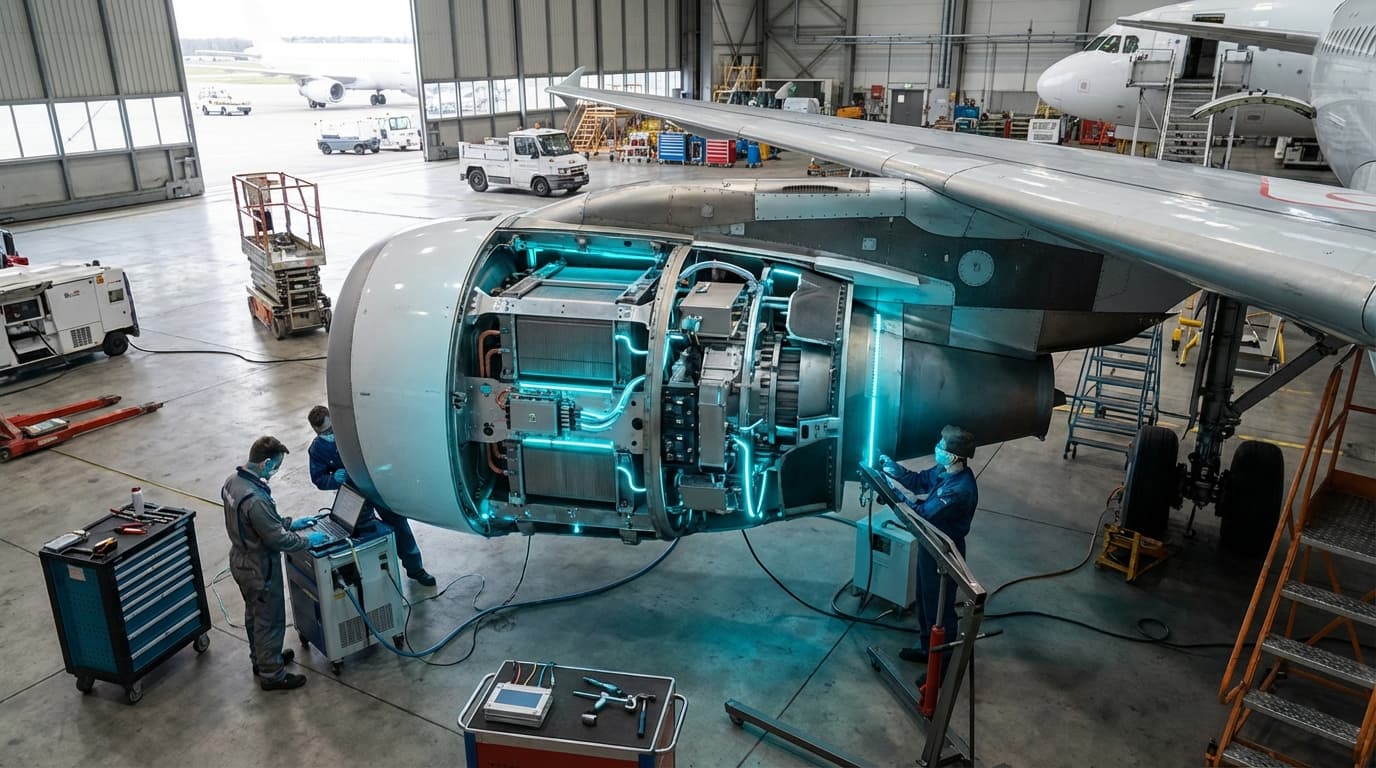
Hydrogen-Electric Powertrains
Hydrogen-electric powertrains represent a fundamental shift in aircraft propulsion architecture, combining hydrogen fuel cell technology with electric motors to eliminate carbon emissions during flight. Unlike conventional jet engines that burn kerosene-based fuels, these systems generate electricity through an electrochemical reaction between hydrogen and oxygen, producing only water vapor and heat as byproducts. The fuel cells convert hydrogen into electrical energy with efficiency rates typically exceeding 50%, which then powers electric motors connected to propellers or ducted fans. This configuration requires careful integration of several critical components: cryogenic hydrogen storage tanks capable of maintaining temperatures below -253°C, high-power fuel cell stacks that can deliver megawatt-scale output, sophisticated thermal management systems to dissipate heat in the thin air at altitude, and power electronics to regulate voltage and current distribution throughout the aircraft.
The aviation industry faces mounting pressure to decarbonize, with commercial flight currently accounting for approximately 2-3% of global carbon emissions. Hydrogen-electric powertrains address this challenge by offering a viable pathway to zero-emission flight, particularly for regional and short-haul routes where battery-electric solutions struggle with weight and energy density limitations. This technology overcomes the fundamental constraint of battery systems—their relatively low energy-to-weight ratio—by leveraging hydrogen's superior energy density, which is roughly three times that of conventional jet fuel by mass. The approach also sidesteps the need for entirely new aircraft designs, as hydrogen-electric systems can potentially be integrated into modified existing airframes or purpose-built platforms. However, the transition demands substantial infrastructure investment, including hydrogen production facilities, airport refueling systems, and supply chain logistics capable of handling cryogenic materials safely and efficiently.
Several aerospace manufacturers and research consortia are actively developing hydrogen-electric aircraft for commercial deployment within the next decade. Regional aircraft configurations, typically seating 19 to 80 passengers on routes under 1,000 kilometers, represent the most immediate application target, with industry analysts suggesting these platforms could enter service in the early 2030s. Early flight demonstrations have validated the core technology, though significant engineering challenges remain around optimizing hydrogen storage volume, managing the additional weight of fuel cell systems and cryogenic tanks, and ensuring adequate power output during critical flight phases like takeoff and climb. The technology aligns with broader aviation industry commitments to achieve net-zero emissions by 2050, positioning hydrogen-electric powertrains as a cornerstone solution alongside sustainable aviation fuels and operational efficiency improvements. As hydrogen production costs decline and green hydrogen infrastructure expands globally, these propulsion systems are expected to scale from regional applications toward larger aircraft and longer routes, fundamentally transforming the environmental profile of commercial aviation.
Related Organizations

Partner in the EuroQCI initiative, working on the space segment of the European quantum communication infrastructure.

Developer of hydrogen-electric powertrain systems for aircraft, acquired by Joby Aviation.

Leader in hydrogen-electric aviation, developing fuel cell powertrains for regional aircraft.

Aerospace design and maintenance organization pivoting to green aviation.

GKN Aerospace
United Kingdom · Company
Leads the H2GEAR program developing liquid hydrogen fuel systems.

Developing the Flying Fuel Cell (FFC) and liquid hydrogen fuel systems.

Developer and manufacturer of fuel cell stacks and systems.


French startup developing a hydrogen-electric light aircraft.
Supporting Evidence
Research this in Signals
Signals turns a topic into a sourced research record you can inspect and rerun. Your first scan is free, and this one starts with Hydrogen-Electric Powertrains already loaded, so edit it or scan as is.