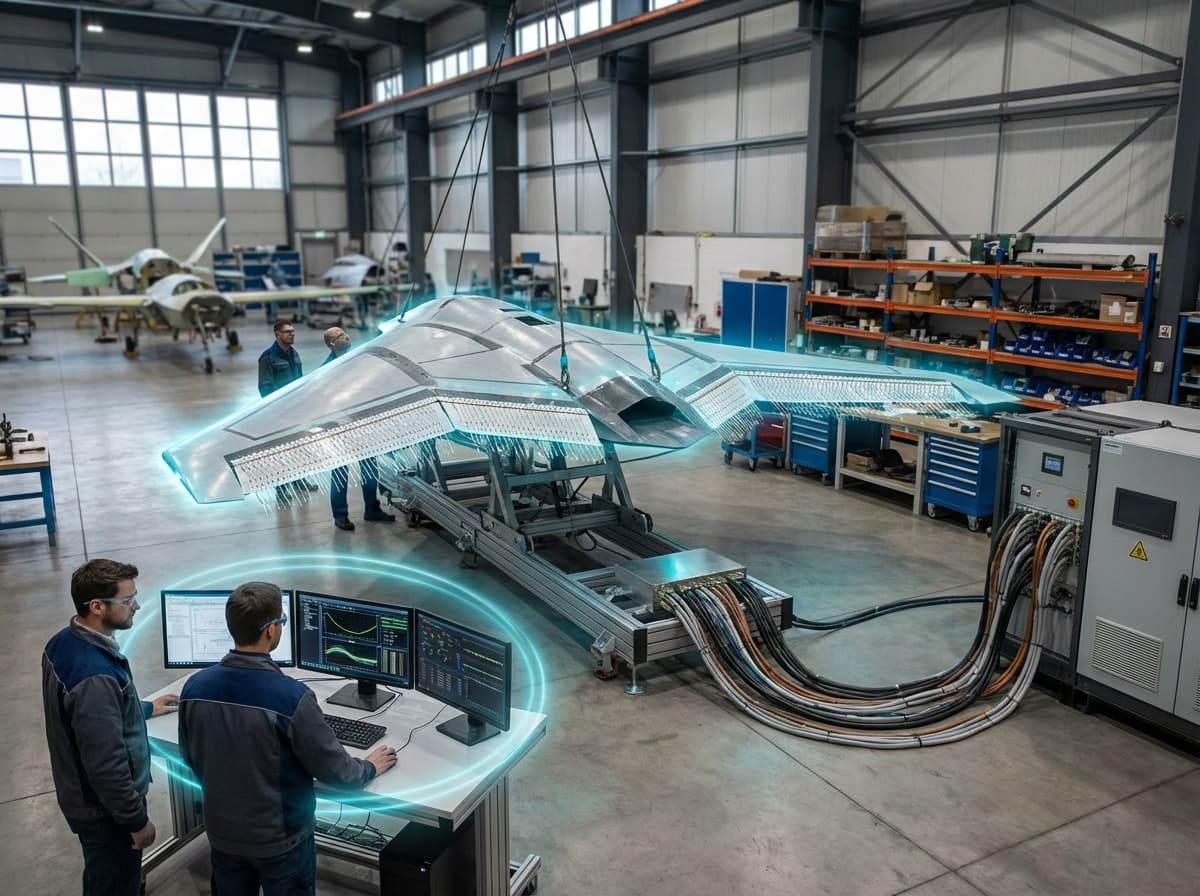
Electro-Aerodynamic (Ion) Propulsion
Electro-aerodynamic propulsion, also known as ionic wind or electrohydrodynamic thrust, represents a fundamentally different approach to flight that eliminates traditional moving components like propellers, turbines, or jet engines. The technology operates by creating a strong electric field between two electrodes—typically a thin wire emitter and a larger collector surface. When high voltage is applied, air molecules near the emitter become ionized, stripping electrons and creating positively charged ions. These ions are then accelerated toward the oppositely charged collector electrode, colliding with neutral air molecules along the way and transferring momentum. This cascade of collisions produces a directional flow of air, or ionic wind, that generates thrust without any mechanical motion. The process is entirely solid-state, relying solely on electrical energy to manipulate air molecules, which makes it inherently silent and vibration-free. The absence of combustion or rapidly spinning components also means dramatically reduced maintenance requirements and potentially longer operational lifespans compared to conventional propulsion systems.
The aviation industry faces mounting pressure to address noise pollution, particularly in urban environments where low-altitude flight operations are increasingly desired for applications like air taxis and delivery drones. Traditional aircraft propulsion creates significant acoustic disturbance through both mechanical vibration and aerodynamic turbulence, limiting where and when aircraft can operate near populated areas. Electro-aerodynamic propulsion addresses this challenge directly by producing virtually no audible sound during operation, opening possibilities for noise-sensitive applications that would be impossible with conventional engines. Beyond noise reduction, the technology's solid-state nature eliminates the mechanical complexity that drives maintenance costs and reliability concerns in traditional aviation. However, the fundamental challenge lies in energy efficiency and power density—current EAD systems require extremely high voltages and produce relatively modest thrust compared to their power consumption and weight. The thrust-to-weight ratio remains orders of magnitude below what conventional propulsion achieves, making it impractical for anything beyond lightweight experimental aircraft at present.
Research institutions have demonstrated the viability of the concept through small-scale prototypes, including sustained flight of lightweight unmanned vehicles, proving that ionic wind can indeed generate sufficient lift and thrust for controlled flight. These early demonstrations, while limited in scale and duration, validate the underlying physics and suggest potential pathways for improvement. Current research focuses on optimizing electrode geometries, exploring alternative ionization methods, and developing lightweight high-voltage power systems that could make larger implementations feasible. The technology shows particular promise for hybrid propulsion architectures, where EAD systems might complement rather than replace conventional engines, providing silent maneuvering capability or auxiliary thrust. As urban air mobility concepts mature and regulatory frameworks evolve to accommodate new forms of aviation, the demand for ultra-quiet propulsion will likely intensify. While significant engineering challenges remain before electro-aerodynamic propulsion can scale to commercial aviation applications, the technology represents a compelling vision for a future where aircraft operate silently above our cities, fundamentally reshaping the relationship between aviation and urban environments.
Related Organizations

Home to the lab of Professor Steven Barrett, who built and flew the first solid-state ion-propelled plane.

Undefined Technologies
United States · Startup
Developing 'Silent Ventus' drones powered by ionic propulsion technology.

Runs the Semantic Forensics (SemaFor) program to develop technologies for automatically detecting, attributing, and characterizing falsified media.
Haofly Technology
China · Startup
Chinese startup developing ionic wind propulsion systems for UAVs.

Leads the SABERS (Solid-state Architecture Batteries for Enhanced Rechargeability and Safety) project.

A leading technical university known for research into self-healing asphalt using steel wool and induction heating.

Home to the Conboy Lab (Irina and Michael Conboy).

French state research organization investigating plasma and ion propulsion physics.
Supporting Evidence
Research this in Signals
Signals turns a topic into a sourced research record you can inspect and rerun. Your first scan is free, and this one starts with Electro-Aerodynamic (Ion) Propulsion already loaded, so edit it or scan as is.