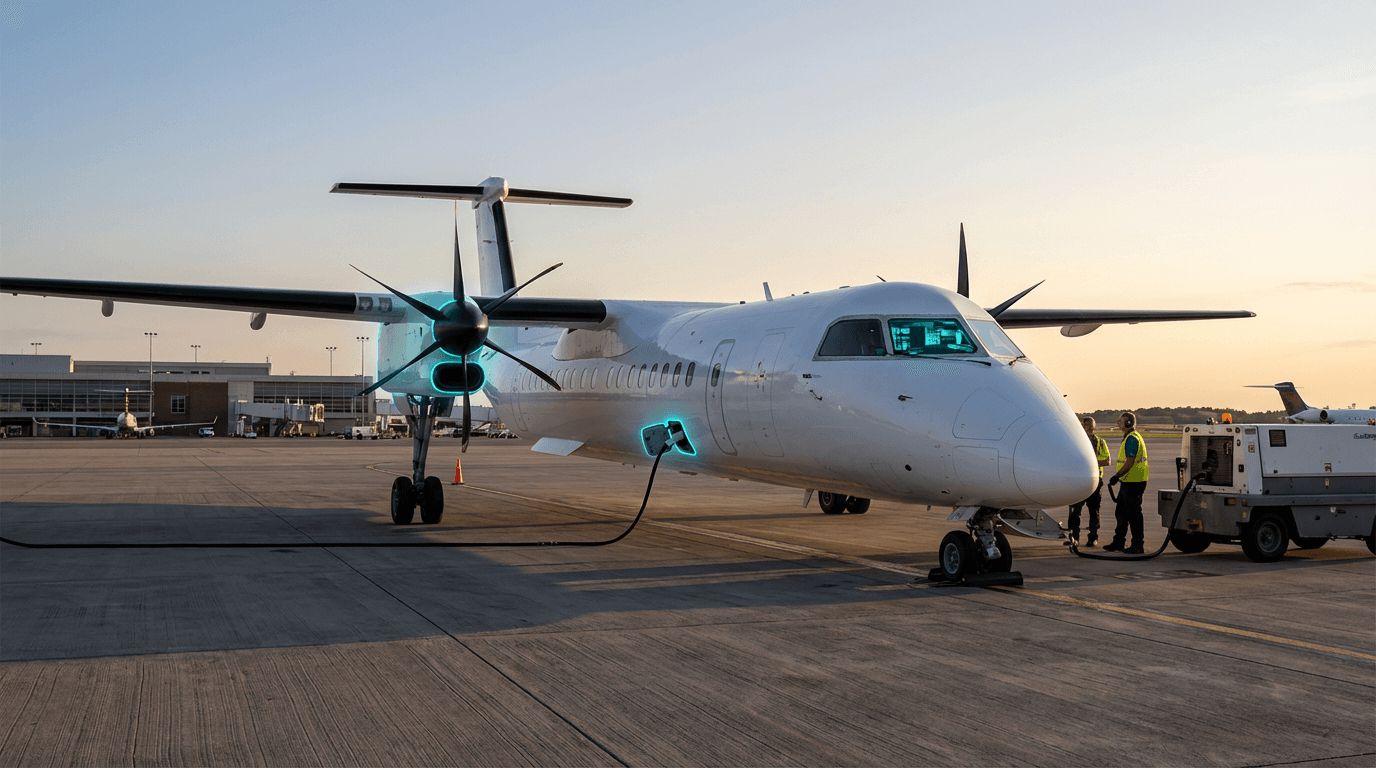
Regional Electric & Hybrid-Electric Commercial Aviation
Regional electric and hybrid-electric commercial aviation represents a fundamental shift in how short-haul air travel is powered, targeting the replacement of conventional turboprop and regional jet aircraft on routes between 100 and 500 nautical miles. These aircraft, designed to carry between 9 and 50 passengers, employ either fully electric propulsion systems powered by high-density battery packs or hybrid-electric configurations that combine batteries with hydrogen fuel cells or small turbine generators. The technical challenge centers on achieving sufficient energy density to match the range and payload capabilities of traditional kerosene-burning engines while maintaining acceptable weight margins. Electric motors offer inherent advantages in efficiency and reduced mechanical complexity, but current lithium-ion battery technology remains the primary constraint, with energy density roughly 50 times lower than jet fuel by weight. Hybrid approaches attempt to bridge this gap by using fuel cells or range-extending generators to recharge batteries in flight, though this adds system complexity and certification challenges.
The aviation industry faces mounting pressure to reduce carbon emissions, with regional routes representing a significant portion of total flight operations yet often serving thin markets where larger, more efficient aircraft are impractical. Conventional regional aircraft, while essential for connecting smaller communities to major hubs, operate with relatively poor fuel efficiency per passenger-mile and contribute disproportionately to local air quality issues around regional airports. Electric and hybrid-electric propulsion promises near-zero direct emissions, dramatically lower operating costs through reduced fuel consumption and simplified maintenance, and significantly quieter operations that could ease noise restrictions at urban airports. These aircraft could unlock new route possibilities previously deemed uneconomical, particularly for short hops between secondary cities, while reducing the environmental impact of essential air connectivity. The technology also addresses the challenge of decarbonizing aviation in segments where sustainable aviation fuels may be too expensive or battery-electric solutions more practical than long-haul alternatives still decades away.
Several manufacturers are advancing toward certification, with development programs targeting entry into service in the mid-to-late 2020s, though timelines remain subject to both technical validation and regulatory approval processes. Early commercial deployments will likely focus on routes with established passenger demand, favorable weather conditions, and airports willing to invest in charging or hydrogen refueling infrastructure. Scandinavian countries, with their short inter-city distances, strong environmental commitments, and existing hydroelectric power infrastructure, represent particularly promising early markets. The success of these aircraft depends critically on continued improvements in battery energy density, the buildout of specialized ground infrastructure at regional airports, and the ability to demonstrate dispatch reliability comparable to conventional aircraft—a standard where even minor delays can cascade through airline networks. As these technologies mature, they could fundamentally reshape regional air travel, making it cleaner, quieter, and potentially more accessible, while serving as a proving ground for electric propulsion concepts that may eventually scale to larger aircraft and longer routes.
Related Organizations

Manufacturer of 'Alice', the world's first all-electric commuter aircraft.

Developing the ES-30, a regional aircraft with reserve-hybrid turbogenerators.

Manufacturer of electric propulsion units (EPUs) for commercial aviation.

Develops hybrid-electric powertrain upgrades for existing aircraft (e.g., Eco Caravan).

Developing the ERA (Electric Regional Aircraft), a 19-seater hybrid-electric regional transport.

Developing a hybrid-electric eSTOL aircraft using blown lift technology.

Developing the Cassio family of aircraft with a proprietary hybrid-electric power module.

Developing the Maeve 01, a modular regional aircraft optimized for hybrid-electric propulsion.

Regional air travel platform committed to electrifying its fleet of Cessna Grand Caravans.

Italian aircraft manufacturer developing the P-Volt, an electric version of its P2012 Traveller.
Supporting Evidence
Research this in Signals
Signals turns a topic into a sourced research record you can inspect and rerun. Your first scan is free, and this one starts with Regional Electric & Hybrid-Electric Commercial Aviation already loaded, so edit it or scan as is.