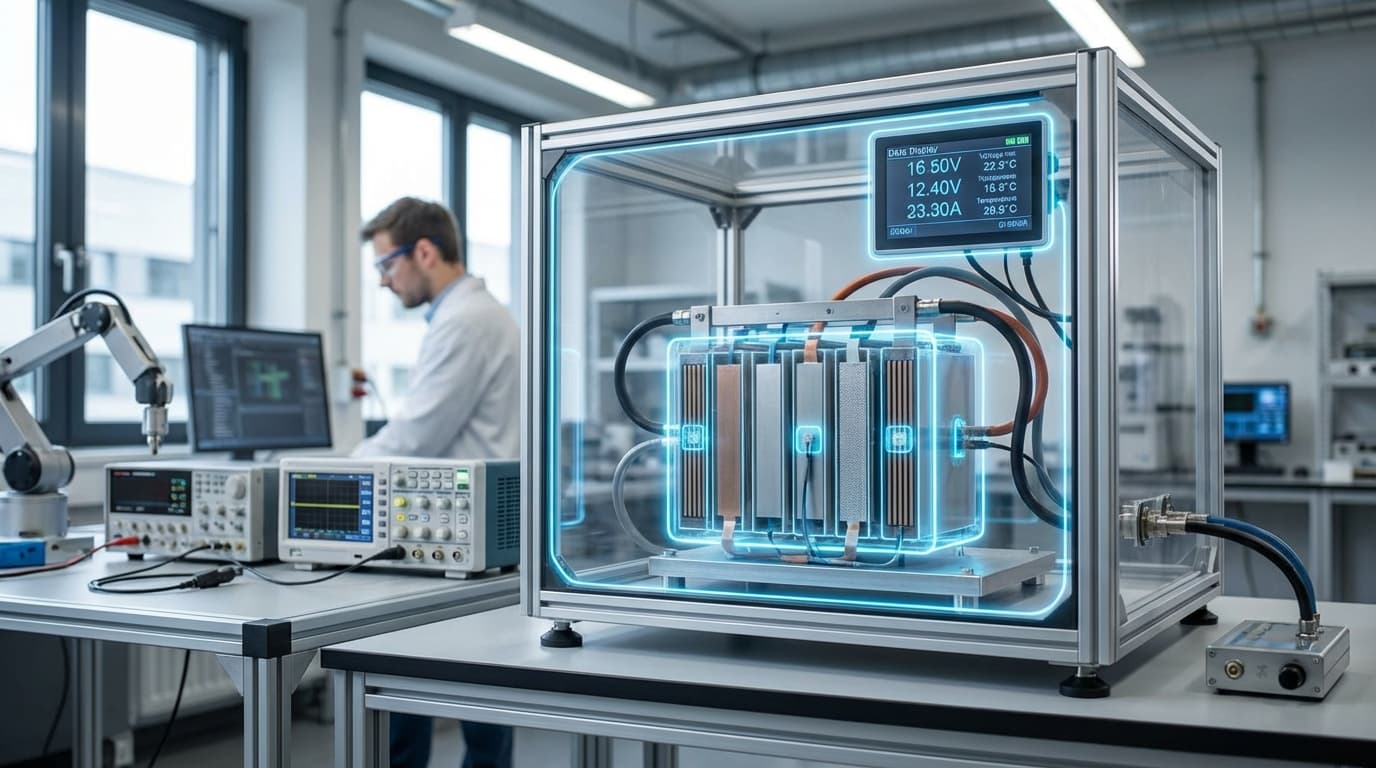
Solid-State Batteries
Solid-state batteries represent a fundamental shift in energy storage architecture, replacing the liquid or gel electrolytes found in conventional lithium-ion batteries with solid-state materials such as ceramics, glass, or solid polymers. In traditional batteries, liquid electrolytes facilitate ion movement between the anode and cathode, but they also introduce safety risks due to their flammability and tendency to degrade over time. Solid electrolytes eliminate these vulnerabilities while enabling the use of lithium metal anodes, which offer significantly higher energy density than the graphite anodes used in current battery designs. The solid interface also allows for more compact cell architectures, as it eliminates the need for heavy separator materials and cooling systems that add weight and complexity to battery packs.
The transportation sector faces a critical challenge in achieving the energy density required for mass-market electric vehicle adoption and the electrification of aviation. Current lithium-ion batteries, while continuously improving, are approaching their theoretical energy density limits, constraining vehicle range and requiring large, heavy battery packs that reduce efficiency. Solid-state technology addresses these limitations by potentially doubling energy density compared to conventional cells, which translates directly into extended range without proportional increases in weight or volume. This breakthrough is particularly crucial for commercial aviation applications, where weight penalties severely impact operational economics. Additionally, the enhanced thermal stability of solid electrolytes reduces the risk of thermal runaway events, addressing one of the primary safety concerns that has plagued battery development and slowed adoption in certain applications.
Research institutions and automotive manufacturers have invested heavily in bringing solid-state technology from laboratory demonstrations to commercial viability, though significant manufacturing challenges remain. Early deployments indicate that solid-state batteries could achieve charging times measured in minutes rather than hours, addressing range anxiety and enabling new use cases for electric vehicles. Industry analysts note that the technology is particularly well-suited for premium electric vehicles and urban air mobility platforms, where performance requirements justify higher initial costs. The development trajectory suggests a gradual transition, with hybrid solid-state designs appearing first in niche applications before full solid-state architectures become economically viable for mass-market vehicles. As manufacturing processes mature and economies of scale develop, this technology is positioned to become a cornerstone of the broader electrification movement, enabling transportation modes that are currently impractical with existing battery chemistry.
Related Organizations

Develops solid-state lithium-metal batteries with ceramic separators, primarily for EVs but with high relevance to future grid density.

Specializes in the development and manufacturing of ceramic solid-state batteries.

A subsidiary of Bolloré Group producing solid-state Lithium Metal Polymer (LMP) batteries, deployed in buses and stationary storage.

Developing solid-state battery technology with their FEST (Factorial Electrolyte System Technology).

Developing agricultural support tools including electrostatic spraying and growth stimulation technologies for greenhouses.
Major lithium supplier and battery manufacturer producing solid-state batteries with oxide-ceramic diaphragms.

German research institute focusing on material development for solid electrolytes and protective coatings for lithium anodes.
Supporting Evidence
Research this in Signals
Signals turns a topic into a sourced research record you can inspect and rerun. Your first scan is free, and this one starts with Solid-State Batteries already loaded, so edit it or scan as is.