Zorgwoningen (Care-Integrated Living)
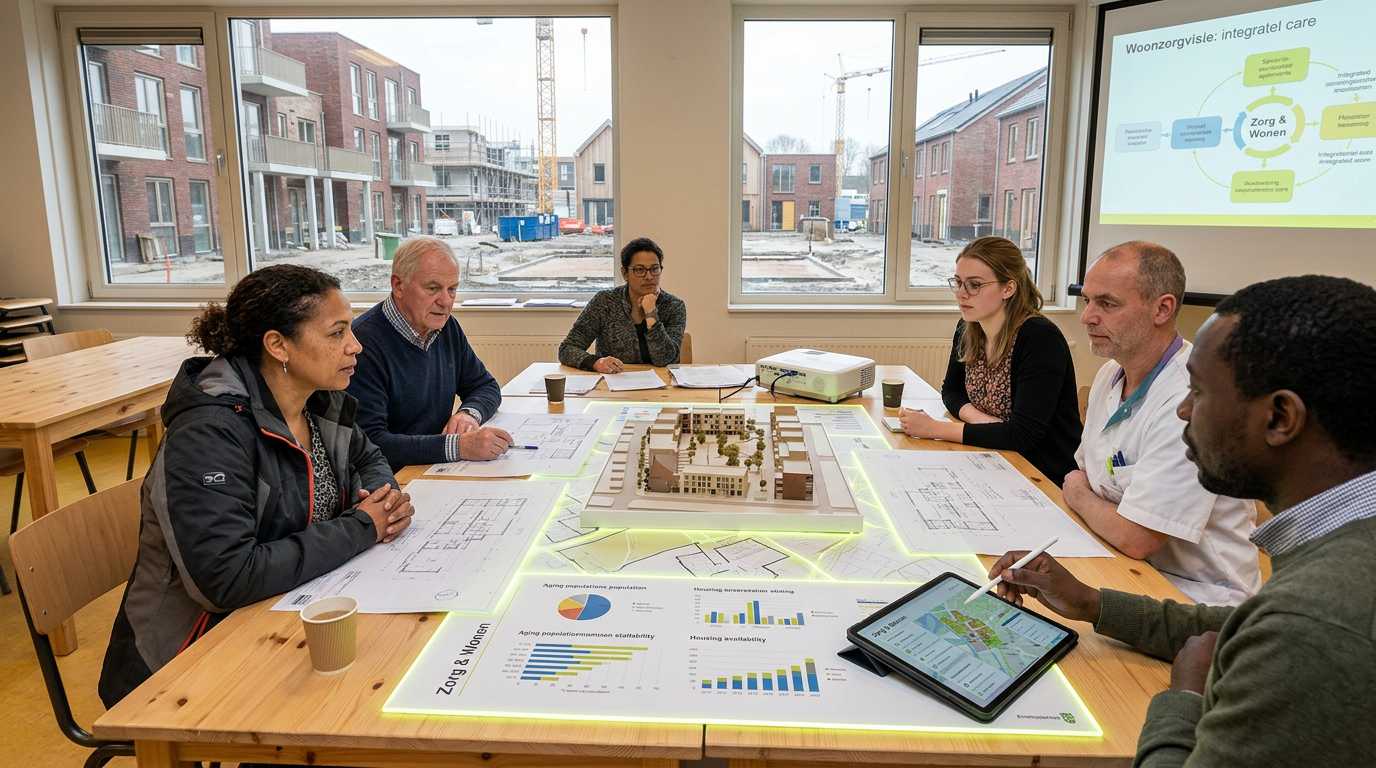
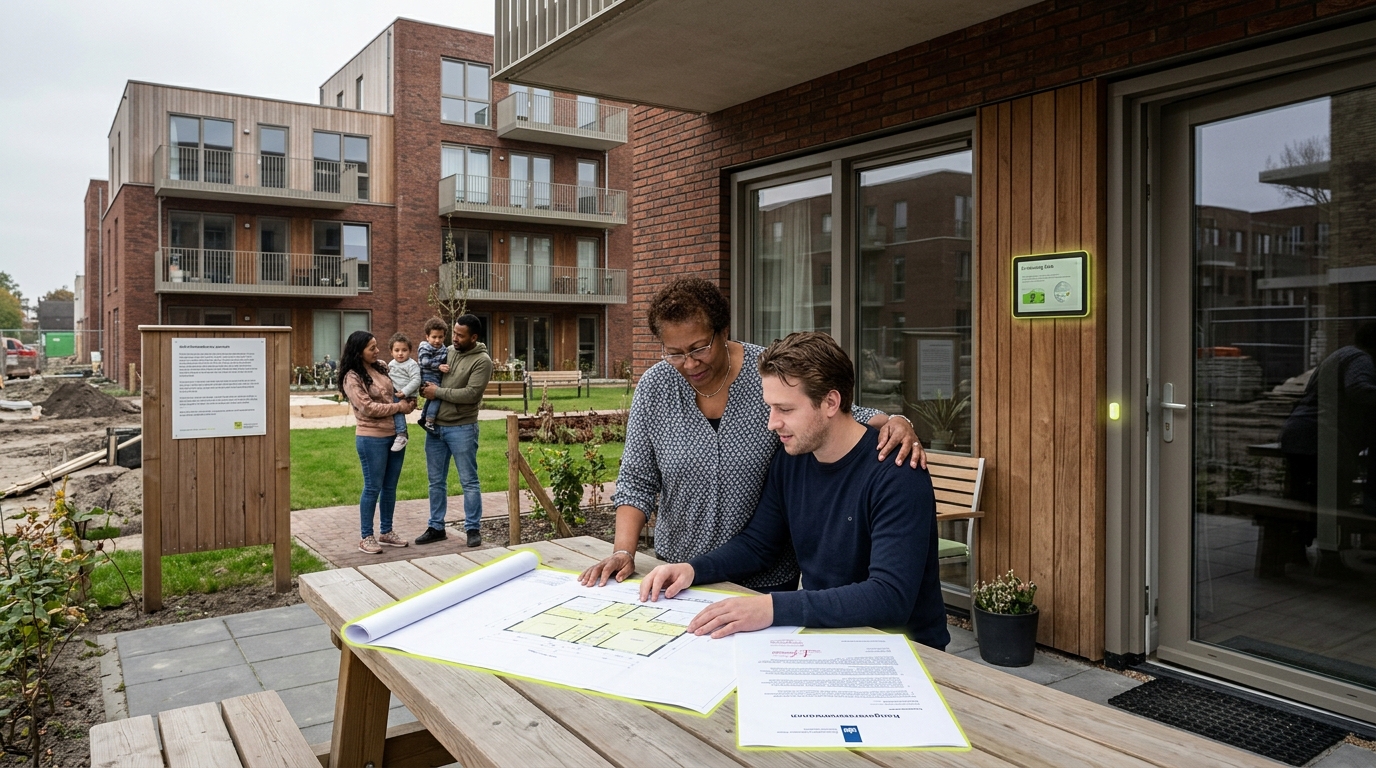
Zorgwoningen represent a fundamental rethinking of how housing and healthcare intersect in aging societies, addressing both demographic pressures and the spatial politics of urban densification. The core challenge they tackle is twofold: first, the growing mismatch between an aging population requiring varying levels of support and the institutional care model that isolates seniors from their communities; second, the persistent local resistance to new housing development that has stalled densification efforts across the Benelux region. By embedding care infrastructure directly into residential neighborhoods through purpose-designed housing units, this model allows elderly residents to maintain independence and community ties while accessing support services as needed. Unlike traditional nursing homes that concentrate care in institutional settings, zorgwoningen blur the boundary between independent living and assisted care, creating a continuum that adapts to changing needs without requiring relocation.
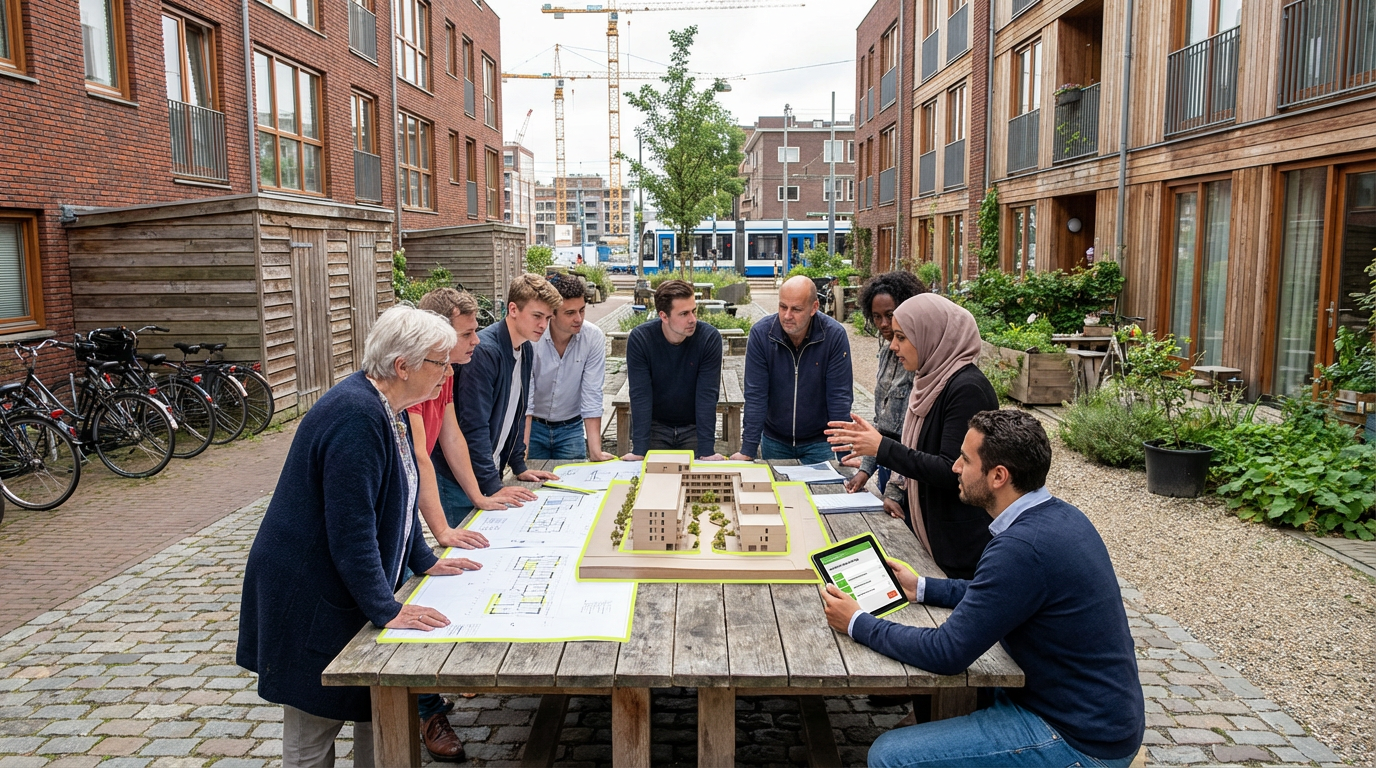
The emergence of zorgwoningen reflects converging policy shifts and market innovations across Netherlands, Belgium, and Luxembourg. National 'aging in place' strategies increasingly prioritize community-based care over institutional models, while municipalities recognize that senior-focused developments often encounter less neighborhood opposition than conventional apartment blocks because they address a visible local need rather than appearing to serve outside demand. Implementation models vary considerably: the Netherlands has pioneered 'Knarrenhof' cooperative senior courts where residents collectively manage shared spaces and mutual support networks; Belgium is experimenting with intergenerational complexes that mix senior units with family housing; Luxembourg is testing technology-enabled smart apartments with integrated monitoring systems. Early evidence suggests these developments can catalyze a beneficial housing chain reaction—seniors vacating larger family homes create availability in the existing stock while new construction adds net units. However, the pattern remains uneven, with successful projects concentrated in municipalities that have adapted zoning codes and financing mechanisms to accommodate the hybrid care-housing model.
The implications for housing policy and urban development are substantial but contingent on resolving persistent structural challenges. Financially, the model requires bridging two traditionally separate funding streams—housing finance and healthcare budgets—which often operate under incompatible timelines and risk frameworks. Affordability remains precarious for middle-income seniors who earn too much for social housing but cannot afford market-rate care-integrated units, potentially creating a new form of housing inequality. Municipalities should monitor whether zorgwoningen genuinely reduce opposition to densification or merely shift resistance to other project types, and whether the released family homes actually reach younger households or are absorbed by investors. The scalability of this approach depends on developing standardized care-infrastructure specifications that can be financed conventionally, establishing clear regulatory frameworks for the care-housing interface, and ensuring that the model serves diverse income levels rather than becoming a premium product. As demographic aging accelerates, the success or failure of zorgwoningen in the Benelux region may offer crucial lessons for other European housing markets facing similar pressures.
Related Organizations

A housing corporation specializing in housing for the elderly, known for transforming traditional care homes into modern independent living concepts.

The largest provider of senior care and housing in Antwerp, offering service flats and residential care centers.

Investment manager and developer of homes and residential areas.

A large real estate investment manager with a significant portfolio and strategy focused on healthcare real estate (Zorgvastgoed).

The branch association for care organizations in the Netherlands.

Aedes
Netherlands · Consortium
The umbrella association of Dutch housing corporations, facilitating knowledge exchange on sales models.

A knowledge institute researching how people can age vitally, including the impact of living environments.
A care provider offering a wide range of care services, including residential care and home care, specifically in the Flevoland region.

Heijmans
Netherlands · Company
A major Dutch construction firm known for the 'Heijmans ONE', a movable prefab home for temporary placement.