Co-Living Models
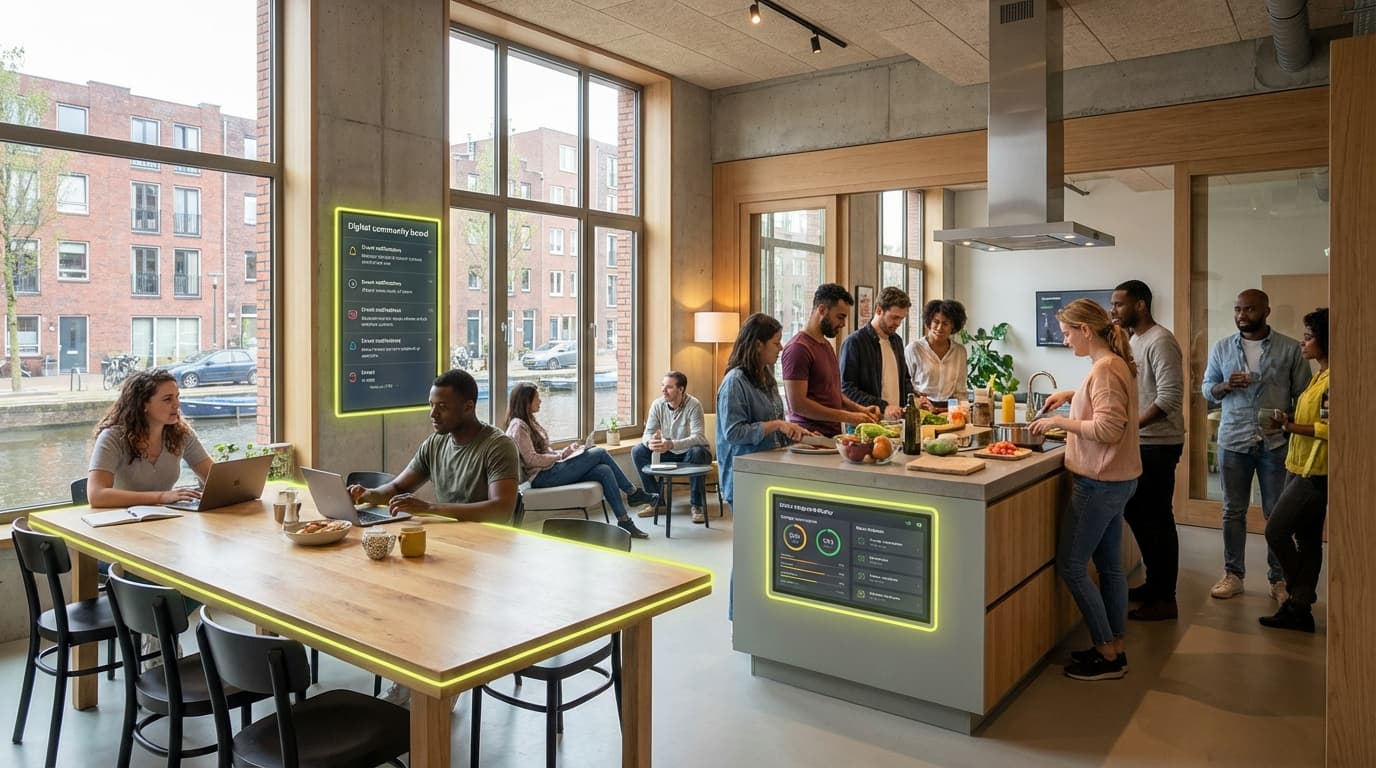
Co-living models represent a strategic response to converging pressures in Benelux housing markets: rising costs that price out young professionals and students, demographic shifts toward smaller households, and growing demand for community-oriented living arrangements that counter urban isolation. Unlike traditional shared housing, contemporary co-living intentionally designs private bedrooms alongside curated shared amenities—kitchens, lounges, workspaces, sometimes gyms or rooftop gardens—under professional management structures. This model matters because it addresses both economic accessibility and social infrastructure simultaneously, potentially easing opposition to density by offering smaller individual footprints while maintaining livability through collective resources. In markets where land scarcity and construction costs make conventional apartments increasingly unaffordable, co-living reframes housing as a service rather than purely a product, bundling utilities, maintenance, and community programming into flexible rental arrangements.
Early evidence across the Benelux region indicates growing experimentation with diverse co-living formats. Dutch platforms have launched urban co-living buildings targeting young professionals in Amsterdam and Rotterdam, often converting underutilized office buildings or designing purpose-built structures with 15-30 private units around shared facilities. Belgian initiatives include both grassroots shared housing cooperatives and developer-led projects in Brussels and Antwerp, while Luxembourg has seen pilot developments aimed at cross-border workers and international professionals seeking affordable entry points into expensive rental markets. Industry observers note that successful models balance privacy with programmed social interaction—weekly dinners, skill-sharing events, co-working arrangements—without mandating participation. However, the sector remains fragmented, with significant variation in quality, management approaches, and target demographics. Regulatory frameworks often lag behind, as zoning codes and building standards designed for traditional apartments may not accommodate shared kitchens or flexible room configurations, creating permitting uncertainties that slow deployment.
Plausible implications extend beyond immediate affordability gains. If co-living scales effectively, it could influence urban density debates by demonstrating that smaller private spaces paired with quality shared amenities can maintain resident satisfaction, potentially reducing political resistance to compact housing forms. For municipalities facing housing shortages, co-living offers a tool to increase unit counts within existing building envelopes, though this requires updating housing codes and establishing standards for shared-space ratios and management accountability. Social outcomes remain uncertain: while proponents emphasize community building and reduced loneliness, critics question whether professionally managed co-living genuinely fosters organic social ties or merely commercializes communal living. Monitoring should focus on regulatory adaptations across Benelux jurisdictions, resident satisfaction and tenure patterns beyond initial novelty periods, and whether co-living remains a transitional housing phase or evolves into a stable long-term option across age groups and income levels.
Related Organizations

A network of shared homes for young professionals, focusing on community and sustainable renovation of existing townhouses.

Holland2Stay
Netherlands · Company
A housing provider offering studios and apartments for students and young professionals.

Global leader in the investment, development, and management of high-quality rental housing.

The world's largest coliving company (merged with Common), setting global standards for shared living operations.


A Belgian real estate investment trust (BE-REIT) specialized in student housing.

A Belgian co-living operator focusing on flexible housing for young professionals.

An architecture and design studio specializing in co-living and modular spaces.