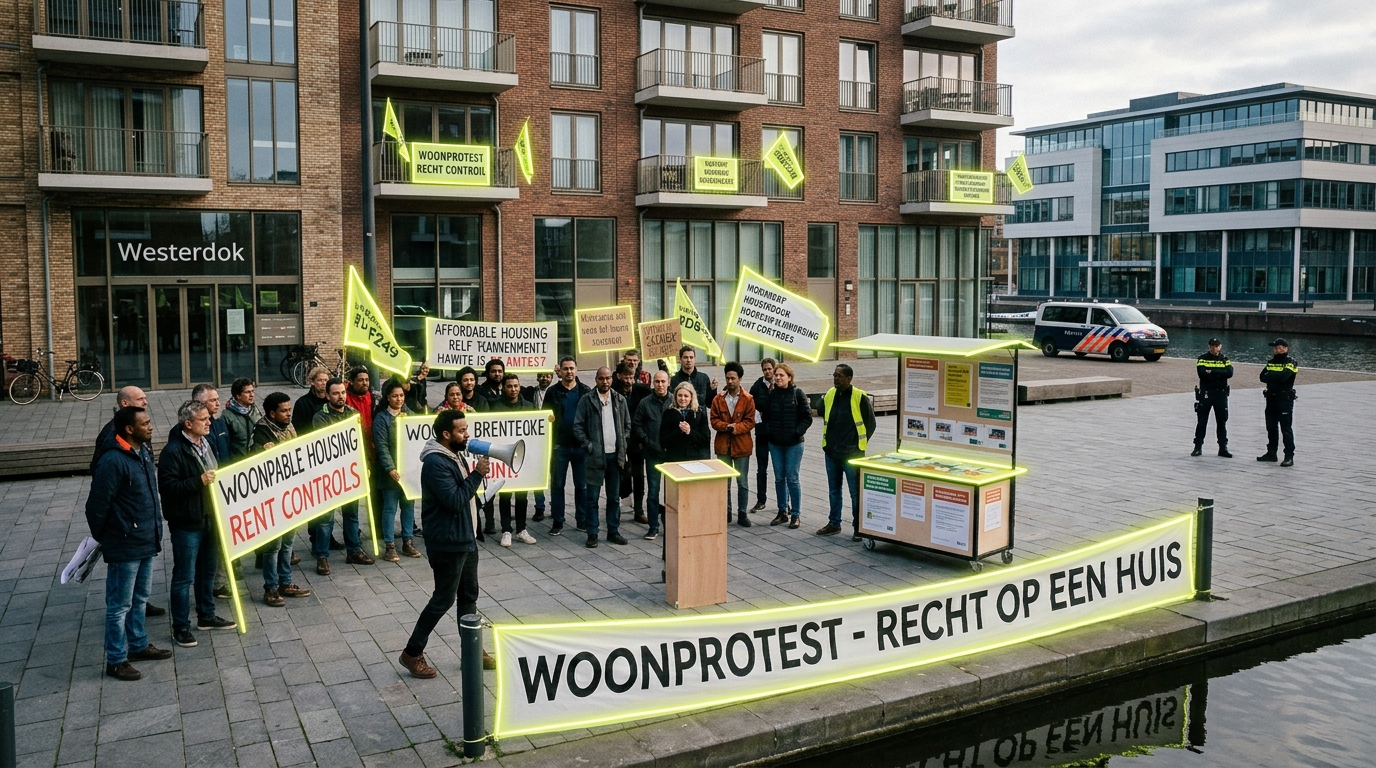
Middenhuur (Mid-Rent Segment)
The middenhuur segment addresses a critical gap in housing markets across the Netherlands and Belgium: the disappearance of affordable rental options for middle-income households who earn too much to qualify for social housing yet cannot afford market-rate rents. This "missing middle" has emerged as incomes stagnated while both social housing became more tightly targeted toward the lowest earners and private rental prices surged in urban centers. The result is a growing cohort of teachers, nurses, civil servants, and young professionals who face either long social housing waiting lists or spending 40-50% of income on rent. This housing squeeze creates workforce retention problems for cities, forces longer commutes from peripheral areas, and contributes to broader affordability crises that threaten economic vitality and social cohesion.
Policy responses are taking shape through multiple channels, though implementation remains uneven. The Netherlands' 2024 Wet Betaalbare Huur (Affordable Rent Act) extended rent regulation into the mid-segment, capping rents for units below certain point thresholds and creating a protected corridor between social and free-market housing. Housing associations are exploring niet-DAEB (non-core) activities that allow limited mid-rent development outside strict social housing mandates. Some municipalities offer density bonuses or expedited permits for projects dedicating units to middenhuur, while Belgium's Flanders region has piloted income-linked rental schemes targeting this demographic. Early evidence suggests these interventions can stimulate supply where land costs and construction financing align favorably, but developers note that mid-rent margins are thin—regulatory certainty and subsidy mechanisms remain crucial. The challenge lies in calibrating policies so they genuinely expand the middle segment rather than simply reclassifying existing stock or inadvertently reducing social housing availability through opportunity costs.
The implications extend beyond housing supply metrics to questions of urban composition and economic resilience. If middenhuur policies succeed, cities could retain essential workers, support more diverse neighborhoods, and reduce pressure on both social housing queues and ownership markets. However, monitoring must track whether mid-rent units actually reach intended income groups or become entry points for higher earners, whether construction costs and land prices allow viable development at target rent levels, and whether housing associations can balance social and mid-rent portfolios without mission drift. Political sustainability also matters—middle-class housing advocacy differs from social housing movements, and policy durability depends on maintaining coalition support. The next critical threshold involves scaling pilot programs into systemic supply while avoiding the regulatory complexity that has sometimes paralyzed Dutch housing production. As demographic pressures intensify and homeownership becomes less accessible, the middenhuur segment represents a test case for whether housing policy can adapt beyond binary social-versus-market frameworks.