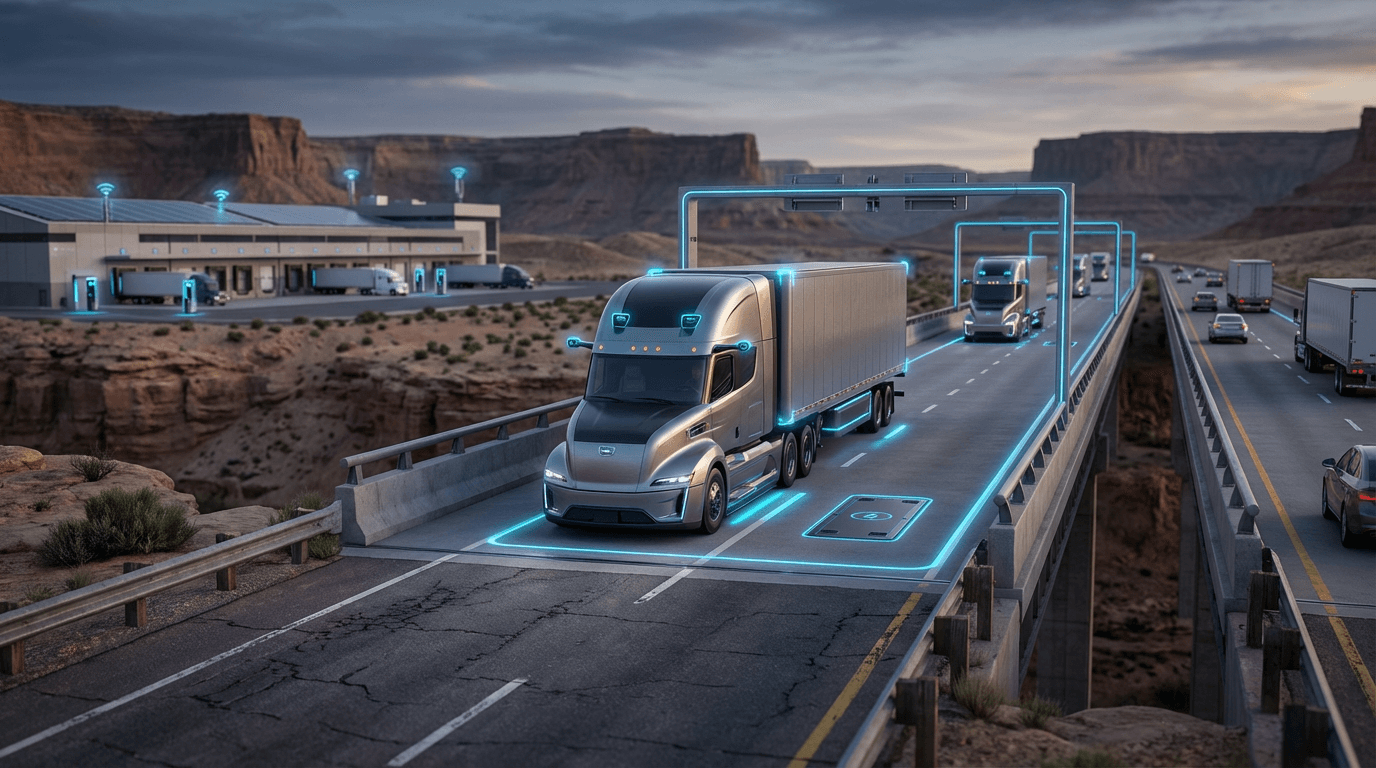
Autonomous Freight Corridors
Autonomous Freight Corridors represent a fundamental reimagining of long-haul trucking infrastructure, establishing dedicated highway lanes and routes specifically designed for driverless Class-8 commercial vehicles. These corridors leverage a combination of advanced sensor arrays, vehicle-to-infrastructure (V2I) communication systems, and high-definition mapping to create controlled environments where autonomous trucks can operate with minimal human intervention. The infrastructure typically includes enhanced road markings, strategically placed communication nodes, and standardized entry and exit points where human drivers can transfer trailers to and from autonomous units. Unlike mixed-traffic autonomous vehicle deployments, these dedicated corridors reduce the complexity of the driving environment by limiting interactions with unpredictable human drivers, creating a more controlled operational domain that current autonomous driving systems can navigate with greater reliability.
The freight transportation industry faces mounting pressures from driver shortages, rising labor costs, and increasing demand for faster, more reliable delivery schedules. Research suggests that driver availability has become one of the most significant bottlenecks in supply chain operations, with long-haul trucking particularly affected by high turnover rates and an aging workforce. Autonomous Freight Corridors address these challenges by enabling continuous operations without mandatory rest periods, potentially doubling the effective utilization of each vehicle. Early deployments indicate that these systems can achieve more consistent fuel efficiency through optimized speed control and platooning capabilities, where multiple autonomous trucks travel in close formation to reduce aerodynamic drag. The technology also promises enhanced safety outcomes by eliminating fatigue-related incidents and maintaining consistent adherence to traffic regulations, addressing a sector where accidents involving heavy commercial vehicles carry particularly severe consequences.
Several pilot programs have emerged along major freight routes, with initial implementations focusing on relatively straightforward highway segments between major logistics hubs. These early corridors typically feature transfer stations at either end, where human drivers handle the complex first-mile and last-mile portions through urban areas while autonomous systems manage the highway segments. Industry analysts note that this hybrid approach allows companies to capture many benefits of automation while working within current regulatory frameworks and technological capabilities. The concept aligns with broader trends toward specialized infrastructure for emerging transportation technologies, similar to how dedicated bus rapid transit lanes have transformed urban mobility. As the technology matures and regulatory environments evolve, these corridors are expected to expand in both geographic scope and operational complexity, potentially incorporating dynamic lane allocation systems that adapt to traffic patterns and freight demand. The long-term trajectory suggests a fundamental restructuring of freight logistics networks, with autonomous corridors serving as the backbone of an increasingly automated supply chain ecosystem that promises greater efficiency, reduced environmental impact, and improved economic competitiveness for regions that invest in this infrastructure.
Related Organizations

Developing the Aurora Driver for Class 8 trucks, focusing on highway corridors in Texas.

Develops physical and digital infrastructure for connected and autonomous vehicle corridors.

Focuses exclusively on long-haul autonomous trucking for freight corridors, using a 'light' mapping approach.

Independent subsidiary of Daimler Truck developing L4 autonomous trucking solutions.

Freight technology company developing autonomous electric trucks, with signed MOUs for deployment in UAE logistics.

Inceptio Technology
China · Startup
Builds the 'Xuanyuan' autonomous driving system for heavy-duty trucks, operating a large line-haul network in China.

Autonomous trucking technology company developing the PlusDrive system.

Business area of Volvo Group dedicated to developing autonomous transport solutions for hub-to-hub freight.


Autonomous trucking company backed by SoftBank, founded by the former leadership of Argo AI.

Parent company of Scania, MAN, and Navistar, actively testing autonomous hub-to-hub transport in Europe.
Supporting Evidence
Research this in Signals
Signals turns a topic into a sourced research record you can inspect and rerun. Your first scan is free, and this one starts with Autonomous Freight Corridors already loaded, so edit it or scan as is.