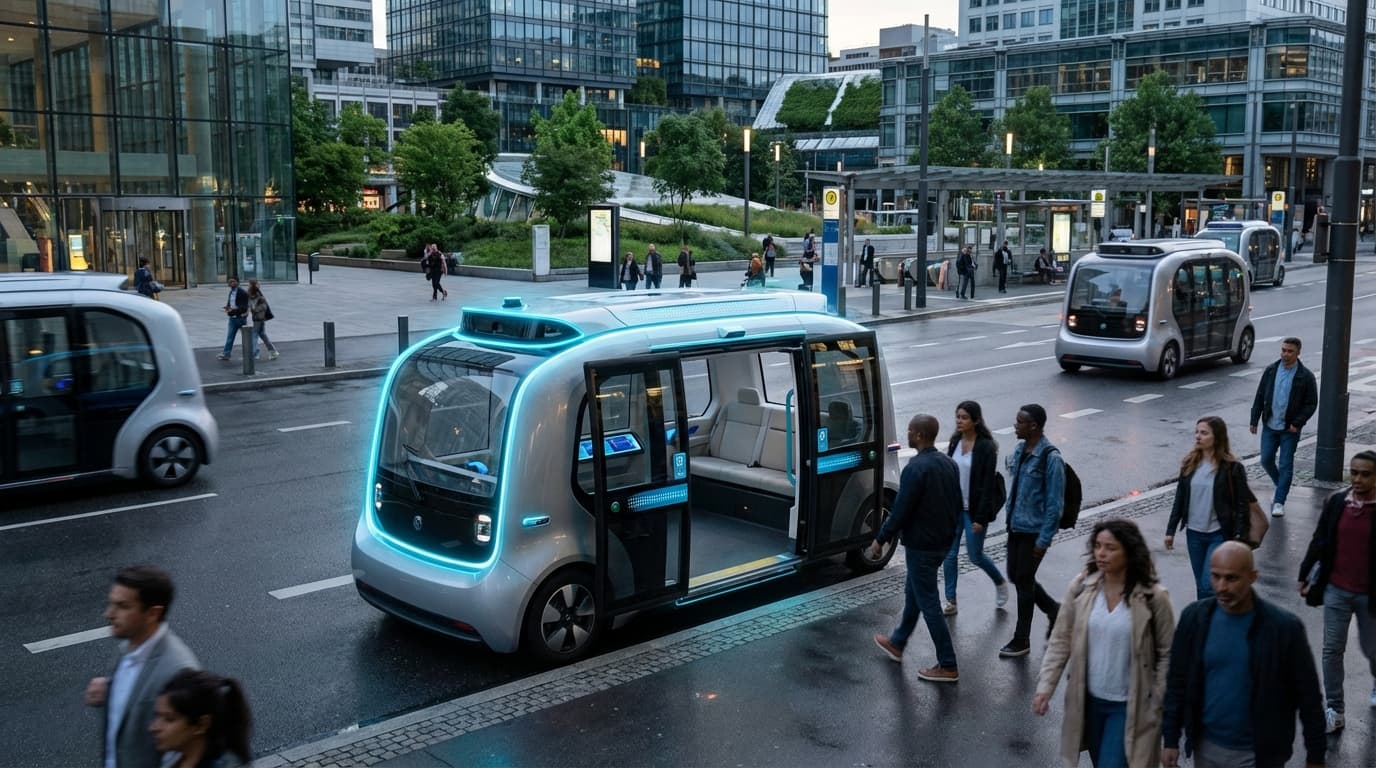
Level 5 Autonomous Fleets
Level 5 autonomous fleets represent the pinnacle of self-driving vehicle technology, where vehicles operate entirely without human intervention across all conditions and environments. Unlike lower automation levels that require human oversight or are limited to specific operational design domains, Level 5 systems possess the full capability to navigate any road scenario a human driver could handle. These fleets rely on sophisticated sensor fusion architectures that integrate data from multiple sources—LiDAR arrays for precise 3D mapping, radar systems for object detection in adverse weather, high-resolution cameras for visual recognition, and ultrasonic sensors for close-proximity awareness. The vehicles process this sensory information through advanced artificial intelligence systems that perform real-time path planning, obstacle prediction, and decision-making. Vehicle-to-everything (V2X) communication protocols enable these autonomous vehicles to exchange data with traffic infrastructure, other vehicles, and central fleet management systems, creating a networked intelligence that extends beyond individual vehicle capabilities. This technological foundation allows robotaxis to operate continuously without the constraints of human driver fatigue, shift schedules, or the need for steering wheels and pedals.
The deployment of fully autonomous fleets addresses several critical challenges in urban mobility and transportation economics. Traditional ride-hailing services remain constrained by driver availability, labor costs that typically represent 60-80% of operational expenses, and the inefficiencies of human decision-making in route optimization. Level 5 fleets eliminate these limitations by operating 24/7 with minimal downtime, requiring only periodic charging or refueling and routine maintenance. This operational model fundamentally transforms the economics of personal mobility, potentially reducing per-mile transportation costs to a fraction of current ride-hailing or personal vehicle ownership expenses. For cities grappling with traffic congestion, parking scarcity, and air quality concerns, autonomous fleets offer a pathway toward more efficient land use—as vehicles spend more time in motion serving passengers rather than parked—and reduced emissions when paired with electric powertrains. The technology also promises enhanced accessibility for populations underserved by traditional transportation, including elderly individuals, people with disabilities, and residents of areas with limited public transit coverage.
While several companies have conducted pilot programs and limited deployments in controlled environments or specific geographic zones, fully unrestricted Level 5 operation in complex urban settings remains an emerging capability rather than a widespread reality. Current deployments typically operate with safety drivers, geographic restrictions, or favorable weather limitations. The transition to true Level 5 fleets faces regulatory hurdles, liability frameworks that must evolve to address autonomous operation, and the substantial infrastructure investments required for charging networks and maintenance facilities. Early commercial services have demonstrated the viability of autonomous ride-hailing in defined areas, with some operations handling thousands of rides daily in select cities. The trajectory toward widespread adoption depends on continued advances in AI robustness, particularly in handling edge cases and unpredictable human behavior, as well as public acceptance and regulatory frameworks that balance innovation with safety. As these systems mature, they are expected to integrate with broader mobility ecosystems, coordinating with public transit, micromobility options, and freight delivery to create seamless multimodal transportation networks that reshape urban form and function.
Related Organizations

Alphabet subsidiary and global leader in autonomous driving technology.

Has developed WiFi translators and translation earbuds utilizing their deep learning translation engines.

Autonomous vehicle company backed by GM, holding an exclusive agreement with Dubai RTA to operate robotaxis.

Amazon subsidiary developing a symmetrical, bidirectional robotaxi designed specifically for autonomous ride-hailing.

Operates a large fleet of fully driverless RoboTaxis in China, specifically in high-density urban areas like Shenzhen.

Joint venture between Hyundai and Aptiv developing driverless vehicles for ride-hail networks like Uber and Lyft.

Autonomous driving technology company operating robotaxi pilots in both the US and China.

A leading L4 autonomous driving technology company that has developed and deployed the WeRide Robobus.

A leader in autonomous vehicle technology, deploying fleets of self-driving shuttles for public transit in various US cities.

Lead developer of Autoware, the world's first open-source software for autonomous driving, conducting robotaxi pilots in Japan.

A dedicated robotaxi project founded by Mate Rimac, developing a purpose-built autonomous vehicle ecosystem.
Supporting Evidence
Research this in Signals
Signals turns a topic into a sourced research record you can inspect and rerun. Your first scan is free, and this one starts with Level 5 Autonomous Fleets already loaded, so edit it or scan as is.