Adaptive Focus Pods
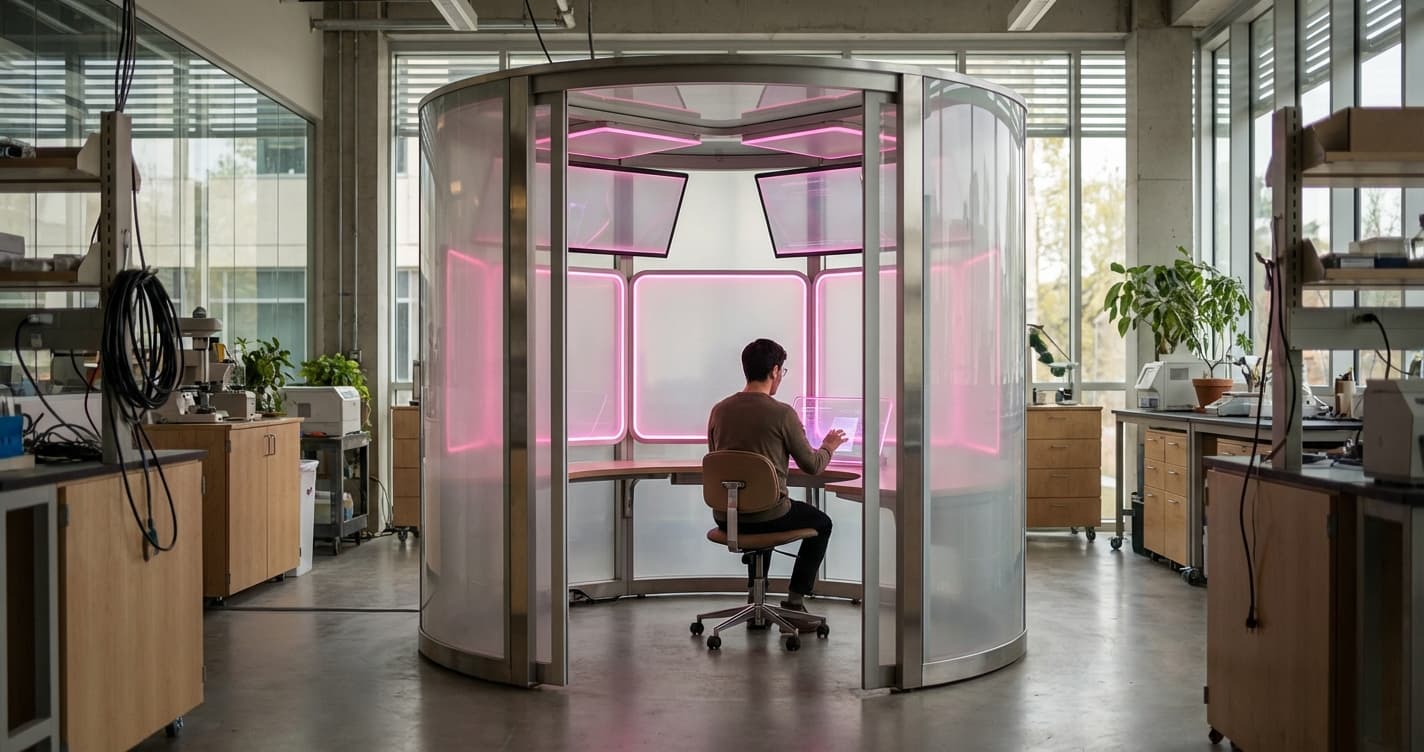
Adaptive Focus Pods represent a new category of intelligent workspace infrastructure designed to address the persistent challenges of open-plan offices and hybrid work environments. These self-contained micro-environments combine advanced environmental controls with real-time sensing capabilities to create optimised conditions for different types of cognitive work. At their core, these pods integrate programmable LED lighting systems that can shift color temperature and intensity, active noise cancellation technology paired with sound-absorbing materials, and climate control systems that regulate temperature and air quality independently from the broader office environment. Embedded sensors—including occupancy detectors, ambient light sensors, and in some implementations, wearable device integrations—continuously monitor conditions within the pod. The system processes this sensory data through algorithms that correlate environmental parameters with different work modes, enabling the pod to automatically transition between configurations suited for deep focus, collaborative sessions, or restorative breaks.
The fundamental problem these pods address is the mismatch between static office environments and the dynamic nature of knowledge work. Traditional workspaces force employees to adapt to fixed conditions regardless of whether they're engaged in analytical tasks requiring intense concentration, creative collaboration demanding energy and openness, or recovery periods necessary for sustained cognitive performance. This inflexibility contributes to reduced productivity, increased mental fatigue, and difficulty maintaining focus in environments with competing demands. Adaptive Focus Pods solve this by creating personalised micro-climates that respond to the occupant's needs in real-time. When sensors detect sustained keyboard activity and minimal movement—indicators of deep work—the pod might dim lights to reduce eye strain, increase sound isolation, and slightly cool the temperature to enhance alertness. Conversely, when calendar integrations signal a collaborative session, the system can brighten lighting, reduce acoustic dampening to facilitate conversation, and adjust seating configurations. Some implementations include biometric feedback loops that detect elevated stress markers and proactively suggest break intervals, addressing the growing concern around workplace burnout and cognitive overload.
Early deployments of these systems have appeared in technology company headquarters, innovation labs, and co-working spaces seeking to differentiate their offerings in competitive markets. Research from workplace design firms suggests that employees using adaptive pods report improved concentration and reduced interruption-related stress compared to traditional desk arrangements. The technology aligns with broader trends toward activity-based working, where employees move between different spaces optimised for specific tasks rather than remaining at assigned desks. As organisations increasingly recognise the connection between environmental design and employee wellbeing, these intelligent pods represent a convergence of workplace psychology, environmental engineering, and human-computer interaction. The trajectory points toward more sophisticated implementations that could incorporate circadian rhythm alignment, air quality optimisation for cognitive performance, and integration with personal productivity systems, potentially reshaping how organisations think about workspace allocation and employee support infrastructure in an era where attracting and retaining talent increasingly depends on providing environments that actively enhance rather than merely accommodate human cognitive capabilities.
Related Organizations


Designs modular, soundproof office pods with built-in power, ventilation, and sustainable materials.

A brand by Mikomax Smart Office offering a wide range of acoustic pods for focus work and meetings.
Estonian manufacturer of modular silent pods with advanced air circulation and wheelchair accessibility options.

Offers 'Workplace Advisor' sensors and analytics to monitor space utilization and environmental conditions in offices.

Direct-to-consumer smart office brand producing motorized desks and ergonomic chairs.

Design-driven acoustic pod manufacturer focusing on sound mastery and minimalist aesthetics.

Originally an elevator interior company, now a major manufacturer of workspace pods (SnapCab Workspace).
US-based manufacturer of wooden, eco-friendly office phone booths and meeting pods.
Provider of privacy booths for offices and public spaces, focusing on sanitation and ventilation.
Supporting Evidence
Research this in Signals
Signals turns a topic into a sourced research record you can inspect and rerun. Your first scan is free, and this one starts with Adaptive Focus Pods already loaded, so edit it or scan as is.