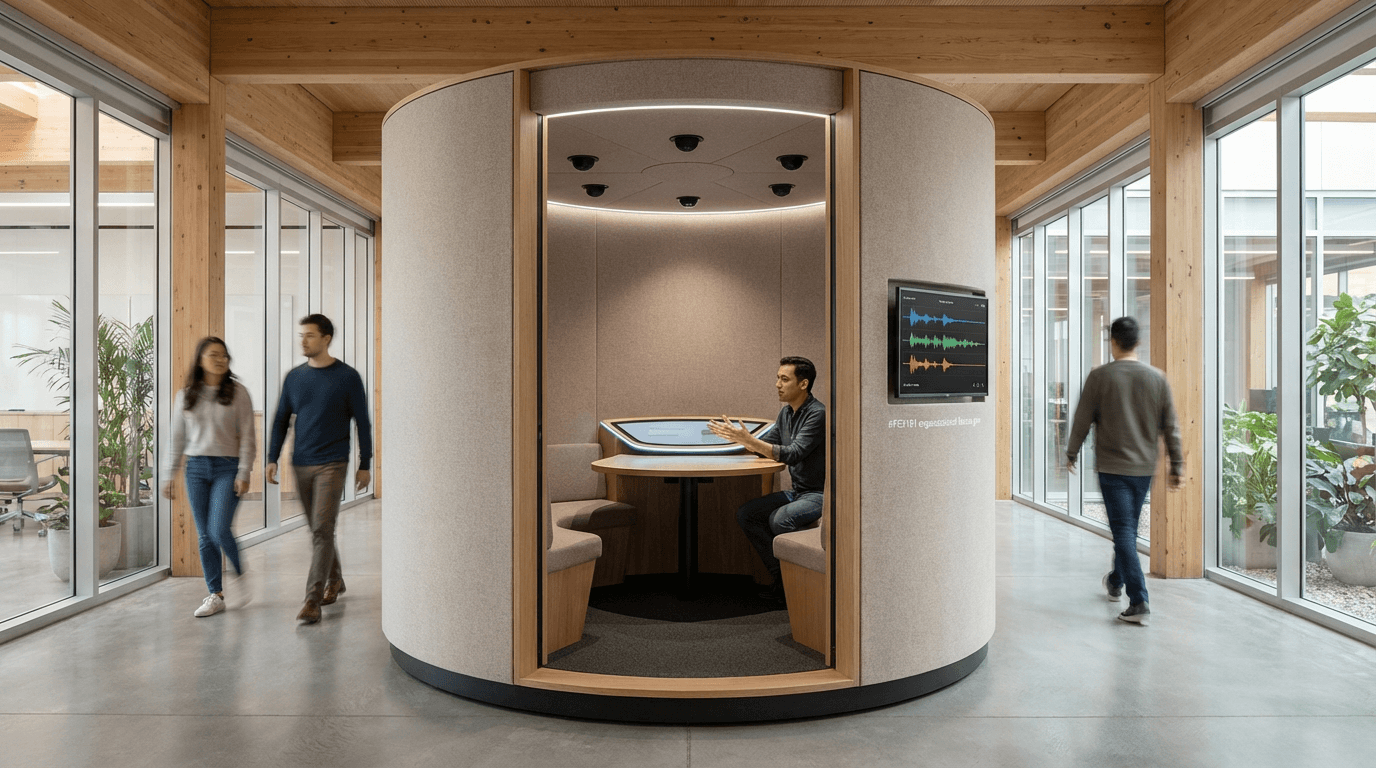
Asynchronous Voice Rooms
The modern workplace faces a persistent tension between the richness of voice communication and the flexibility of asynchronous work. Traditional meetings demand real-time presence, creating scheduling friction across distributed teams and time zones, while text-based collaboration tools strip away vocal nuance, tone, and the spontaneous energy of conversation. Asynchronous voice rooms emerge as a solution to this dilemma, creating persistent audio spaces where team members can drop in to leave voice messages, respond to others' contributions, and engage in threaded conversations without requiring simultaneous presence. Unlike ephemeral voice calls or static recordings, these environments organize audio contributions spatially or topically, preserving context and enabling non-linear exploration of discussions. The technology typically employs cloud-based audio storage, intelligent threading mechanisms, and playback controls that allow listeners to navigate conversations at variable speeds, skip between topics, or focus on specific contributors.
For organizations navigating hybrid and remote work arrangements, asynchronous voice rooms address several critical challenges. They preserve the emotional bandwidth and expressive capacity of voice—the hesitations, enthusiasm, and collaborative thinking that text often flattens—while eliminating the calendar Tetris that plagues globally distributed teams. This approach proves particularly valuable for creative collaboration, complex problem-solving, and relationship-building activities where vocal tone and spontaneity matter. Teams report that these spaces capture the serendipitous "hallway conversations" and informal knowledge-sharing that remote work often loses, creating a middle ground between formal meetings and fragmented chat threads. The technology also supports inclusivity by accommodating different communication preferences and reducing the pressure of real-time performance, allowing contributors to craft thoughtful responses while maintaining conversational flow.
Early adopters in technology companies and creative agencies have begun integrating asynchronous voice rooms into their collaboration workflows, often alongside existing tools for project management and documentation. Some platforms enable spatial audio arrangements where voice notes occupy virtual locations, mimicking the experience of walking through an office and overhearing relevant discussions. Others organize contributions into threaded conversations similar to discussion forums but with audio as the primary medium. As remote and hybrid work models mature, this technology aligns with broader trends toward flexible, human-centered collaboration tools that respect individual work rhythms while maintaining team cohesion. The approach suggests a future where organizations can harness the full spectrum of communication modes—from quick text updates to deep voice discussions—without forcing everyone into the same temporal box, potentially reshaping how distributed teams build culture and make decisions together.
Related Organizations

An asynchronous video and voice messaging app that allows for threaded conversations.

A voice-first messaging platform designed specifically for asynchronous team collaboration to reduce meeting fatigue.

Video messaging for work that allows users to record screen and voice for async viewing.

A major collaboration hub that introduced 'Huddles' and audio/video clips for flexible communication.

A walkie-talkie app for high-performance teams that combines live voice with recorded audio.

Communication platform widely used for community building, including grief support servers.

The remote-first company behind Twist, a team communication app that prioritizes asynchronous threads.

A virtual office platform that includes spatial audio zones for spontaneous and persistent conversation.

A productivity platform that includes native voice clips within tasks and comments.

Through Copilot and the 'Recall' feature in Windows, Microsoft is integrating persistent memory and agentic capabilities directly into the operating system.
Supporting Evidence
Research this in Signals
Signals turns a topic into a sourced research record you can inspect and rerun. Your first scan is free, and this one starts with Asynchronous Voice Rooms already loaded, so edit it or scan as is.