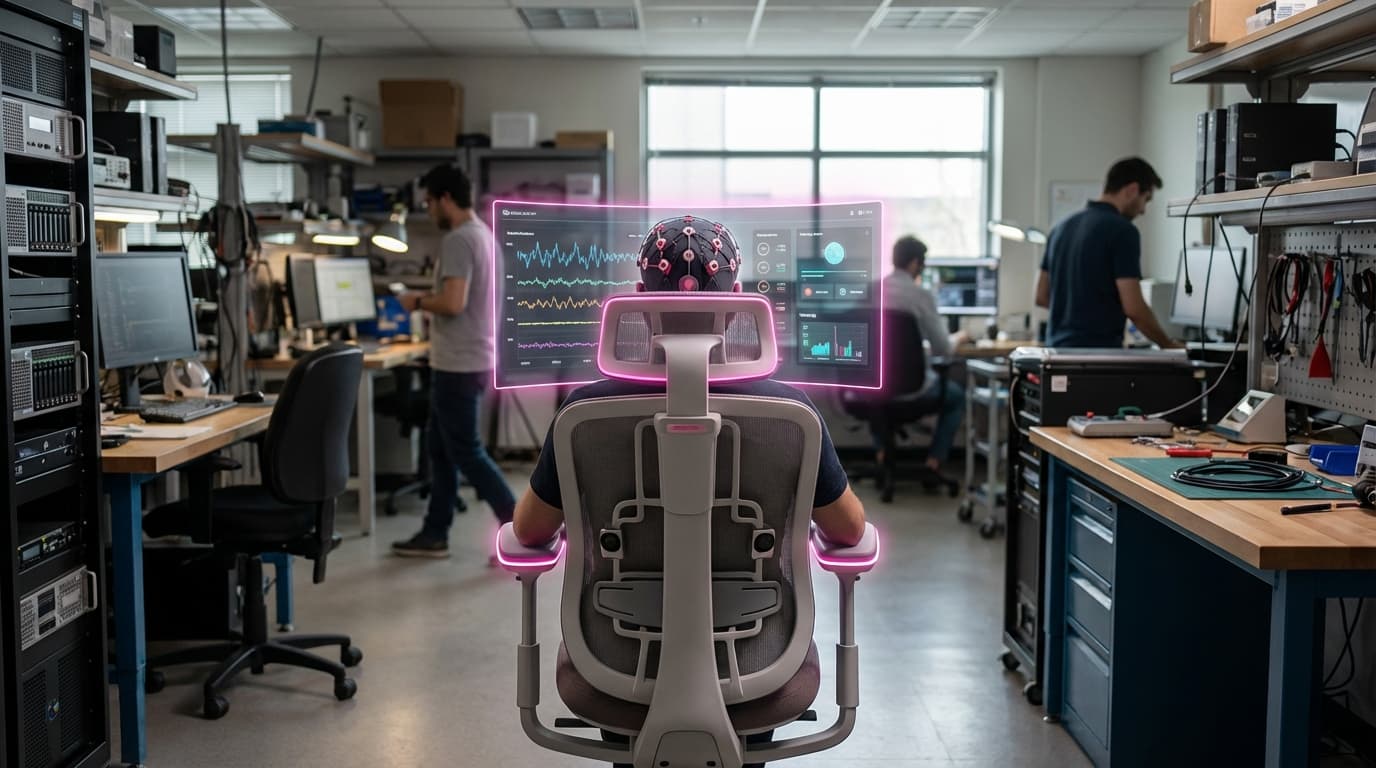
Neuro-Feedback Training Suites
Neuro-feedback training suites represent a convergence of neuroscience, real-time data processing, and immersive learning environments designed to optimize human cognitive performance. These specialized facilities integrate electroencephalography (EEG) sensors with sophisticated biofeedback interfaces that monitor and display brain activity patterns in real time. The core mechanism relies on operant conditioning principles: when learners achieve desired brain states—such as focused attention, reduced anxiety, or the flow state characterized by theta and alpha wave patterns—they receive immediate visual or auditory feedback. This creates a closed-loop system where individuals learn to consciously modulate their neural activity. Advanced implementations incorporate virtual reality environments, adaptive difficulty algorithms, and multi-modal sensory feedback to create immersive training scenarios that respond dynamically to the learner's cognitive state. The technology builds upon decades of clinical neurofeedback research, now adapted for organizational learning contexts with enterprise-grade hardware and analytics platforms.
Organizations face mounting pressure to rapidly upskill workforces amid accelerating technological change, yet traditional training methods often require extensive time investments with variable outcomes. Neuro-feedback training suites address this challenge by targeting the neurological foundations of learning itself rather than simply delivering content. Research suggests that individuals who learn to self-regulate their brain states can achieve competency in complex technical skills in significantly reduced timeframes compared to conventional instruction. This approach proves particularly valuable for high-stakes domains requiring sustained concentration, such as software development, data analysis, surgical procedures, or air traffic control. Beyond skill acquisition, these systems help employees develop metacognitive awareness—the ability to recognize and optimize their own mental states—which transfers across diverse professional contexts. Early corporate adopters report that workers trained in neuro-feedback techniques demonstrate improved stress resilience, enhanced focus during demanding tasks, and better emotional regulation in high-pressure situations.
While still emerging in mainstream enterprise settings, neuro-feedback training suites are gaining traction in sectors where cognitive performance directly impacts outcomes and safety. Technology companies have begun piloting these systems for developer onboarding and complex problem-solving training, while healthcare organizations explore applications in surgical skill development and clinical decision-making. The aviation industry has shown particular interest, with some training centers experimenting with neuro-feedback protocols to help pilots maintain optimal alertness and manage cognitive load during simulated emergencies. As the technology matures, costs are declining while sensor accuracy and user experience continue improving, making deployment more feasible for mid-sized organizations. The broader trend toward personalized learning and human augmentation in workplace contexts suggests that neuro-feedback training will evolve from specialized facilities into more distributed formats, potentially including portable systems for on-demand cognitive optimization. This trajectory aligns with growing recognition that organizational competitiveness increasingly depends not just on what employees know, but on how effectively they can regulate their cognitive resources to acquire new knowledge and perform under pressure.
Related Organizations

Produces EEG headsets and the BCI-OS platform, allowing developers to build applications that respond to cognitive stress and facial expressions.

Creators of the Muse headband, a consumer EEG device used for meditation and cognitive research.
Develops BCI-enabled headphones that detect focus and intent to control digital experiences.

Provides a remote neurofeedback platform using consumer wearables (like Muse) to treat ADHD and anxiety.
Uses AI and neuroscience to enhance creativity and flow states in the workplace.
Develops semi-dry and dry EEG wearable devices for human behavior research and neurotechnology applications.

Neuroscience company developing non-invasive brain recording technology (Flow and Flux).

Develops BMI technology including the FocusCalm headband and prosthetic hands.
Creates open-source brain-computer interface tools and the Galea headset (integrating with VR) for researching physiological responses.

Consumer fNIRS headband for brain training and blood flow monitoring.
Supporting Evidence
Research this in Signals
Signals turns a topic into a sourced research record you can inspect and rerun. Your first scan is free, and this one starts with Neuro-Feedback Training Suites already loaded, so edit it or scan as is.