Robotic Drilling Rigs
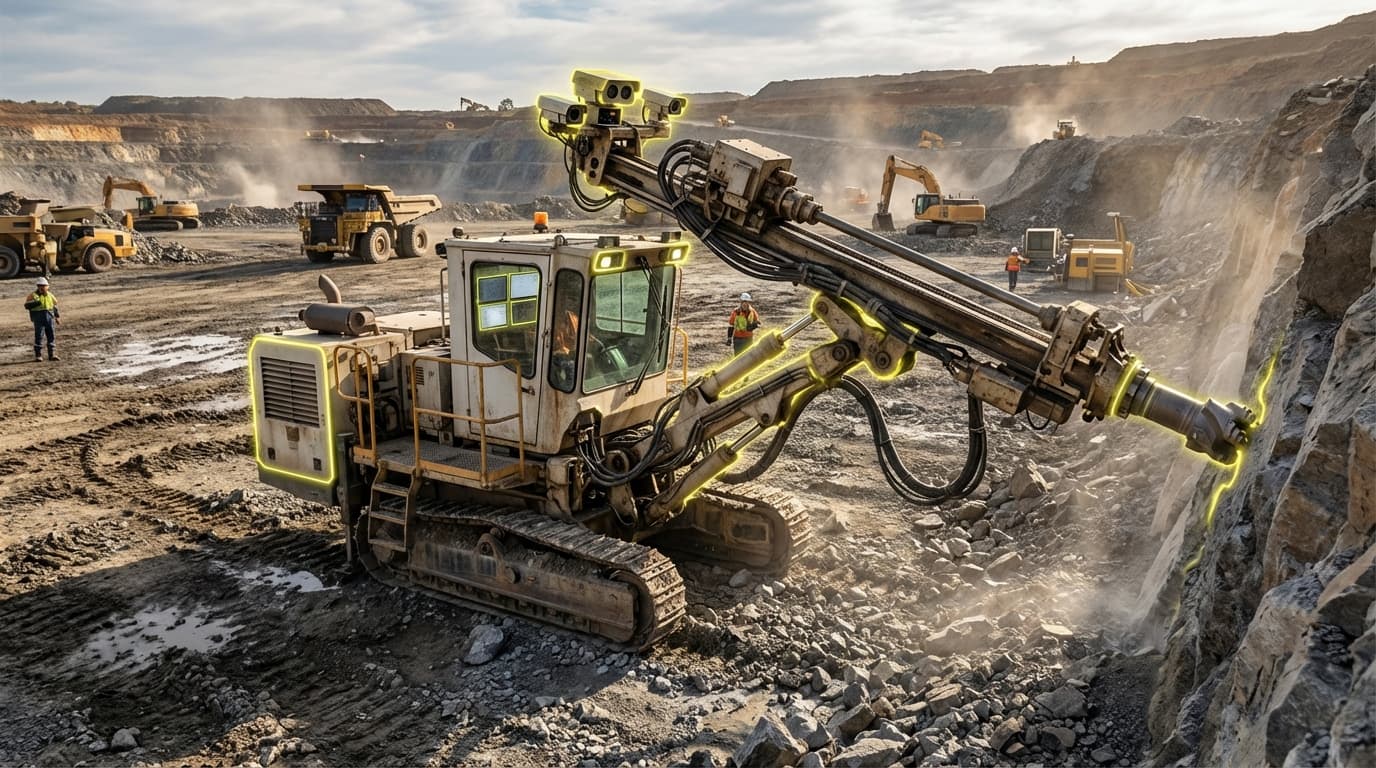
Robotic drilling rigs represent a fundamental shift in how extractive industries approach one of their most critical and hazardous operations. These systems integrate advanced computer vision, machine learning algorithms, and precision robotics to automate the drilling process with minimal human intervention. At their core, these rigs employ sophisticated sensor arrays—including 3D cameras, LiDAR systems, and ground-penetrating radar—to continuously scan and interpret the geological environment. The computer vision systems analyse rock formations in real-time, identifying variations in hardness, density, and structural integrity that would traditionally require experienced human operators to detect. Machine learning models process this sensory data alongside historical drilling performance metrics to dynamically adjust critical parameters such as drill bit rotation speed, penetration rate, and hydraulic pressure. This continuous feedback loop enables the system to respond instantaneously to changing subsurface conditions, optimising the drilling trajectory and preventing costly equipment damage or dangerous operational failures.
The mining and resource extraction sectors face mounting pressure to improve safety outcomes while simultaneously increasing operational efficiency and reducing costs. Traditional drilling operations expose workers to significant risks, including equipment malfunctions, rock falls, and prolonged exposure to noise, vibration, and dust in challenging environments. Robotic drilling rigs address these challenges by removing personnel from hazardous zones while delivering superior precision and consistency. The technology solves the persistent problem of blast hole placement accuracy, which directly impacts the efficiency of subsequent blasting operations and ore recovery rates. By maintaining optimal drilling parameters regardless of operator fatigue or experience level, these systems reduce mechanical wear on expensive drill bits and components, extending equipment lifespan and minimising maintenance downtime. Furthermore, the data collected during autonomous drilling operations provides valuable geological intelligence that can inform mine planning, resource estimation, and extraction strategies, creating a comprehensive digital record of subsurface conditions that was previously unavailable or inconsistently documented.
Early deployments of robotic drilling systems have already demonstrated measurable improvements in productivity and safety across surface and underground mining operations. Several major mining operations have integrated semi-autonomous drilling rigs that handle routine drilling tasks while human operators supervise from remote control centres, often located away from active mining faces. These implementations have reported reductions in drilling time per hole, improved blast fragmentation outcomes, and significant decreases in equipment-related incidents. The technology is particularly well-suited to large-scale open-pit operations where repetitive drilling patterns and predictable geological conditions allow the systems to operate with high reliability. As sensor technology becomes more sophisticated and machine learning models are trained on larger datasets encompassing diverse geological formations, the capability of these systems continues to expand. Industry trends suggest a trajectory toward fully autonomous drilling fleets that can operate continuously across multiple shifts, coordinating with other automated mining equipment to create integrated extraction systems. This evolution aligns with broader movements toward digital transformation in heavy industry, where data-driven automation promises to unlock new levels of efficiency while fundamentally reimagining how humans interact with dangerous industrial processes.
Related Organizations

Spun out of Atlas Copco, Epiroc specializes in mining equipment and provides extensive automation solutions for underground loaders and trucks.


Produces battery-electric loaders and trucks, bolstered by the acquisition of Artisan Vehicle Systems.

Operates the FlexRig fleet and develops autonomous drilling software solutions.

Provides the NOVOS process automation platform which allows rigs to execute drilling instructions autonomously.

Provides DrillTronics, an automated drilling control system that optimizes drilling parameters in real-time.

Offshore drilling contractor deploying kinetic blowout preventers and automated drilling packages.
Energy major actively testing and deploying automated drilling technologies on the Norwegian Continental Shelf.

Spun out of UPenn's GRASP Lab, developing Level 4 autonomous aerial robot systems for mapping complex, GPS-denied environments like mines.

Provides autonomous vehicle software for mining and construction equipment.
Supporting Evidence
Research this in Signals
Signals turns a topic into a sourced research record you can inspect and rerun. Your first scan is free, and this one starts with Robotic Drilling Rigs already loaded, so edit it or scan as is.